
Shiver Me Timbers
Prefer to listen to this post? (It’s really me, not AI!)
Greetings travelers! Do you remember what you were doing on September 19 last year? Perhaps, like me, you were avoiding any co-worker, friend, or family member enthralled by the very 1990’s Talk Like a Pirate Day parody holiday. You know these people, texting you “Ahoy Matey!” and “Arrrr!” and “Avast, me hearty!” This was humorous once, maybe, in 1997. Why do people do this? Aren’t pirates horrible people — thieving, conniving, ruthless people? There’s no Talk Like A Serial Killer Day, obviously and thankfully. On today’s itinerary we’re going to be heading back out on the Seven Seas to get to the dark heart of piracy and how it has been depicted in horror cinema in a segment called Shiver Me Timbers.
Yes, tourists, we’ve been here before … or at least near here, exploring underwater horror on itineraries called Doom Shanty and Maybe Shark, but today we’re looking at the real history of piracy. International maritime law defines this as “any illegal acts of violence or detention, or any act of depredation, committed for private ends by the crew or the passengers of a private ship or a private aircraft” outside the jurisdiction of any State, such as on the high seas. And, indeed, piracy continues to this day, primarily in the Indian Ocean, the Gulf of Guinea in West Africa, and some of the seas surrounding Malaysia and Indonesia. But these pirates — equipped with GPS, rocket-propelled grenades, and very fast boats — are not what we think of when we conjure the image of pirates.
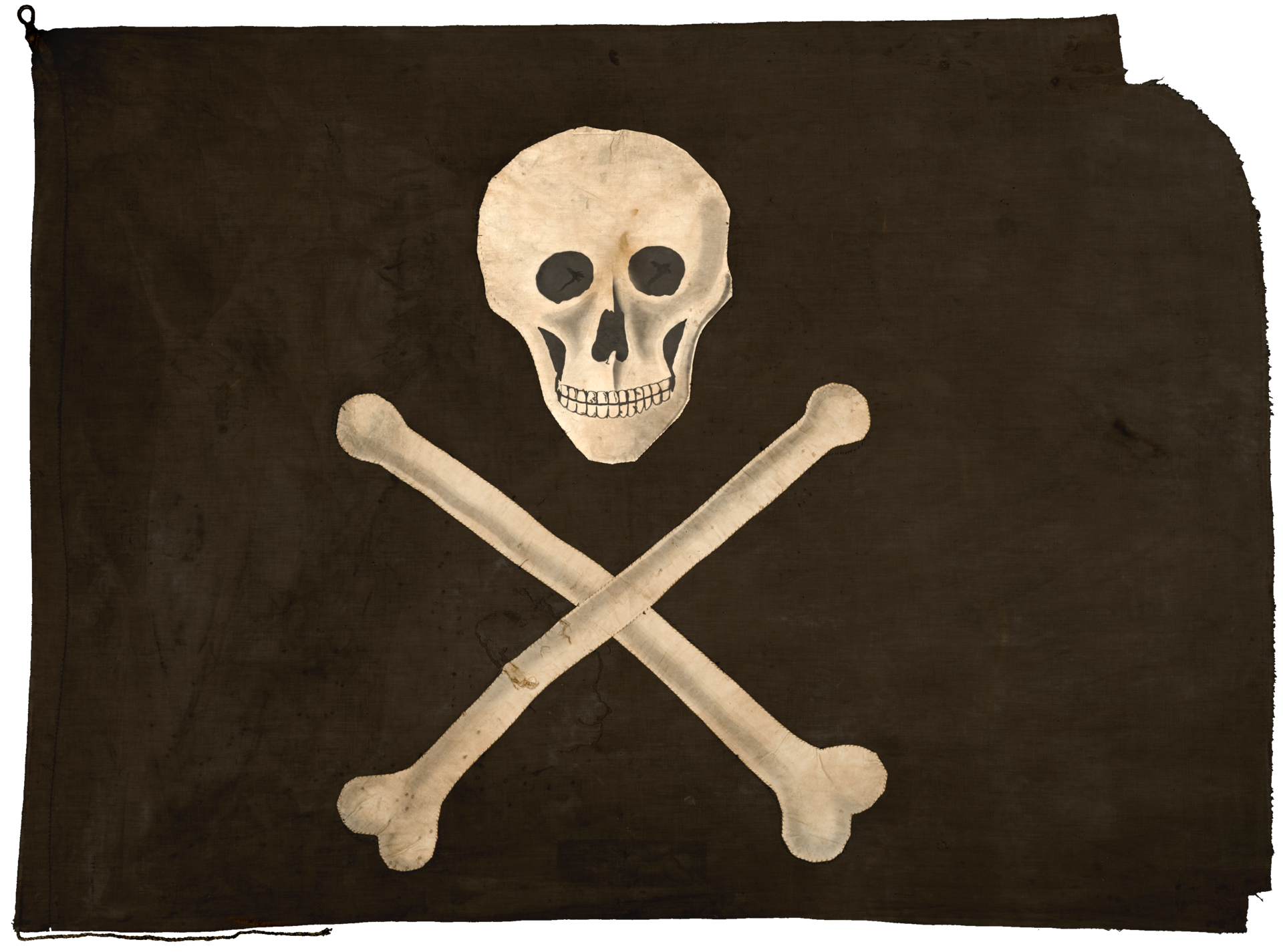
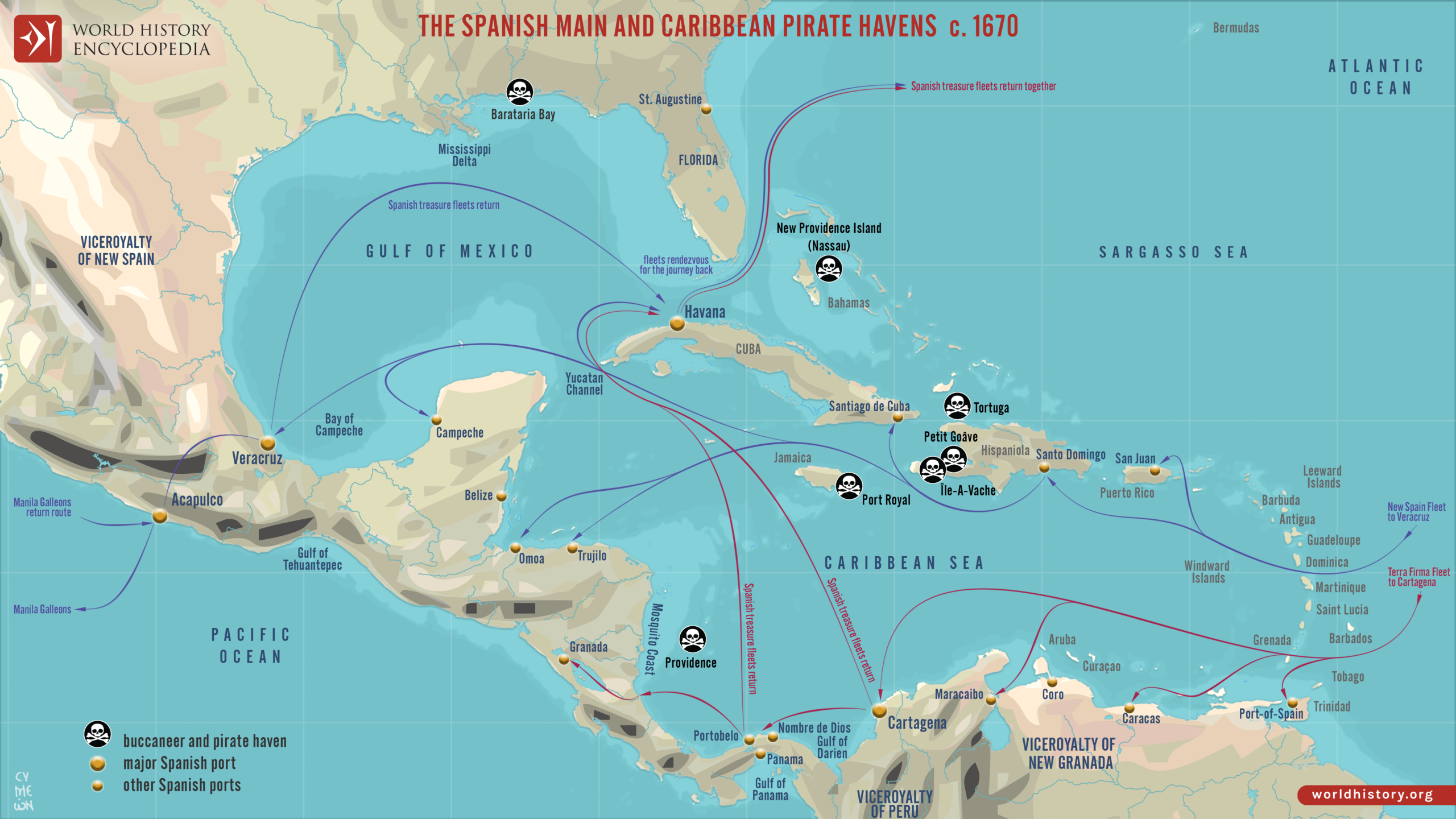
Most of our modern fictional depictions of pirates take their inspiration from what is called The Golden Age of Piracy which lasted from the 1650s to the 1730s. More precisely, pirates in today’s culture have almost exclusively been filtered through just three 19th century characters: Captain Hook from Peter Pan, Long John Silver from Treasure Island, and Sinbad from Sinbad the Sailor. These tales, centered mostly in the Caribbean, present pirates as adventure-seeking swashbucklers, dirty and rum-sodden, causing trouble for European navies, but generally just using the ocean as a lawless crossroads of mercantile opportunity during a period when shipping to and from Europe’s colonial holdings in the New World were reaching their apex. Put another way: pirates were thieves on ships who would board vessels laden with cargo to take it.
Were pirates criminals? Technically yes, though the concept of international law governing activity outside of boundary waters did not really exist. Complicating the ethics here is the fact that, though much piracy (technically buccaneering) was waged against state powers, later phases of piracy evolved into privateering where European states officially sponsored pirate raids on competing powers. What started as motley crews of independent criminals eventually became official sorties licensed by “letters of marque” permitting and financially encouraging robbery to hobble state adversaries. So basically whether you consider pirates criminals or not it comes down to what you consider worse behavior: theft by an underclass waged against state power or theft by an underclass waged on behalf of a state power. Either way, pirates were pretty cool, even if they did some horrible things.
Most of these horrible things were done in service of finding the most valuable cargo or hidden loot. But the acts themselves were useful in creating a reputation that would enable the taking of frightened merchant ships without a fight. This reputation is one of the reasons we have so much historical documentation of pirate atrocity. Take the torture of merchant captains and crew. Techniques included “woodling” — tying a rope around a victim’s head and tightening it with a metal bar until his eyes popped out. Or lighting slow-burning rope ends between a captive’s fingers and toes and in their beards. Or having salt or brine poured into the wounds caused by whipping. Extreme tortures involved bodily mutilation, including forcing the victim to eat their own or others’ body parts. (We can look to the notorious pirate Edward “Ned” Low for that one.) While simply working on board a sailing vessel was a threat to one’s limbs — mind those rigging lines and anchor chains! — it’s no coincidence that the stereotype of pirates that comes down to us usually involves missing body parts: hooks replacing hands, wooden pegs replacing legs, patches over missing eyes, and nothing replacing teeth displaced by a perfidious (and undiagnosed) lack of Vitamin C.
And then there were pirate executions — punishment both for misbehaving pirate crewmen, but also for merchant captives. Alas, this almost never involved making anyone walk a plank. Why be dramatic about drowning someone when you could just toss them overboard? At gunpoint or chained to a cannonball, if need be. Like torture, pirate executions’ larger purpose was psychological: instilling fear in others was easily as important as the act itself. The most spectacularly awful form of pirate execution had to be keelhauling, where a victim was tied to a rope, thrown in the drink, then dragged under the ship, usually from one side to the other. Before drowning the unfortunate human anchor would usually be shredded by the barnacle-encrusted wooden hull of the ship. Less dramatic but better fodder for future fictional tales was marooning, where treasonous or thieving crewmates were left on a deserted island, usually with a bottle of water and a pistol. Die of thirst or just take your own life. Let’s not forget flogging by the fearsome cat o’ nine tails, a technique called “sweating” a prisoner by making them run around the mast while being stuck with swords and daggers by the whole crew, and of course just burning a ship full of sailors wholesale. Or, perhaps worst of all, simply enslaving all captives and keeping them in bondage or selling them at one of the dozens of colonial holdings desirous for manual labor.
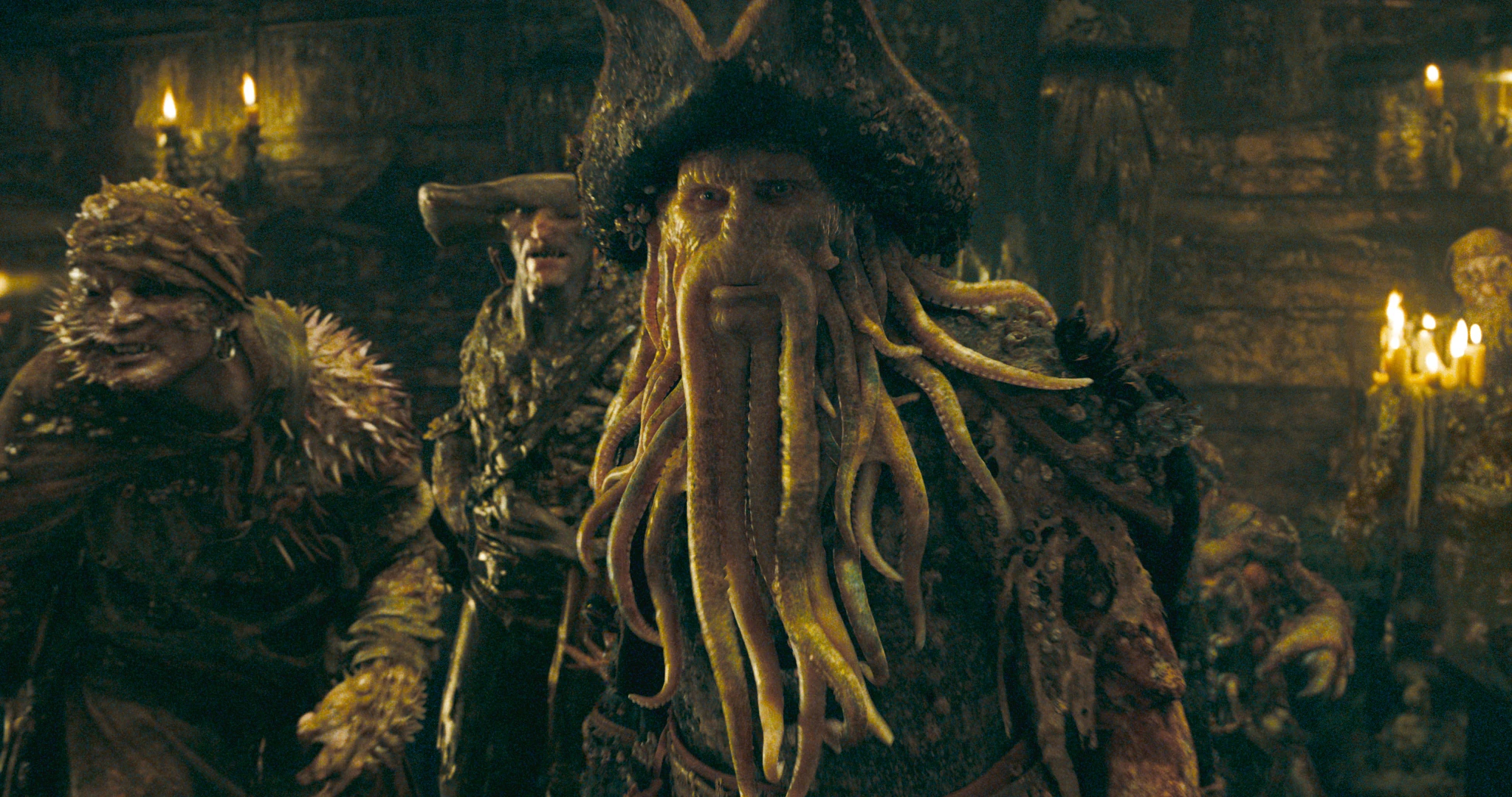
It’s pretty obvious how the lore of piracy would make good material for a horror movie. And yet, pirate horror is a relatively small sub-genre, a couple dozen pictures generously. This might be explained by the fact that modern depictions in film have largely portrayed them as, at worst, antiheroes and often as merely roguish protagonists. Depraved as their documented historical actions might have been, we seem to identify with and even valorize pirates, idolizing their freedom from allegiance, their flaunting of law, even or especially their throwing a wrench into the cogs of capitalism at the very birth of capitalism. Interestingly we can thank Disney both for the sanitizing of the pirate character in modern depictions and for a revival of pirates as undeniably scary. With the former, think of the bumbling Captain Hook in 1953’s Peter Pan or the family-friendly cast of treasure-seeking rogues in Disney’s Pirates of the Caribbean theme park attractions. For the latter, look to the first Pirates of the Caribbean film The Curse of the Black Pearl, from 2003. Featuring a legitimately menacing crew of undead pirates condemned to walk (and swim, though they actually walk along the sea bottom) for eternity and a Davy Jones whose writhing beard of octopus tentacles is almost more haunting than Medusa’s locks. This film, while firmly an action adventure piece, reminded viewers just how scary pirates could be.
But there is a tradition of pirate horror and, travelers, it calls to us as clearly as a bottle of uncorked rum. Let’s take a swig.
1962 brought us the Hammer Productions period piece called Captain Clegg (also known as Night Creatures). Peter Cushing here plays a village parson named Blyss who presides over a coastal congregation when the Royal Navy led by a Captain Collier arrives to investigate reports of alcohol smuggling. This village is purportedly the final resting place of the pirate Nathanial Clegg, but it is terrorized at night by horseback-riding skeleton-ish figures called “Marsh Phantoms”. This film has plenty of pirate ambience, though none of it takes place at sea and there’s nothing supernatural about any of it. To try to get to the bottom of the phantom riders a former crewmate of Clegg’s, muted through torture by the captain, exhumes his grave, finding it empty. Eventually — spoiler! — we come to learn that Parson Blyss is in fact Captain Clegg, spared at the last moment by his executioner and that the phantoms are merely villagers meant to run off out-of-towners. Captain Clegg is an atmospheric film, adequately creepy, if maybe a little tame in the final frights and gore tally.
Do you consider Halloween to be John Carpenter’s masterpiece? You’re probably right, but there are film buffs out there who would argue with you, pointing to 1980’s The Fog as a superior film. The cast itself is a pantheon of horror icons already established and soon-to-be: Adrienne Barbeau, Tom Atkins, Jamie Lee Curtis, her mom Janet Leigh, Hal Holbrook, and even John Houseman. The conceit of using a fog rolling into a coastal town as both a metaphor for encroaching evil and a literal atmosphere of low visibility and dread is a masterstroke that has been repeated multiple times since. The story here, helpfully narrated by Houseman to children sitting around a campfire at the film’s outset, details the crashing of a clipper ship which mistook a campfire for a lighthouse. All its crew drowned. Meanwhile, we learn the real reason for the crash was that locals 1) did not want the leprosy-addled owner of the boat to establish a colony nearby and 2) they wanted his gold. The town, you see, is founded on a lie. Enter the fog, glowing ominously at first out at sea and slowly coming ashore. Barbeau here plays a radio DJ broadcasting from a lighthouse who serves as a kind of omniscient lookout for the townsfolk as the fog slowly reveals the undead sailors come back to exact vengeance. Specifically they come looking for six victims to match the six original local conspirators. The film ends with five deaths, though, so you know there’s an epilogue. This is a great movie. The fog itself I find far scarier than the avenging leper-pirates. It’s used especially well inside the church and around the lighthouse at the film’s climax, hiding basically motionless killers. (Sidenote: the blocking in these scenes was obviously and effectively re-used by Carpenter in the interior scenes of Prince of Darkness.) I love The Fog and you should too..
The true sign of the establishment of a theme in a horror sub-genre of course is whether there are any examples of truly awful films based on it. We have that, my travelers, we definitely have that. I present to you Jolly Roger: Massacre at Cutter’s Cove from 2005. This is made-for-TV quality shlock that starts promisingly enough — on a beach, around a campfire, with all the trappings of a slasher. Canoodling teens find a treasure chest just sitting on the beach, they open it, and an undead pirate appears. It’s not much more complicated than that and let me say I was all in. But then, after an initial mini-massacre, the story moves to the city and becomes a police drama. You see, the really-not-very-jolly pirate named Roger has returned to avenge his keelhauling death at the hands of his mutinous crew. To do this he wants sixteen heads of the descendants of this crew, all of whom helpfully live at Cutter’s Cove. Look, if you like decapitations by cutlass this is the film for you. Nearly all the deaths, gory as they are, are decapitations. The evil pirate is pretty great, honestly, looking more like a zombie than the swashbuckler he might once have been. I would have preferred if this film stayed a straight slasher. Dead men may tell no tales, but undead men sometimes tell tales you wish were better tales. Oh well.
I’ve put together a list of side excursions you can undertake on your own — no charge — if this short jaunt is not enough for you all. If you’re a fan of Tombs of the Blind Dead (and who isn’t?) you will like The Ghost Galleon from 1974. If you’re more into modern day pirates engaged in terror see The Island from 1980 or Deep Rising from 1998, a creature feature masquerading as a pirate film (and underloved, in my opinion). You know where you might get the most undead pirates for your buck? 1998’s Scooby-Doo on Zombie Island. I’m not kidding. Don’t laugh. Watch it and tell me I’m wrong. Prefer the sub-genre of reality film horror? Check out CrossBones from 2005. Basically Survivor but with ghost pirates running about. Maybe the most straight-up pirate horror out there, which is to say the film featuring the most stereotypical pirate stuff in a horror storyline is Curse of the Pirate Death from 2006. If you are actually a fan of Talk Like A Pirate Day: 1) watch this film and 2) do not contact me on Sept. 19. The most recent entries in this category Pirates of Ghost Island, Dark Waves, and Ship of the Damned are all variations on the same theme: what happens when you come between undead pirates and their booty. All of which raises an interesting point: where is the pirate horror set during actual pirate times several centuries ago? With the exception of Captain Clegg, I could find none. Filmmakers, contact me. I have ideas.
Well that’s it, mateys. Whoops I did it. That’s it, my traveling companions. Time to flee like bilge rats. Until our next journey, mind your step on the wet decks and make sure you eat lots of citrus. Thank you!
A full list of the movies mentioned above can be found at Letterboxd. Find out where to watch there.
The Terror Tourist is my occasional segment on the Heavy Leather Horror Show, a weekly podcast about all things horror out of Salem, Massachusetts. These segments are also available as an email newsletter. Sign up here, if interested. The segment begins at 19:03 in this episode:
Mission Elapsed Time: 20:00:21:06:42:40

I went back through it this blog (and my Flickr account) on its 20th anniversary, retracing digital footprints made on what feels like a different planet. Here are some highlights.
The Terror Tourist

A roughly monthly exploration of places in horror fiction — real or imagined, geographical or psychological — culled from The Heavy Leather Horror Show.
Subscribe to the podcast or the email newsletter or just read through the archives posted here.
The Ampcamper

How I hauled myself, two teens, an 80 lb dog, and a whole load of crap 4000+ miles across six states in twenty days using an electric vehicle. And survived to tell the tale.


