
40<40
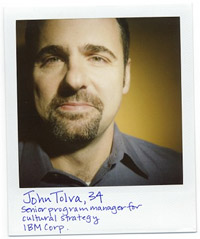
So here’s the deal on that post about the L train photo shoot. In what can only be described as a momentary lapse of reason, the good people at Crain’s Chicago Business have selected me for their annual 40 Under 40 issue. Sorry if reading that just made coffee shoot out your nose. It’s true. They think I’m important.
The theme of the issue was “sanctuary.” The reporters wanted to know where we went to get away from it all. Well, they picked a bad few months to ask me. With the birth of my daughter (and two rambunctious boys) this summer was completely up-ended. Hmmm, sanctuary, sanctuary? Does locking myself in the bathroom count? Home is crazy; work is crazy; so that left only the commute in between. And thus was born the idea that riding the train is my escape.* This is true to some degree. I can relax, read, or just people-watch. I should probably thank my profile’s author, Mark Scheffler, for not making me out as some sort of trainspotting lunatic.
The issue is full of lots of interesting stats. Would you believe none of the 40 Under 40 (which actually total 43, huh?) has a tattoo and that the honorees are overwhelmingly Cubs fans? The best part is that I get to see fellow honoree Jason Fried (of 37Signals) tomorrow night and (re)introduce myself as a “merchant of complexity.” What a perfect intro line.
So the full profile is online as well as a little slideshow of honorees. The print version is out today.
[*] Ironically the editor chose the easiest photo (me just sitting on the train) for the issue. I can only guess that the several dozen gigabytes of shots of me on the train platform seemed too much like an escape of a different sort. Don’t jump, man!
All it takes is one bad apple

Luckily we found that one bad apple and removed it from the bushel before embarking on this weekend’s adventure to make hard apple cider.
It was a lot easier than making wine. And yet, so much more work than I anticipated. For one, it is difficult to find detailed information on cider-making. Sure there’s the Intarweb, but the info is suprisingly scarce, nearly always tacked on as an appendix to beer-brewing how-to’s. For another, virtually no cider recipe begins with actual apples which I suppose follows from the first point. I mean, how many beer brewing recipes instruct you on how to harvest your own barley and hops? (This is the biggest difference with amateur winemaking. People love starting with actual grapes.)
So we had all these apples. And they’re something like 93% liquid. But getting all that juice out is nearly impossible without a good masher and press. We had neither. So we sliced up all the Empire apples (which by sheer luck turned out to be good for cider-makin’) with one of them corer doodads. It was handy for sure, but every slice tossed up a reverse shower of apple juice into my face. By the end my face had hardened into a sweet citrus-encrusted mask.
The goal is mash up the apples enough so that squeezing the juice from them is easier than trying to squeeze a whole apple. (This is why apples are called a hard fruit. Yes, just got that.) We had a grape crusher from our stint as home vintners ten years ago which we thought would work perfectly. It did not work perfectly. Indeed, it did not work at all. The few slices that did get mulched in the gears merely created a slurry coating that prevented other slices from entering. So we abandoned that idea.
Ultimately we put the slices into a food processor with the grater blade in. This worked wonderfully, though it kinda technologized the romance out of the process. Just for a bit, though. The real manual labor commenced when we had to hand-wring the mashed apples through cheese-cloth to get the juice out. My kingdom for a fruit press! Imagine wringing several hundred delicate washclothes out. Our hand muscles were basically useless when it was all done.
Now, there’s only so much juice you can extract without the using of a simple machine. I tried to fashion a crude press from a cutting board and a pan. This failed miserably too. So we had no second run. Ultimately we had to add some fresh apple cider from local orchards to top off the carboy. Then we just added some yeast and sugar. It is cloudy but certainly looks like apple cider. In a few weeks we’ll apparently have hard cider.
At one point in this process my wife asked nonchalantly “Is there any possibility that this will kill us when we drink it?” I answered no of course. Potentially lethal apple-based liquor awaits the next step: applejackification. But that’s another post.
Full photo gallery here. Bottoms up.
Museum-as-website
Paul Bausch makes some good points on why museums should be more like today’s web. What’s interesting is that the spark for the post came from an expectional interaction with a human tour guide.
The tour included a stop at a recreation of an 1800’s store run by Chinese immigrants. As you step inside you see lots of stuff that would have been for sale at a store like this, Chinese newspapers and inventory lists from the period, and an audio track playing with people speaking Chinese. Someone in the group asked what the people were saying on the audio track, and the tour guide launched into a story. It turns out he’d had several Chinese speakers on previous tours, and he’d started to piece together what the audio was. Apparently, the museum curators had recorded a mahjong game in progress, and audio in the store was simply some people sitting around playing a game and having a conversation. Most museum-goers in Bend, Oregon would never know what exactly the conversation was about, so it didn’t matter that the audio didn’t faithfully recreate an 1800’s Chinese store.
I was struck by this little exchange, because the tour guide had gone from adding a layer about the exhibit to a little behind-the-scenes information about the construction of the exhibit. And the information hadn’t come from the museum curators, it had come from fellow museum-goers.
Along the way, I noticed other types of information the guide was relating such as trends. He’d say, “everyone always asks about this piece of equipment right here.” And then he’d explain what that was. He was using audience patterns to tune his presentation.
Bausch isolates the characteristics of a great interaction with a knowledgeable human guide and expresses them in terms that sound like what the web does very well: deep info, layered perspective, visitor trend analysis. Many museums have tried to make their physical experiences more interactive, of course (see here, here, here and oh yeah here), but the holy grail of a physical space as malleable and two-way as the web has not been achieved. My team refers to such as a space as a “flexhibit,” but it is more concept at this point than reality.
It is curious that Bausch suggests we use technology to do what the best human guides already do. I can hear a museum director arguing the reverse: that what we really need are more human guides that synthesize info and have a depth of knowledge that equals the best websites. That’s a solution that doesn’t necessarily scale, but then scalability has been the biggest obstacle to making museum exhibits technologically interactive. (Gotta wait in line to punch that button for more info on the wall.)
It’s a tough problem actually and it is complicated by the fact that many museums (like traditional encyclopedias) operate as keepers of culture rather than sharers of it. People can write really informed articles for Wikipedia, but replicating the experience of a museum collection without access to the original material history at your disposal is tricky indeed. Yet we have to try. It isn’t really a cabinet of curiosities if you can’t open the cabinet door or doesn’t make you curious, is it?
I don’t think the solution is standalone kiosks or “information hubs” per se, though they may be part of the solution. The most interactive museum spaces will in fact mimic the best websites as mixtures of superb technology and human community — and that community should necessarily include human guides and docents such as Bausch encountered. What we want is technology that facilitates interaction with humans and with the knowledge embedded in the material history contained in the museum.
Fighter Pilot
Last year I wrote about my wife’s grandfather who had recently passed away. William Boulet was an American fighter pilot in WWII. His story is amazing. Especially interesting is his recollection of his time as a Nazi prisoner of war. For example, Boulet’s Nazi interrogator, Hans Scharff, is the subject of a book and roundly considered the best of the whole war. Many prisoners interrogated by Scharff praised and even befriended him after he emigrated to the US post-war.
The full video of the interview conducted at the D-Day Museum is available at the Library of Congress here. (Miss you, Grandpa!)
Fave
You probably didn’t notice that I removed my blogroll recently. That’s not becuase I’m no longer reading other sites, but rather because I follow so many sites and my interest shifts so often that it seemed silly to call out a subset for special note.
But there’s one site that rises above the rest. Maciej Cegłowski’s Idle Words is this site. Ceglowski is a polymath polyglot and one hell of a writer. He seems partially powered by wanderlust, a tendency that gives his posts a rewarding freshness. Here are some excerpts.
Mooncakes, of course, are the exact cultural analogue of the American Christmas fruitcake, that venerable Christmas pastry of astonishing density that brings people together by uniting the giver and receiver in a shared reluctance to eat it. The Chinese have not yet advanced as far as those intrepid Americans who store a received fruitcake for a year before re-gifting it to another victim, but there are promising signs that the failure to let mooncakes overwinter may just be a function of limited apartment storage space, solvable by applying economies of scale.
On flying from North America to Asia:
If you are a package of avionics software, the North Pole is a stressful place. Depending on how close by you pass, longitude and bearing can change extremely quickly (or converge into an unlucky singularity) and most autopilots throw up their hands and enforce a special wings-level lockout flight mode within a few miles of the pole, to keep from spiraling around it like a housefly circling a light bulb.
NASA dismisses such helpful suggetions as unworthy of its mission of ‘exploration’, likening critics of manned space flight to those Europeans in the 1500’s who would have cancelled the great voyages of discovery rather than face the loss of one more ship.
Of course, the great explorers of the 1500’s did not sail endlessly back and forth a hundred miles off the coast of Portugal, nor did they construct a massive artificial island they could repair to if their boat sprang a leak. And we must remember that space is called space for a reason – there is nothing in it, at least not where the Shuttle goes, save for a few fast-moving pieces of junk from the last few times we went up there, forty years ago. The interesting bits in space are all much further away, and we have not paid them a visit since 1972.
Mile 19
We’re at 115th street, and the crowd has thinned considerably. My legs are much more tired than I expected, and getting stiff – I stop at a water stand, and walk a block before running again. The next five miles will be walk-and-run, trying not to let my legs seize up like they crave to do. A man with a big synthesizer is playing some easy listening jazz number. I resist the urge to trample him (must conserve energy). Who the f*** plays elevator music to motivate tired runners?
Do yourself a favor and visit the site. Ceglowski is proof that blogging doesn’t have to be quick and daily to be satisfying.
Autumnal
Ash, track, apple, and pigskin. This is how I know it is fall in Chicago.
Though fall is by far the most pleasant season in Chicago, by late September there’s a bite in the wind at times that reminds you that winter is lurking close, ready to slice through your jacket with the meteorological equivalent of spite. And this is why I associate fall with placing my annual order for a cord of wood. That’s a lot of wood, actually, but we’ll use it all by winter’s end. One-half birch, one-half mixed. I look forward to the first fire of the season with something approaching primitive desire. The delivery of the wood also marks the annual conversation with my wife about saving on gas bills this year by heating the homestead from the hearth only. Having a newborn in the house doesn’t really bolster my argument, but we’ll see.
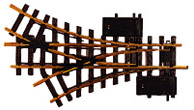
This is also the time of year that we order some new track for our Christmas train set. The train only comes out once a year — to the infinite delight of my boys (and, well, me too) — and each year Santa brings something new for the set. You probably see the problem with track though. It is tough to recall from the previous Christmas what new track we could use. And of course you want to get the order in early enough so that it will come in time for us to build something before Dec. 25. (See, Santa’s worked out this elaborate scheme whereby he enlists Kris Kringle to bring the track on St. Nicholas Day, Dec. 6. And we’re not even Dutch.) So, anyway, to get it ordered I’m forced to take it all out in the fall and do a mock-configuration only to put it all away again — to the infinite dismay of my boys (and, well, me too). This year we decided we were going to break out of our two-loop rut (one around the family room, one around the tree, switched together). Yes, this is the year we pound the spike into the Trans-Dining Room Railway. Problem is that the track is ridiculously expensive. Like the Electric Double-Slip Switch pictured here. That single piece of track will set you back over $100. I tell my wife the track is indestructible, veritable heirlooms for our kids and their kids. Not sure she buys that. (But I bought the switch.)
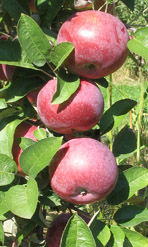
Fall is also for apples. Picking them from trees, that is. I suppose doing it for five years now makes it a mini-tradition. The kids love it because they get to wield ultra-dangerous picking implements that are crosses between rakes, jai-alai cestas, and Hannibal Lecter’s mask. Plus it is fun to eat stuff right off a tree. It must be especially unique for my city-boy children who think the rocky underside of an overturned piece of asphalt is “nature.” My wife always does wonders with the bushel or so of apples we bring home. Usually the apples end up in cake and pie, but this year we’re going to try something different. I recently dusted off my winemaking equipment last used about a decade ago. So we’re going to make hard cider or, if we can’t figure that out, at least apple wine. And with the cold winter a-comin’ we’ll probably be able to ice-distill applejack. This method of distillation without a still is reminiscent of jailhouse fermentation for alcoholics and it occupies an area of questionable legality. Which is of course why I’m interested. Updates on progress to come.

Lastly, fall is for football. Of course that’s not unique to Chicago in any way. Except that in the city the density of homes makes a Bears game a totally communal event. Sitting on my porch during a game I get 5.1 surround sound commentary issuing from homes up and down my street and the bar at the corner. You can actually follow the progress of the game just by listening to the shouts, claps, and “fucks!” reverberating up and down the street. It is a wonderful thing. Doesn’t hurt that the Bears are looking phenomenal this year. Grab a brat and say yeah!
TiVo the Tutor
My oldest son has taught himself to read. He takes every opportunity he can to sound out letters into words. Identifying road signs is a favorite pastime, though not without its hazards. Like yesterday when he sounded out the words “Road Closed” and let rip a bloodcurdling “No!” from his car seat that almost caused me to wreck.
But the best exercise he’s created for himself by far is to search for his favorite TV shows by spelling out their names in TiVo’s “Search by Title” feature. No one showed him how to do this; my wife and I rarely use Search by Title. TiVo is a perfect tutor, actually. He thinks of a show he likes — Hip Hop Harry, for example — then starts typing the letters he thinks make up the title. TiVo of course starts displaying what it thinks are matches which my son visually identifies. If he really screws up the spelling TiVo won’t show any matches and he’ll have to back up. And the reward for a correct spelling is that he gets to record his show. Positive reinforcement!
Gotta figure out how to get the microwave to teach him mathematics and we’ll be all set.
Mission Elapsed Time: 20:00:21:06:42:40

I went back through it this blog (and my Flickr account) on its 20th anniversary, retracing digital footprints made on what feels like a different planet. Here are some highlights.
The Terror Tourist
Explorations of place in horror fiction — real or imagined, geographical or psychological — culled from my time on The Heavy Leather Horror Show 2023-2026.
Subscribe to the podcast or the email newsletter or just read through the archives posted here.
The Ampcamper

How I hauled myself, two teens, an 80 lb dog, and a whole load of crap 4000+ miles across six states in twenty days using an electric vehicle. And survived to tell the tale.


