
When public data goes dark
Last week, I joined colleagues at Public Data Project from the Harvard Law School library and Paul Ford of Aboard for “When Public Data Goes Dark”, a conversation about public environmental data and the tools available for monitoring it. I had the pleasure of sharing the stage with Jack Cushman, Gretchen Gehrke, Alison Smart, Abby André, and Molly Hardy to discuss the importance of preservation and how emerging tools like AI can help us navigate and use existing data.
During the talk I mentioned Apex, the largest and second most complete Stegosaurus skeleton ever found. Billionaire Ken Griffin bought the fossil in 2024 for $44.6 million. He then loaned it to the American Museum of Natural History in NYC. It’s cool; you should see it.
The problem is that no paleontologist will touch it. It’s a beautiful specimen — but zero science is going to come from it. Why? Because the validity of any claims made based on this skeleton may not be verifiable in the future. Ken Griffin could at any point say “you know what, I’d rather that this beast live in my foyer” and it would be gone, effectively deleted as an object of scientific scrutiny.
The scientific method relies on verifiability. No scientist is going to invest the time and their reputation studying something against which their claims may be impossible to validate. So we can’t learn anything from this fossil. And that is a shame for the public, ultimately.
The same dynamic is at play with public environmental data. We used to take it for granted that the underlying data that earth science is based on would be available and accessible forever. We know now — perhaps we always sort of suspected — that this was wishful thinking. Just the knowledge that we could lose this resource has a chilling effect, throttling inquiry before it even begins.
But public environmental data is not a fossil. There is only one holotype for a dinosaur — and precious few skeletons per species. But data can be copied, mirrored, and otherwise carefully duplicated error-free. Safely preserving data through redundancy is absolutely foundational to the future of environmental science as a discipline. It isn’t about the data per se. It is about having trust in the perpetuity of the data.
The credibility of science — which means the degree to which we trust the underlying principles that give us airplanes and iPhones and life-saving drugs — is that we know that it can be proven or disproven, built upon or discarded at any point in the future. The future verifiability of data is critical to our trust in doing anything with that data.
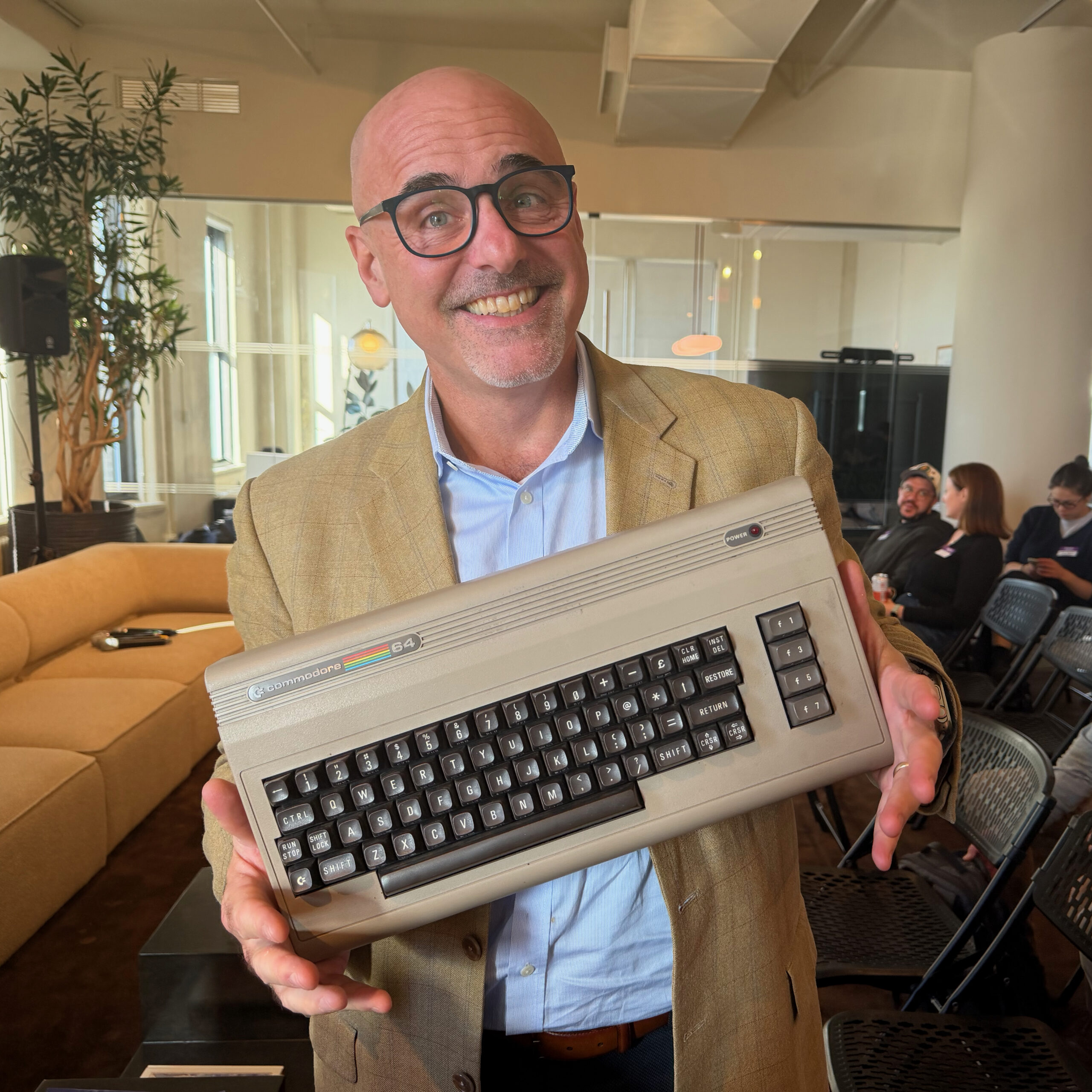
Speaking of fossils, here’s me and a Commodore 64 from the event. The C64 is the computer which started me on this path so many decades ago.
Mission Elapsed Time: 20:00:21:06:42:40

I went back through this blog (and my Flickr account) on its 20th anniversary, retracing digital footprints made on what feels like a different planet. Here are some highlights.
The Terror Tourist

Explorations of place in horror fiction — real or imagined, geographical or psychological — culled from my time on The Heavy Leather Horror Show 2023-2026.
Subscribe to the podcast or the email newsletter or just read through the archives posted here.
The Ampcamper

How I hauled myself, two teens, an 80 lb dog, and a whole load of crap 4000+ miles across six states in twenty days using an electric vehicle. And survived to tell the tale.


