
What about the aquarium?
It may sound crass with so much human misery around, but I ask for very human reasons. What is happening at the Aquarium of the Americas? Has it been breached? It is right at Canal St. and the river. There are some creatures in there that you very definitely do not want swimming through the flooded streets of New Orleans. I haven’t heard a word about it.
UPDATE: GC writes in with this story on the aquarium. It survived the hurricane proper, but there appears to be “some question” about its state right now. High water, fire, lawlessness, pestilence … we really don’t need unfed sharks in this equation.
Missing: WeiQun Wang
A colleague of mine in China has not heard from her brother-in-law in New Orleans since Monday morning. If anyone has any information on his whereabouts please contact me.
Name: WeiQun Wang
Date of Birth: 06/13/1968
Last contact time: 08/29 9:30AM
Location: Chemistry lab of Chemistry Department at University of New Orleans
I’m posting this information mostly just to get it indexed and Googleable.
UPDATE: WeiQun has been located and is safe in New Orleans. Phew!
Update from Baton Rouge
Jeff Greer provides a dispatch from the front lines of the medical response to the hurricane.
My parents live in Baton Rouge and were thankfully spared from the brunt of the storm. Most of Baton Rouge has power, but parts of the city are still without and many schools are closed. Phone lines and cellular systems remain congested and it has been difficult to get through.
At this point, BR has become the point of refuge. My father runs a medical clinic there and my mother is a nurse – they are now very much involved in relief efforts. As of last night a few hospitals were still operating in NO, but with the recent orders to evacuate NO things will most likely be changing. BR clinics and hospitals were planning to see as many patients as they could today and LSU has cancelled classes to help accommodate the influx of people who are able to make it there on their own or who have been evacuated from NO. As has been reported, things are incredibly chaotic and without access to working phones, organized communications are nearly impossible.
All facets of infrastructure are at (or have exceeded) their breaking points and I encourage all to donate to charity and/or other support organizations.
For additional information:
Baton Rouge Advocate
NO Times-Picayune
The scale of things
I’ve had a few moments of emotional perspective-shifting lately.
The first was Sunday as I stood in the throng of wetsuited, goggled 30-34 year-old men ready to begin the triathlon. As normal, adrenalin and fear were duking it out. My training was frequent but not for long durations and so I was more than normally worried about the race. As I stood there flirting with panic I heard a call from the back of the pack to make way. The physically-challenged athletes were set to go off in the wave before mine and they were making their way to the Swim In, as it is called. Amputees hopping, blind athletes being led, the “Paralympic hopefuls” lined up to begin. In a move that I can only applaud, the race organizers actually put the physically-challenged racers with the elite racers (not quite pro, but way better than the rest of us). Because, let’s face it, finishing a triathlon blind is fucking elite. Perspective shifted, I jumped in the lake invigorated.
Then today. As I noted in the previous post, my wife’s grandparents have most likely lost their house in coastal Mississippi. We were worried that they did not understand the severity of the storm. That is, until my wife’s grandfather, whose son died tragically in 1990, said this: “I lost my son and he cannot be replaced. Everything in Mississippi can be replaced.” OK, then. Family matters, stuff doesn’t. Move on.
Lastly, the whole “this is our tsunami” business. Katrina is a bitch, there is no doubt. My family is scattered throughout the south and their property is in various states of destroyed. But, people, it is not appropriate to compare this to the tsunami in southeast Asia. Tens of thousands of people died there. Let’s keep things in perspective. Tragedy is tragedy. Superlative comparison not needed. (Are you listening network TV?)
Clermont Harbor, Mississippi
My wife’s grandparents live in coastal Mississippi in a tiny town called Clermont Harbor. The eye of Hurricane Camille made landfall there in 1969 and didn’t leave much standing. Our grandparents successfully evacuated in advance of Katrina, but we’re worried for them. They are getting older and, having grown accustomed to evacuations from New Orleans and Mississippi, we fear that they don’t understand the severity of this latest storm. There are no reports from Clermont Harbor right now, but nearby Bay St. Louis is in tatters. The house we care about and which contains so many of my wife’s childhood memories is only a block from the water. Even if the house is still standing, the long-term disruption of our grandparents’ daily routine — such a sustaining force for them — is what will hurt the most.
We feel so helpless up here in Chicago.
Chicago Triathlon
Tomorrow I’ll join a few thousands others swimming, biking, and running in circles in downtown Chicago for the annual triathlon. It can’t be any worse than last year when I had a three hour wait between the closing of the transition area and when my wave jumped in the drink. And then, within a few minutes of the swim I got a goggle lens kicked out in the aquatic melee.
This year sponsor Accenture will be sending live racer telemetry to the web. Not just splits but actual map location data and (so they say) streaming video of finishes for every racer. This will be pretty cool, if it works. You can send basic text information to your phone too.
So if you have nothing better to do at 7:36 AM Central time on Sunday, scoot over to the real-time athlete tracking page. My bib number is 2510. Last year I finished 35 seconds shy of three hours. Here’s hoping I can at least do it with a minute to spare this year.
And if the map data doesn’t update after the swim portion would someone please call the Coast Guard?
More than marginally better
Quick housekeeping note. I’m no longer fetching the marginalia links sidebar via a third-party RSS reformater. Instead, the front page now pulls straight from my del.icio.us account. Del.icio.us calls these Linkrolls and they are mighty speedy. Recommended.
One big ass text file
Recently I successfully migrated most of my personal information apps (calendar, mail, addresses) to a new system. The only thing the new setup lacked was a way to keep track of the hundreds of scraps of information (password, registration codes, etc.) that I had previously kept in Outlook’s cumbersome Notes. Like the other aspects of my personal info I wanted local access with complete online redundancy. Nothing seemed to fit the bill. Then I came across this post at 43 Folders describing über-geeks who actually put all their information into a single, gigantic text file. I laughed at this as completely impractical and moved on.
But I kept thinking about it, specifically about the actual difference between hundreds of tiny files and one huge file. In both cases search is the only practical way to find anything. But a single file reduces redundancy to the act of merely uploading the file ocassionally. And ASCII is the ultimate cross-platform, app-neutral, read-anywhere format. As long as you have a good text editor, you’ll be fine. But even if you don’t you can always at least open the file and roam around. Call it the toilet paper roll method of info management.
Mark thinks Tinderbox is a better solution. I’ll give that a spin when the Windows version is released. But, for now, my life happens inside a single unnavigable-except-for-search text file. Restaurant notes, aborted blog posts, credit card info, SMTP server information from seven years ago, words I like, a Blackjack cheat sheet, domains I’d like to own one day, hundreds of pairs of login info, and on and on. It is stranegly comforting to know that it is all in there, including stuff I will never see again because I don’t know the keywords for it. But it is there.
Three things I did yesterday
(1) Had a 30 minute discussion on what designing a website for a user characterized as a “tattletale” would entail. (Not to be confused with a “gossip,” which was also a user profile we had to deal with.) I’ve never thought so much about the concept of the tattletale in my life. Basically this person has information, must convey it, and must convey it to someone of higher status for personal gain. Try designing a website for that.
(2) The Tolva family challenged the City of Chicago and won. Don’t tell us we left “materials/junk” in the alley, goddamnit. Turns out they had the right address, wrong street. Sometimes I marvel that this city doesn’t sink back into the swamp it emerged from.
(3) I took my oldest son to see Star Wars in Grant Park with a few thousand other residents. I had forgotten how much fun it was to watch movies with large audiences. Hell yes I’m going to cheer when Han knocks off the tie fighters at the end! Might even high five a stranger!
Sweet language
I met Rabbi Marvin Hier, founder of the Simon Wiesenthal Center in Los Angeles, last week. He was describing the new Museum of Tolerance to be built in Jerusalem. It is, in part, a learning center and so in describing the philosophy behind the center’s outreach he used an analogy from a tradition in teaching the Hebrew alphabet. When first encountering the alphabet Jewish children have a drop of honey placed on their tongue as they pronounce the first letter, the aleph. This is meant to equate learning — perhaps language too — with sweetness.
Honey on the Aleph. This I like a lot.
Mission Elapsed Time: 20:00:21:06:42:40

I went back through it this blog (and my Flickr account) on its 20th anniversary, retracing digital footprints made on what feels like a different planet. Here are some highlights.
The Terror Tourist
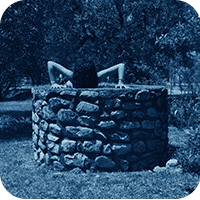
A roughly monthly exploration of places in horror fiction — real or imagined, geographical or psychological — culled from The Heavy Leather Horror Show.
Subscribe to the podcast or the email newsletter or just read through the archives posted here.
The Ampcamper

How I hauled myself, two teens, an 80 lb dog, and a whole load of crap 4000+ miles across six states in twenty days using an electric vehicle. And survived to tell the tale.


