
Occultation in Texas
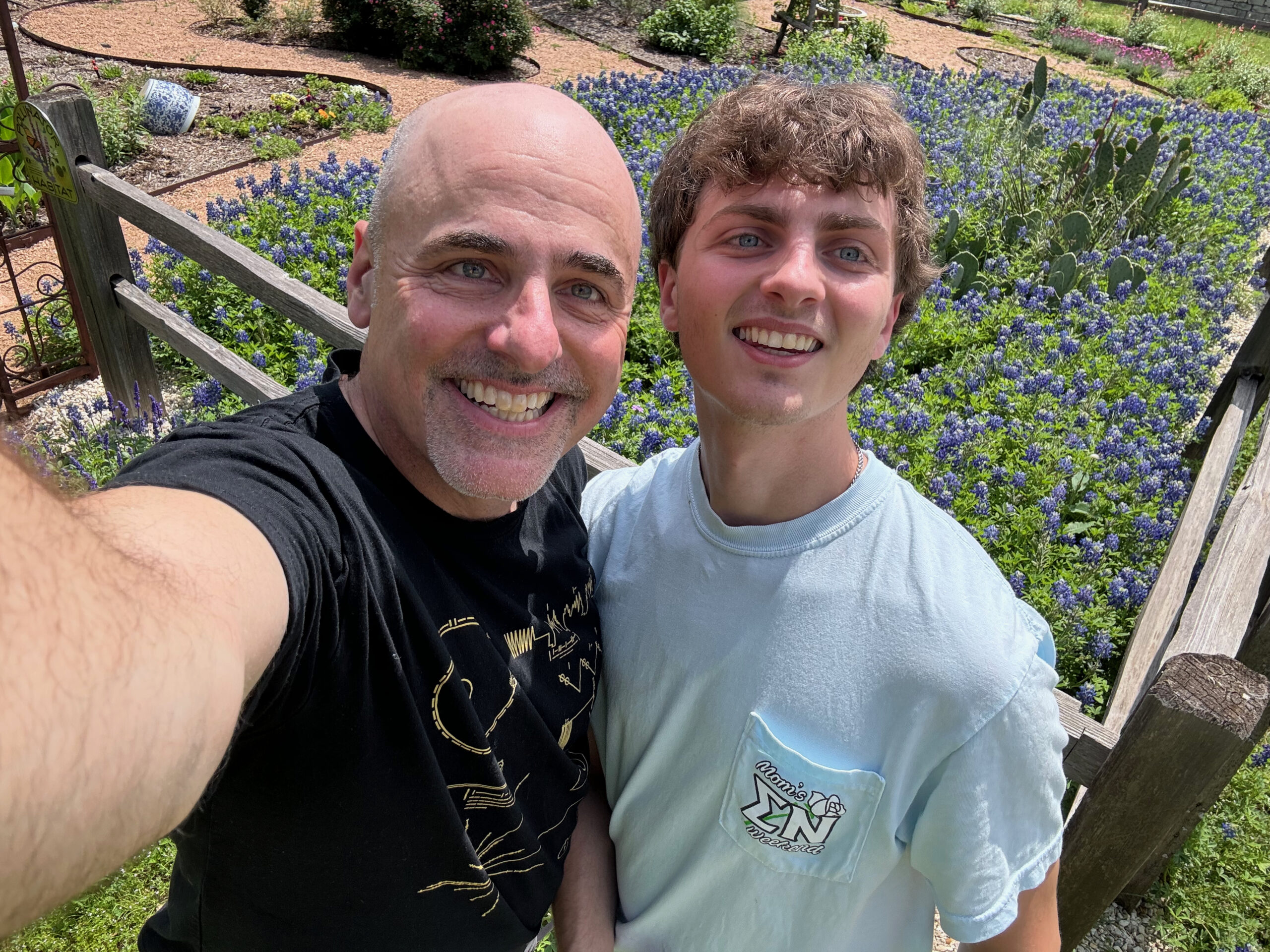
My son and I intercepted the total solar eclipse on April 8. It was even more remarkable — larger, darker, spookier — than the only other we’ve seen in Wyoming in 2017.
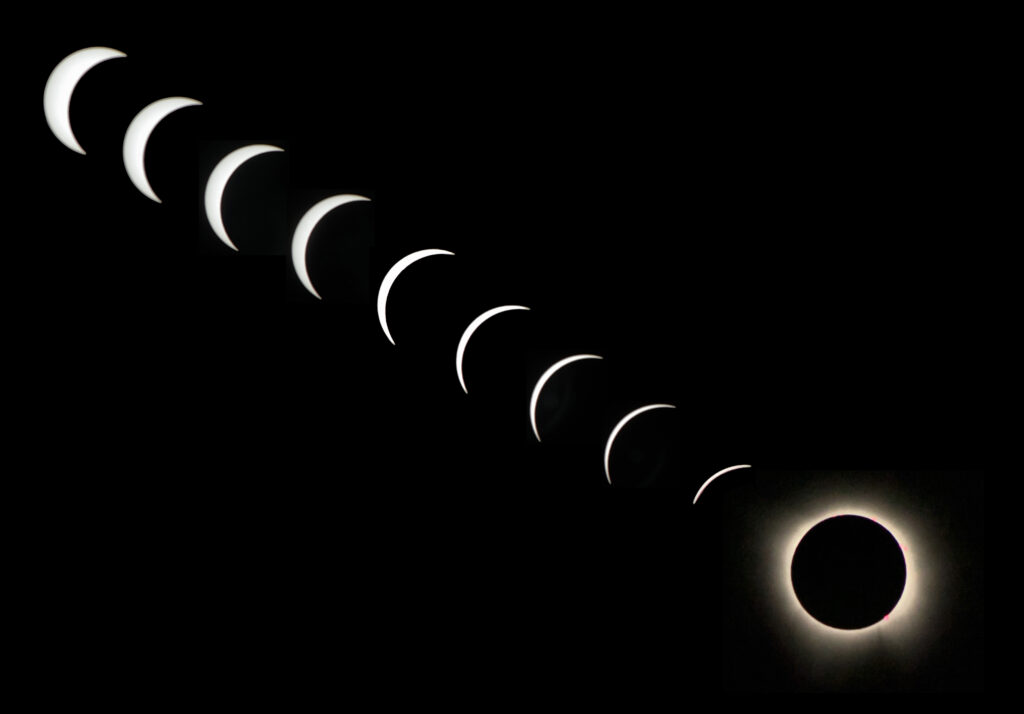
We were relatively unprepared for the one seven years ago (eye protection, yes; ways to capture the experience, not really). But since then — and with the help of an annular eclipse dry run last October — we were ready this time. We knew we wanted to be as near the centerline as possible but with the ability to call a cloud cover audible if needed.
On the morning of the eclipse we headed south from Fort Worth, Texas to a small town called Hillsboro (excuse me, Eclipseboro) but upon arrival determined the clouds were too risky. So we motored northwest, giving up about a minute of totality for what we hoped were clearer skies. Destination: Glen Rose. We found a public park on a branch of the Paluxy River right in town and set up shop.
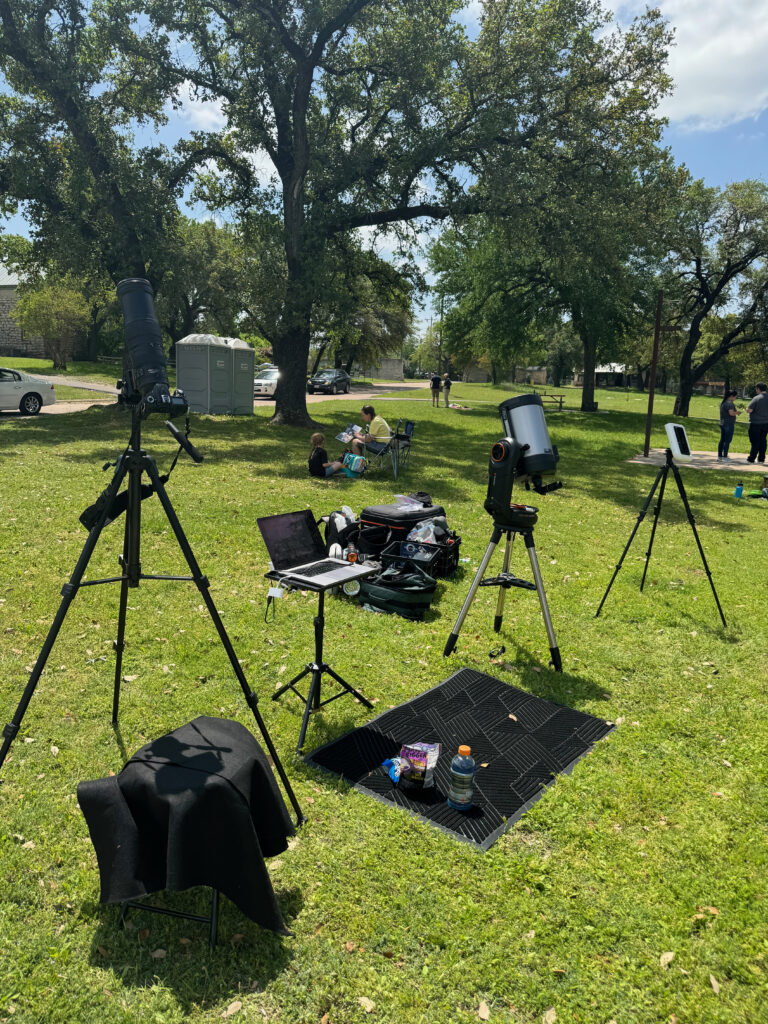
We had three viewing rigs:
- Nikon D90 dSLR + Nikkor zoom lens (AF-S 200-500mm f/5.6E ED VR) + Haida solar filter. This was controlled via USB connected to a MacBook running AstroDSLR, mostly to relieve the tedium and distraction of snapping lots of photos during totality but also to avoid slightly jiggling the rig with a button press on the camera body.
- Celestron NexStar Evolution 8″ telescope + solar filter. I never did turn tracking on as the sun was fairly easy to spot. I probably should have enabled it though. (Next time!)
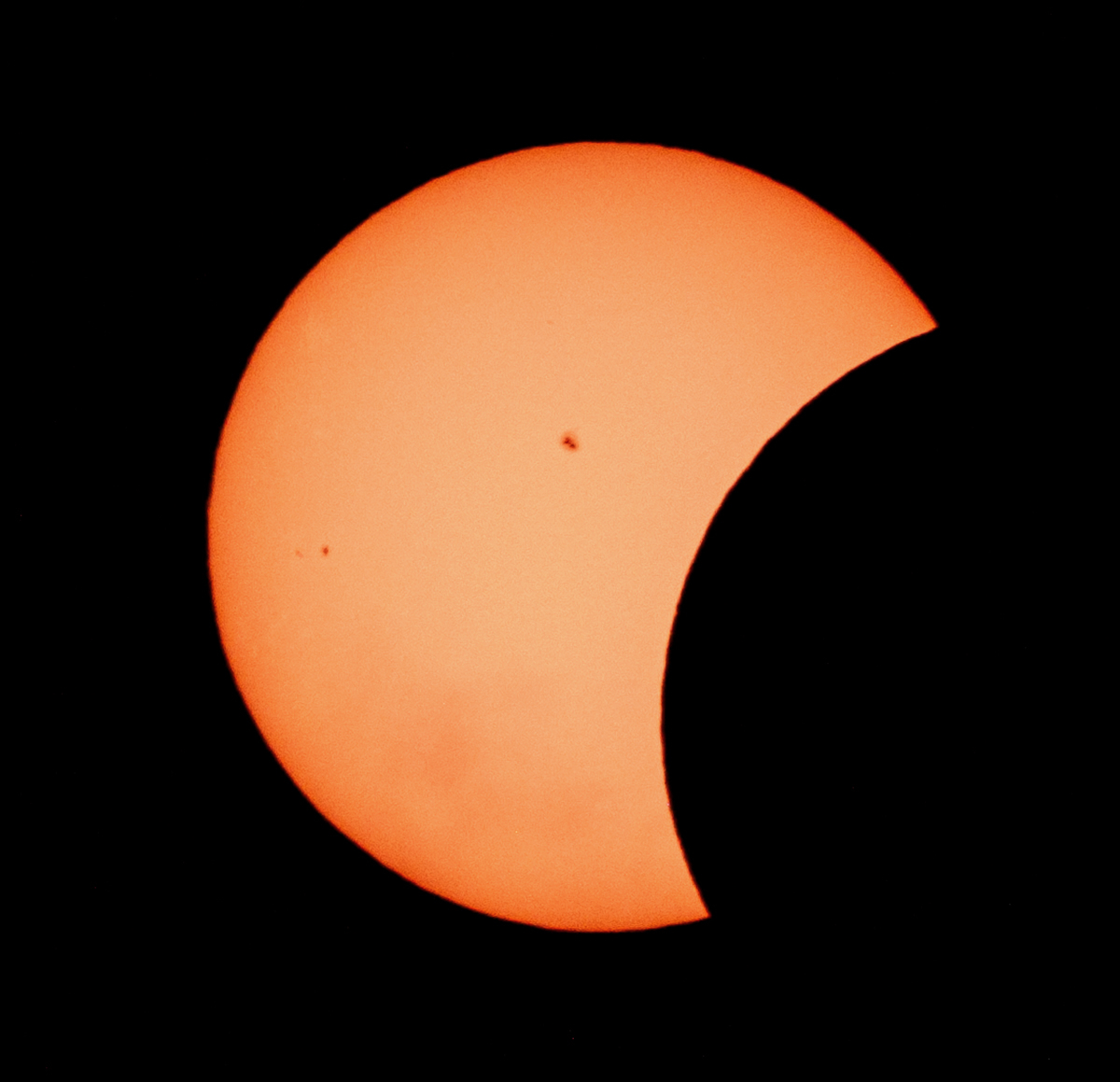
- The new Vaonis Hestia mount for iPhone. This small white box held the phone in place over its magnifying ocular (with solar filter) allowing photography and on-device processing in real time. I used an iPhone 15 Pro Max. It captured remarkably good photos, such as the composite above.
Having done this a few times by this point I was looking forward to the mix of normal people just out to have their minds blown (often with small children) and giant astronomy nerds ready to shout “first contact!” and similar at every moment of the event. I suppose there are other types of people who show up for eclipses — astrology zealots, doomsday cultists, daytime-curious vampires — though none did where we watched unfortunately.
The moments approaching totality were especially surreal as the day, which normally darkens from a fixed point on the western horizon, got shimmeringly dark from everywhere at once. Light through leaves and colander holes reminded us that our celestial flashlight was no longer circular. We peered through obsidian glass (supposedly used by ancient Mayans to view eclipses, which they accurately predicted). While the obsidian monocle seemed just as dark/protective as our ISO-certified glasses in hindsight maybe I should have verified that.
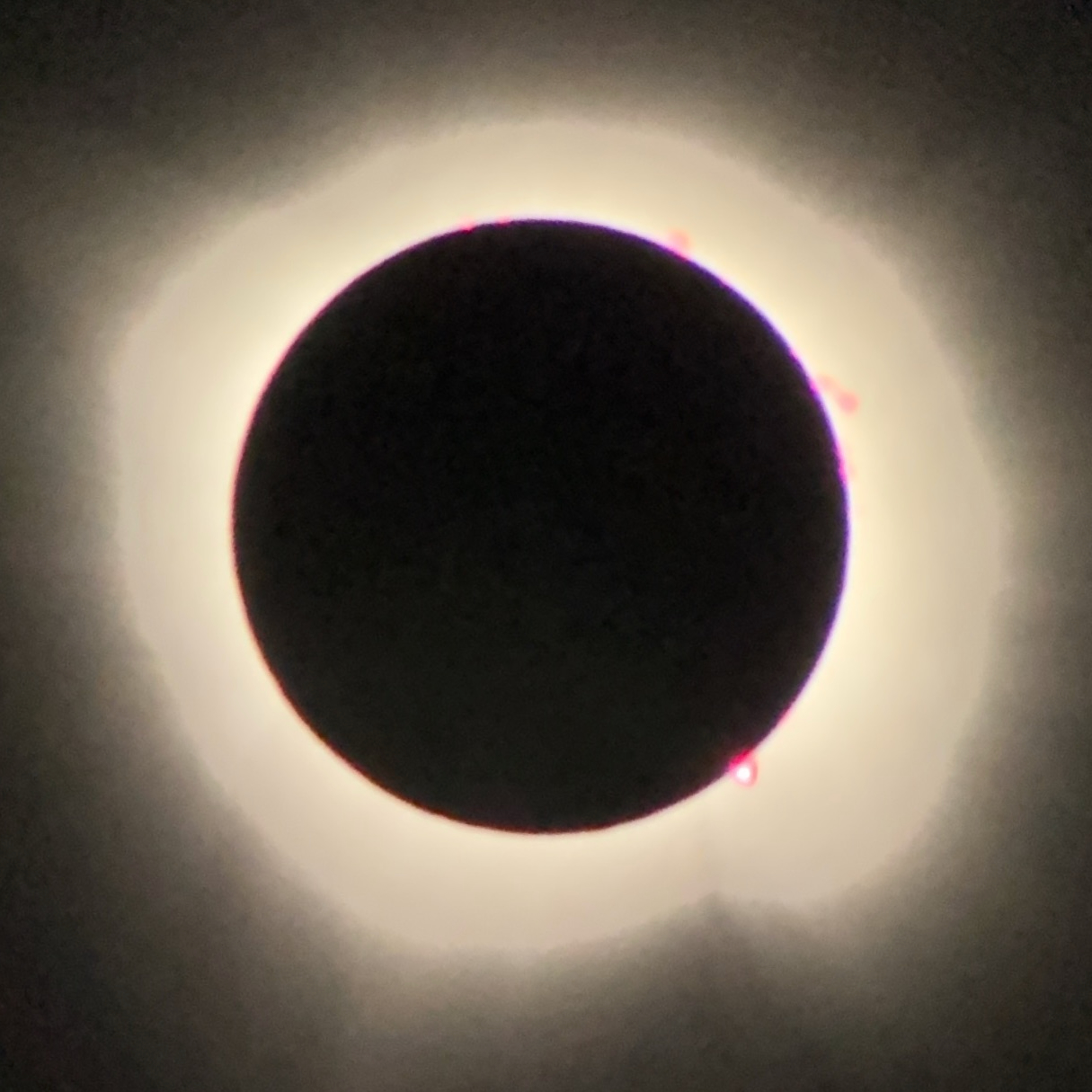
And then it went dark and the protective eyewear finally came off. I’m sure I could look it up to confirm or deny, but it felt like the sun-moon duo was closer in space to us than in 2017 because that scary black hole in the sky looked much bigger. Loopy prominences licked around the edge of the disc while we stared up slack-jawed for both the longest and shortest three minutes and fifteen seconds of our earthbound existence. I couldn’t help but think about how terrifying it all would have seemed for pre-scientific peoples viewing a total solar eclipse. A few minutes of inexplicable darkness and then … right back to normal. (A Navajo friend of mine noted that his people do not view the eclipse as a matter of respect. Tradition holds that it is a time of intimacy between the sun and the moon. Voyeurism is impolite.)
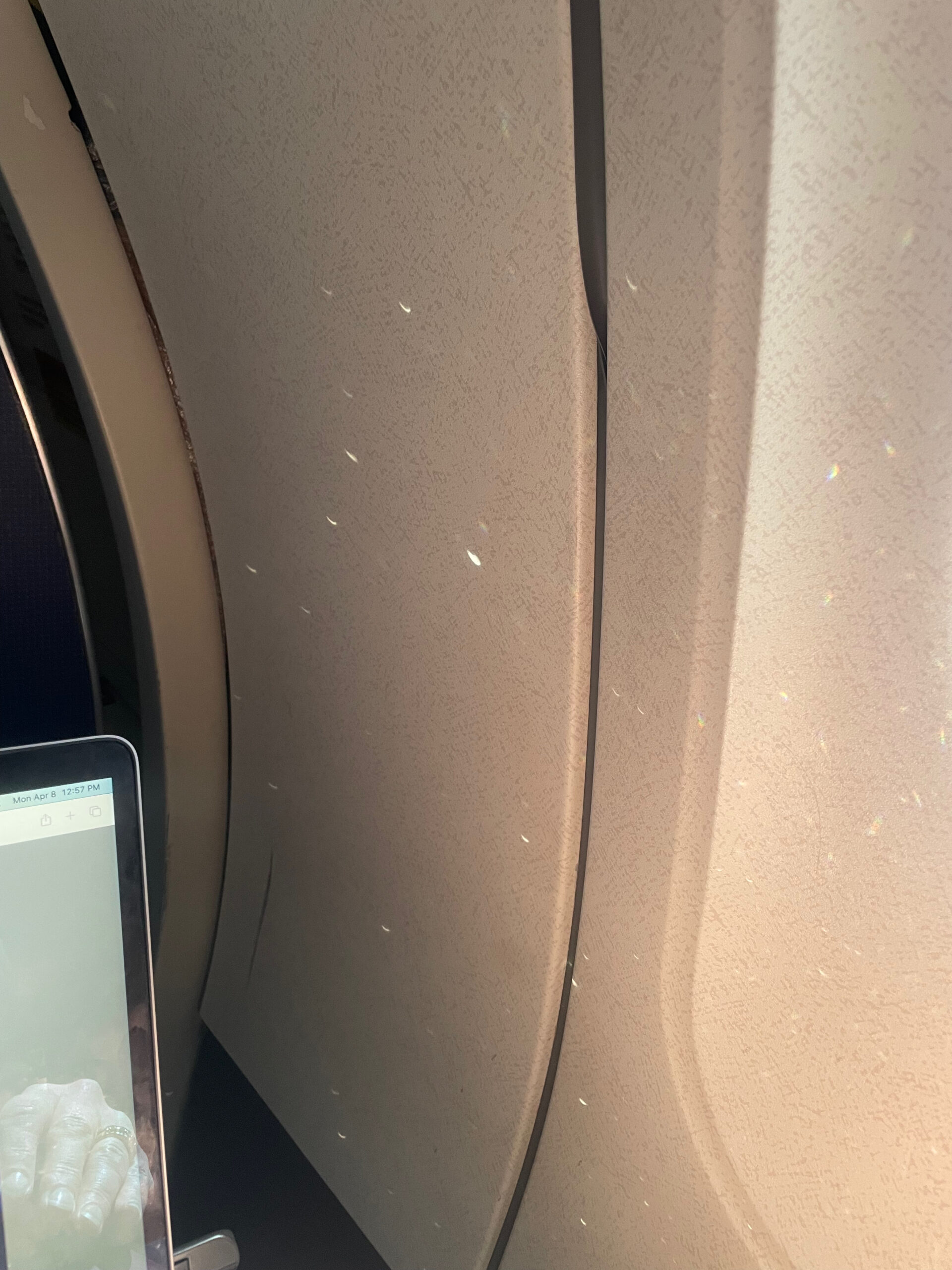
While we were dumbstruck in Texas (and as my other son was preparing for the umbra hurtling away from us and towards him in Vermont at 2,000 MPH) my wife was on an airplane over Ohio. She noticed little crescent-shaped sparkles on the cabin wall next to her window seat. This disco ball effect was caused by reflections from the partially-eclipsed sun glinting off her wedding ring! As my wife was the only person in her section who brought eclipse glasses, she eventually had the whole cabin at her seat staring at our moon nudging in front of our star.
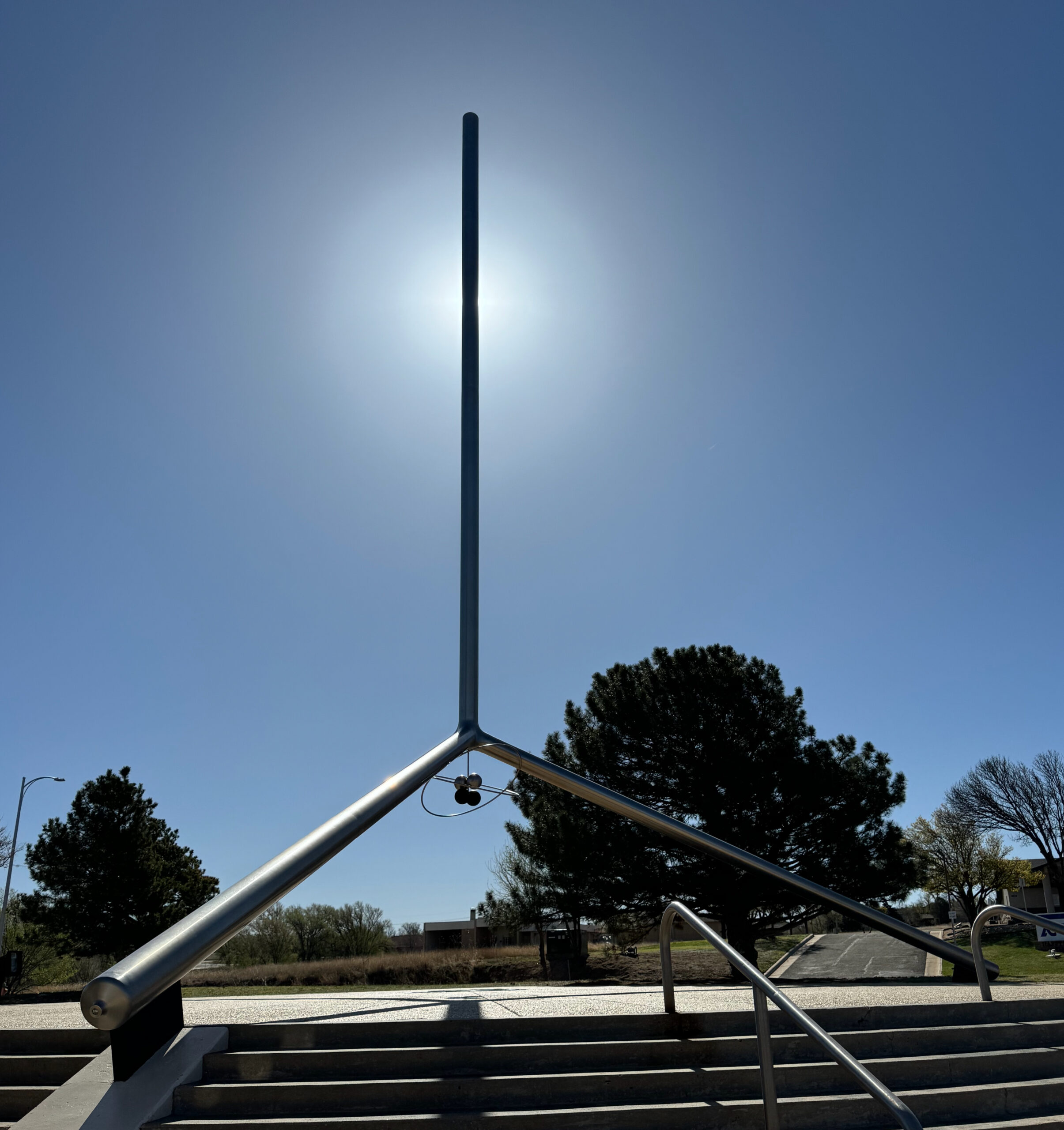
On the drive down from Denver I learned quite by chance that helium is so named because its presence was spectroscopically determined during an 1868 eclipse in India. The chance part of my learning this was due to my stopping at the Helium Time Columns Monument time capsule in Amarillo, Texas — former site of our nation’s strategic helium reserve. Even though helium is the second most abundant element in the universe, those dirigibles and zeppelins weren’t gonna inflate (or blow up) themselves. So America stockpiled.
But back to Glen Rose. Other than being in the crosshairs of totality, this pretty little town is the jumping off point for two related points of extreme cognitive dissonance.
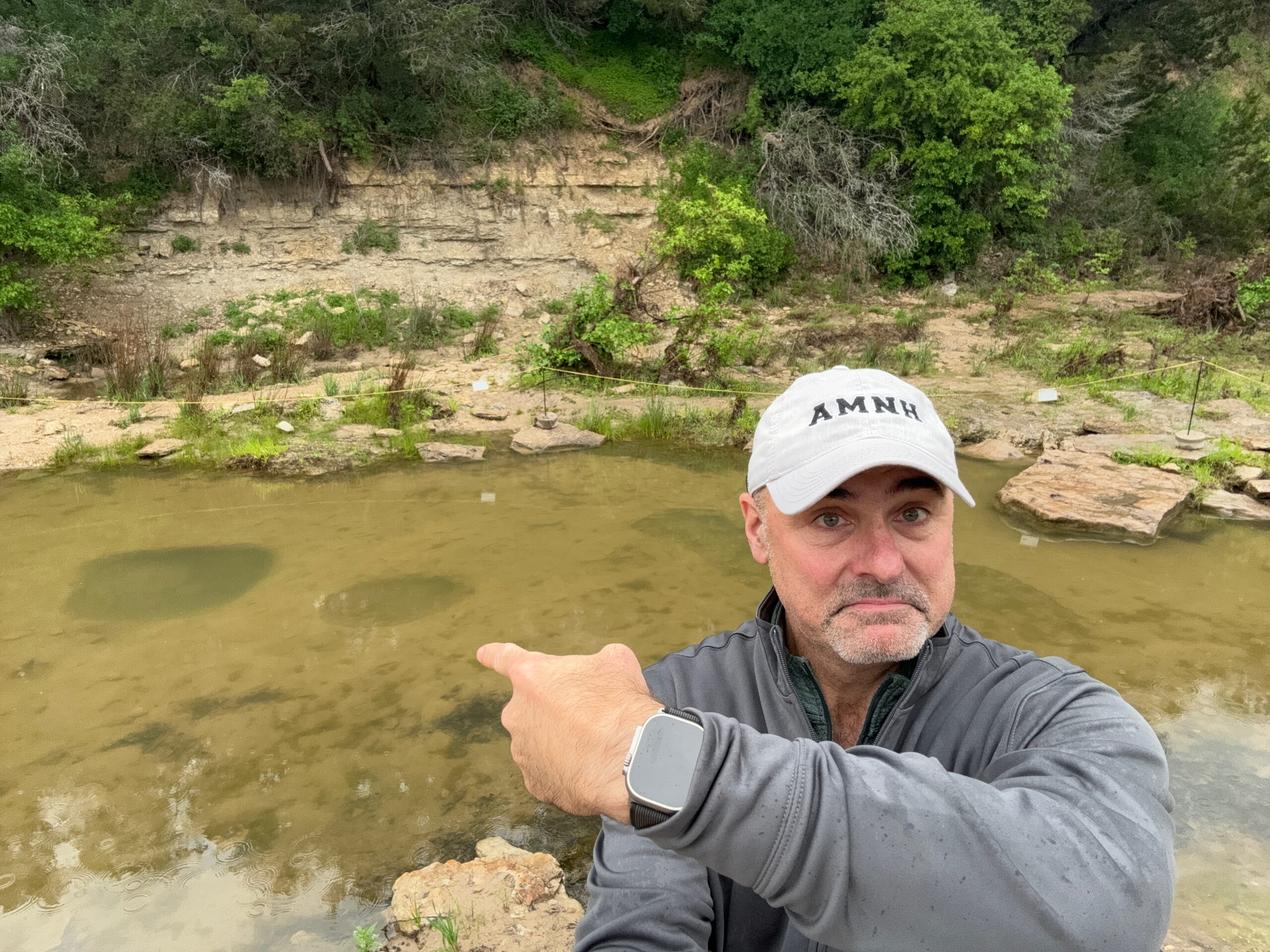
The Paluxy River flows right through town and into Dinosaur Valley State Park, where over the last millions of years it has eroded various types of rock to expose Early Cretaceous dinosaur tracks of both sauropods and theropods. The fun thing about these trace fossils is that they exist almost exclusively in the flowing riverbed itself. You gotta wade if you wanna nerd up. Often because of high water the tracks are not visible at all. But on my visit they were on full display. It was rainy and wet (obviously) which gave the expedition a slight air of danger but the park is well-signposted and easily accessible. Plus, with water continuing to erode the riverbed, this priceless evidence of dinosaur behavior is slowly being erased. Catch them while you can. (Or go see this entire section that was lifted out and sent to the American Museum of Natural History in NYC.)
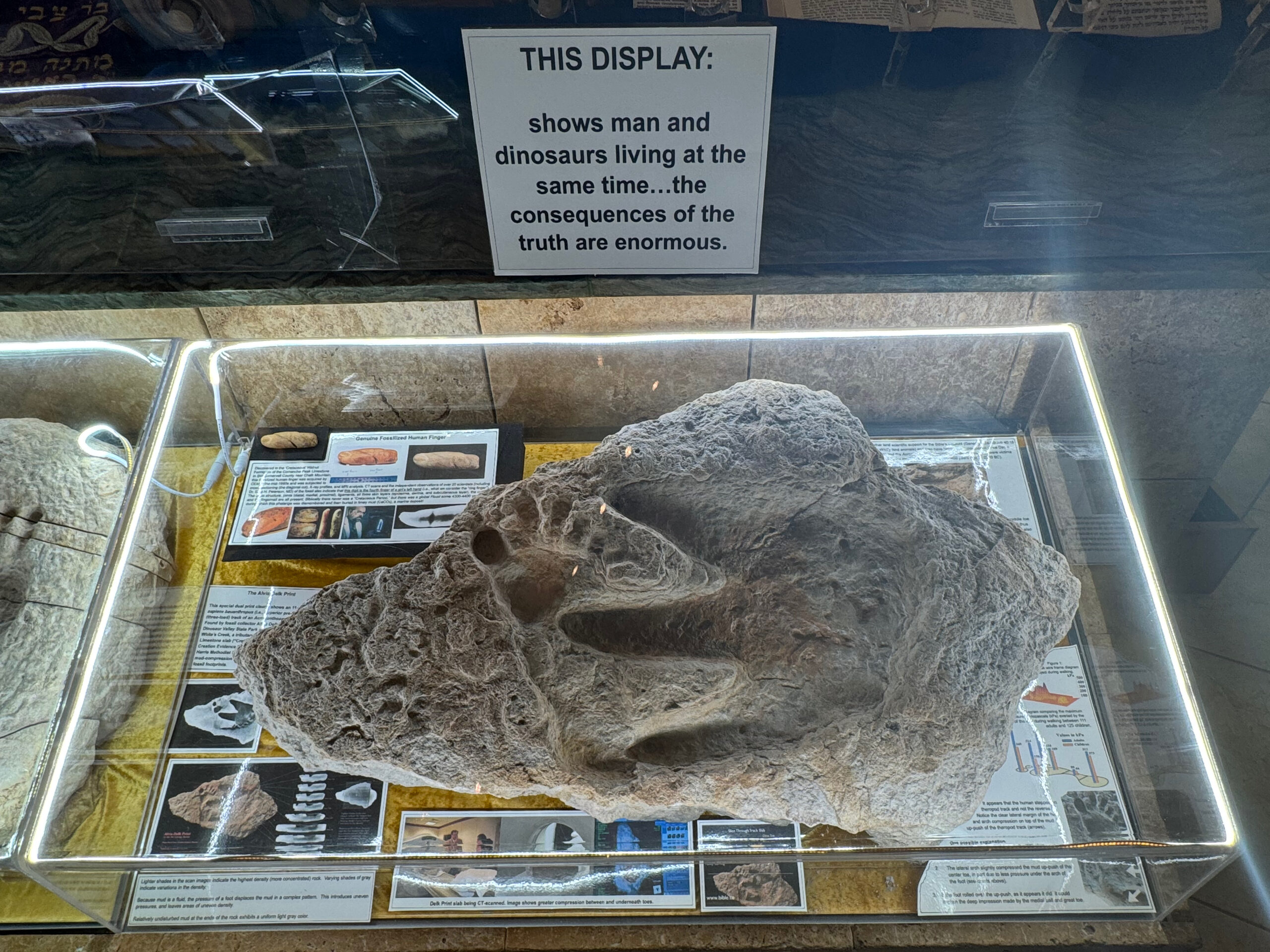
But scientific artifacts are not the only thing this river has gurgled up. Glen Rose is also home to the Creation Evidence Museum where tracks lifted from the Paluxy are purported to prove that humans lived side-by-side with dinosaurs, Flintstones-style, which of course thus proves biblical creationism, an earth only 6000 years old, and other utter fictions. The contortions this museum wriggles itself into to prove that the fossil record synchs with the bible are comical: mapping geological epochs to precise days of biblical flood, building a model of an ark complete with holding zones for Tyrannosaurus rex (seems unwise, Noah), and a giant hyperbaric chamber meant to recreate conditions for bringing non-avian dinosaurs back to life. What.
The centerpiece of the museum are tracks that show impressions of human footprints next to or overlaid on dinosaur tracks. Most of the footprints are deliberate fakes created to sell during the Great Depression but the urge to validate an already-held belief can be powerful and sometimes you build an entire fantasyland around that. Of course, there’s margin for error in all paleontological and geological time estimates but being off by 100 million years is, you know, well outside that margin. We actually find evidence of ancient peoples next to dinosaur tracks all the time. They were as fascinated by fossils as modern humans are, but that doesn’t mean that humans rode Velociraptors bare-back.
It was difficult to maintain a straight face in this place, I admit. The cartoonishly white-coated and goggled “scientists” running around a lab full of seemingly legit equipment (what exactly were they testing?); the bus full of home-schooled kids, grist for the generational conspiracy theorist pipeline; the non sequitur side exhibit on the moon landing (presented as real, not a conspiracy — possibly meant to allay fears that the curators are complete crackpots). An entire universe of fallacy meant to make people feel good about not questioning their faith.
We don’t still believe eclipses are a dragon eating the sun, or celestial gods at war, or even a moment of intimacy (the Navajo offer this respect out of cultural tradition). Science advances because we constantly question it. It’s how we discover helium. It’s how we verify Einstein’s General Theory of Relativity. It’s how we know exactly where to stand in a beautiful little town in Texas to view a rare astronomical event. So, thank you, science. And thank you Creation Evidence Museum, for the concise if troubling example of what happens when you want to be comfortable in belief rather than disquieted by truth. Go see the next total solar eclipse, friends. (Or better yet, go see the 2027 eclipse over the pyramids of Egypt!).
Itinerary footnote: this journey included a few other stops related to dinosaurs and crazy right-wingers: An easy hike to the KT boundary in Trinidad Lake State Park (lots of shocked quartz layers from the meteor impact that ended the reign of the dinosaurs 66 million years ago); the excellent dinosaur trackways of Clayton Lake State Park in New Mexico, where tracks became visible when a reservoir spillway was constructed decades ago; and Bishop Castle, the monomaniacal building project of a father-son duo in rural Colorado that is what happens when someone really loves the garden gnome aesthetic and spatial logic of M.C. Escher while also hating workplace safety and all forms of government.
The Ghosts of Colorado
The Terror Tourist is my occasional segment on the Heavy Leather Horror Show, a weekly podcast about all things horror out of Salem, Massachusetts. (Segment begins at 12:12, but you’ll enjoy the whole thing!) These segments are also available as an email newsletter. Sign up here, if interested.
Hail and well met, travelers! I am your guide, your troubadour of horror, for The Terror Tourist — an itinerary of dark destinations, a travelogue of dread, a must-see list of ghastly locales worldwide. Each episode we’ll explore a new place — real or imagined, geographical or psychological. With these surveys of the macabre as inspiration I encourage you to strike out and blaze your own trail through the darkness!
Today our journey takes us through the state of Colorado, a rectangle of diverse vertical and horizontal lands in the Mountain West of the United States. While your association between Colorado and horror may begin and end with the music of John Denver, I assure it is so much worse. Let’s go for a hike!
Millions of years before it was known as Colorado this land was covered by a great inland seaway plied by the most terrifying creatures ever to make water their home. Take Xiphactinus, the 24’ long angular death machine the inside of whose serrated maw would be the first you ever saw of it and the last sight of your sorry life. Or the fierce mosasaur, a 50’ long monstrosity whose thirds were essentially giant crocodile, whale, and eel — and which even the largest sharks gave a wide berth. None of these creatures survived the meteor impact of 66 million years ago, you may be grateful to know, but their fossilized skeletons — and teeth, so many shed teeth! — form a rich, literal foundation of terror beneath your hiking boots in this land we now call Colorado.
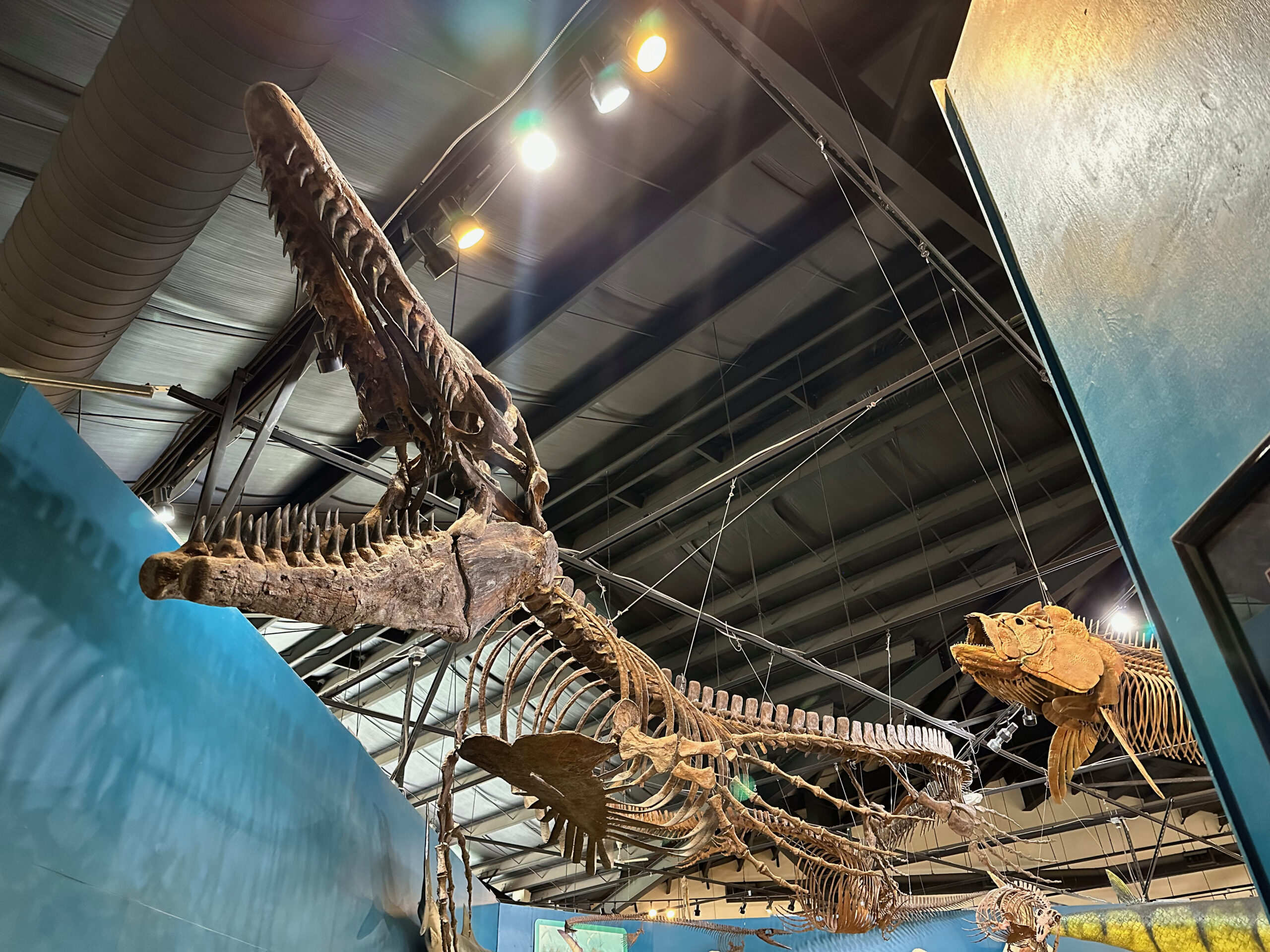
Mosasaur and Xiphactinus, Dinosaur Resource Center, Woodland Park, CO
You might have noticed the signpost at the trailhead for all the supernatural destinations upcoming. We’ll get there soon enough, but, sadly, there are plenty of waypoints of real life horror I want to note here for your future exploration:
In the 19th century colonizing settlers waged a genocidal campaign against the native inhabitants of the lands here, culminating in the atrocity known today as the Sand Creek Massacre. I will not provide detail except to say 1) This slaughter was actually praised in histories and monuments as an act of near-inevitable nation-building until shockingly recently and 2) The belief in Manifest Destiny has justified more horrific acts than the sum of every movie this podcast has or ever will review. (As an optional detour, I point you to the film Blood Quantum, which centers the Native American experience during a zombie apocalypse. Though set in Canada rather than Colorado it is a most creative reimagining of the concept of an Indian reservation.)
You’re not cold are you? You did dress in layers for this hike, right? See, it’s not just human behavior to fear here. The state itself seems to have it out for you. The most 14,000 foot-plus mountains in the continental US of course delivers brutal cold, blinding snowstorms, avalanches, piercing winds, and deliriously low levels of oxygen at altitude. Oh it’s also super dry, so you’ll dehydrate if all the other things don’t get you first.
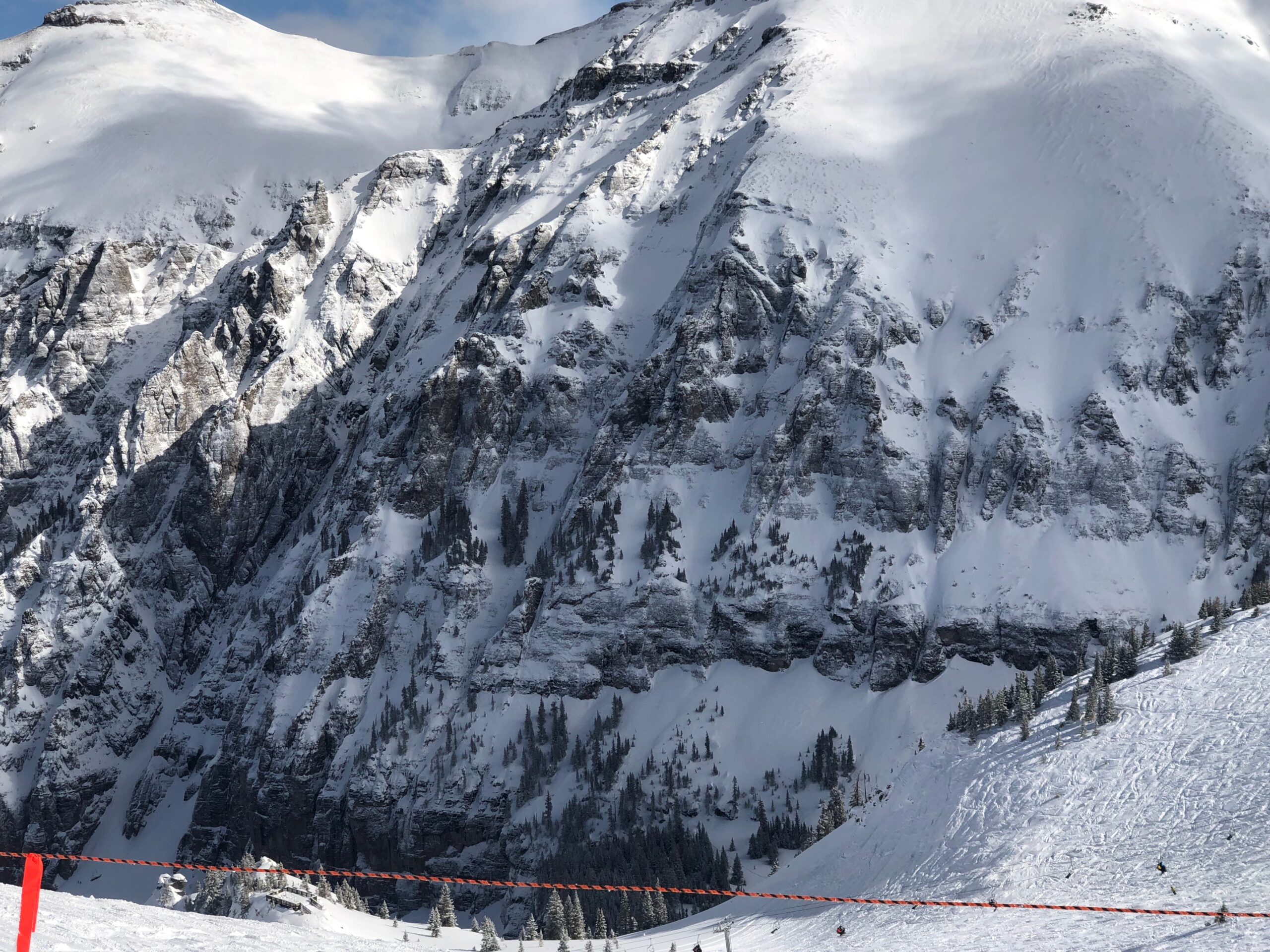
The sheer mountain faces of Telluride, Colorado
Did you hear that? That rustling in the underbrush? Don’t panic. Apex predators have mostly been sacrificed at the altar of industrialized agriculture, but we do have bears (no grizzlies though!) and just recently the gray wolf was reintroduced as an experiment in ecological rebalancing. Moose and elk can kill you by sheer size, but they don’t necessarily want to kill you. Actually moose might. The tip here is to walk noisily. Most animals don’t want anything to do with you … unless you sneak up on ‘em and they get startled.
You may think we’re hiking through the middle of nowhere. But a lot of these places were once raucous somewheres. Only to eventually become ghost towns. Hundreds of ghost towns, from piles of rubble barely discernible in the brush to actual towns full of rotting structures seemingly frozen in time, dot the landscape. Of course ghost towns are spooky, full of memory and loss — ready set-pieces for tales of actual ghosts. Surprisingly few films to my knowledge have actually used these locales at least in Colorado.
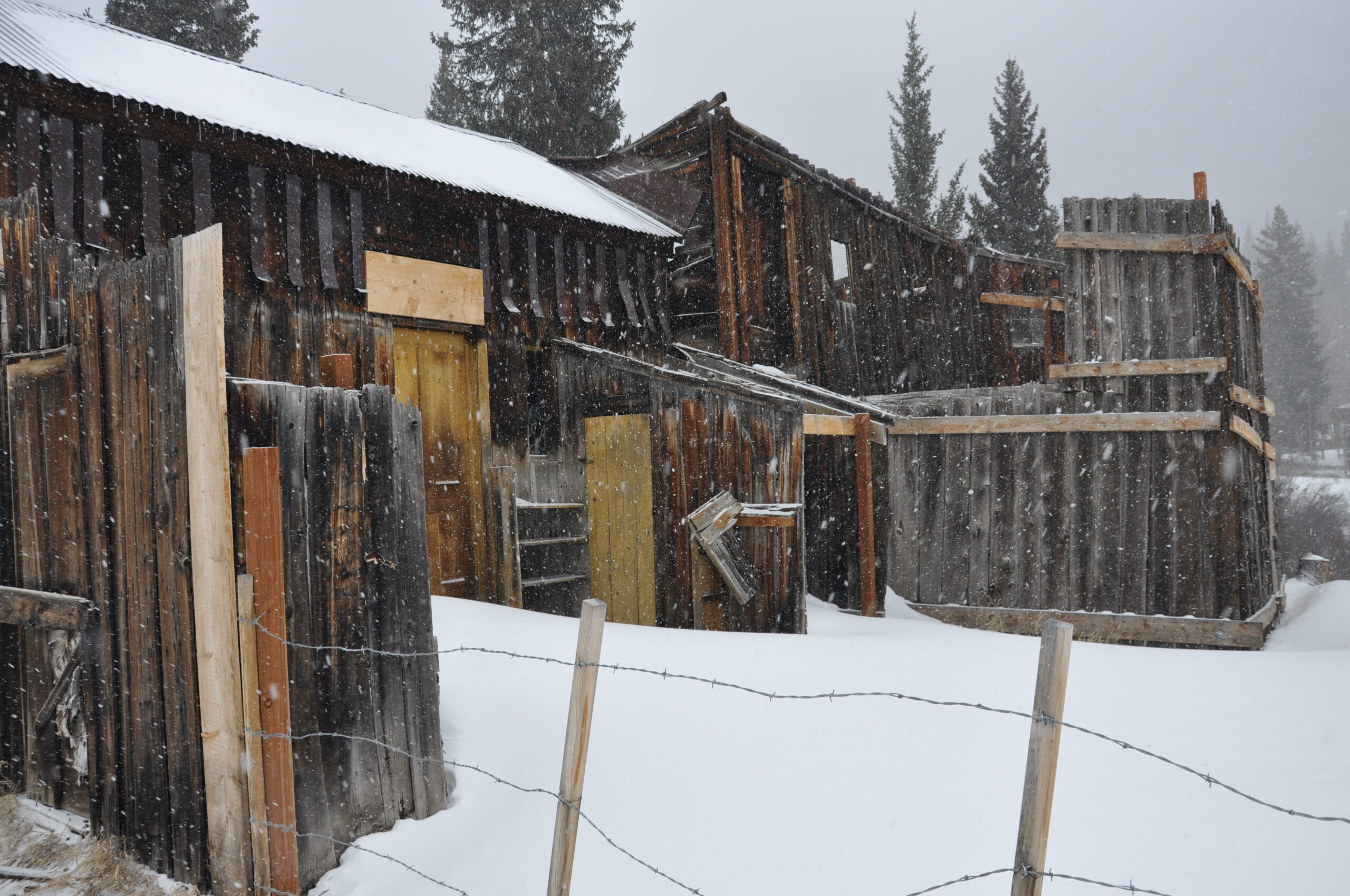
The ghost town of St. Elmo, Colorado
For me, what’s more interesting to ponder is why these booming burgs went bust. Usually it’s some sort of sudden resource scarcity — like the gold veins went dry, or the silver market crashed — or a technological change — a new rail line bypasses the town or a new road with a better grade makes it easier to get someplace else. The idea of these places grimy with miners, entrepreneurs, charlatans, prostitutes and barkeepers one day — and then nothing virtually overnight is the real scare for me. Our market economy is a cheery midwife and a merciless executioner.
There are two can’t miss destinations coming up before our journey ends.
Let’s walk back in time to the mid 19th century on the outskirts of the booming new city of Denver. About 160 acres of land is set aside as Mount Prospect Cemetery just southeast of the central business district and what would become the state capitol. And just as Denver is swelling with people coming to the Rockies looking for gold, silver, and a new life, the city cemetery is swelling with those who instead found disease, bullets to the head, and death. By 1898 there are about 5,000 bodies in the dirt here, but times are changing in urban design and this is era of the City Beautiful movement where parks, leafy boulevards, and neoclassical design are all the rage in proving that your city is to be taken seriously. So Denver wants to turn the cemetery — no longer on the outskirts of the growing city — into a beautiful new park. Surely you see where this hike is headed, fellow traveler.
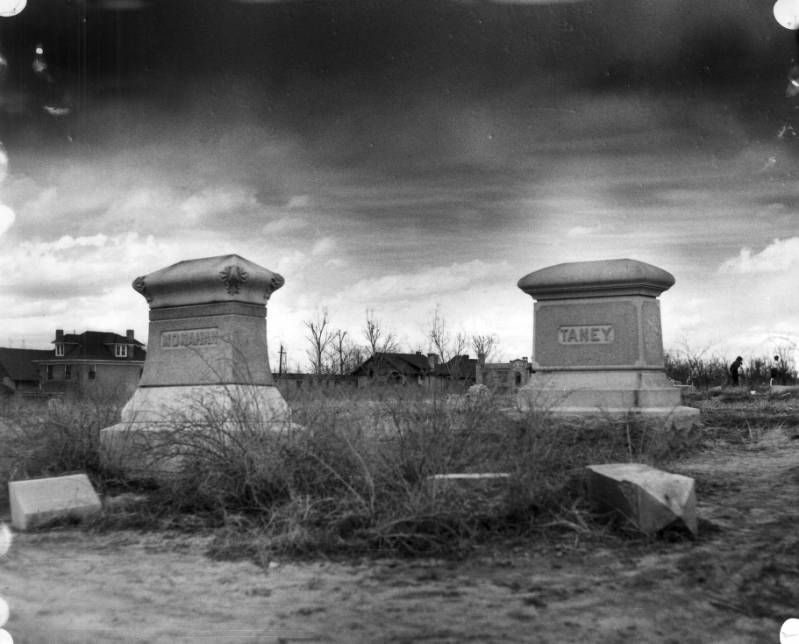
Photo: Denver Public Library
The city undertook the task of moving the 5,000 graves, but the effort was bungled from the start. The movers were paid by the coffin so enterprising gravediggers would dismember corpses and shuffle parts into smaller, more numerous child-sized boxes. When the city discovered this, they dismissed the whole crew and admitted they were out of money to move the remaining 2,000 bodies. The city gave family members a few weeks to claim bodies, but as many of these graves were of the indigent and unclaimed victims of crime, few people came forward. So, the park conversion continued, bodies still in the ground. (Sidenote: the segregated far southwest of the cemetery filled with the corpses of Chinese immigrants who came to help build the transcontinental railroad was dutifully disinterred by the small Chinese community here and all bodies shipped back to China.)
Walk with me over here and, if our location and the angle of the sun is right, you can still make out divots in the rolling hills of the park where the graves have ever-so-slightly subsided. Every day, not two blocks from my house people lounge and dogs run about oblivious to the corpses beneath the picnic blankets and volleyball nets. Part of the former cemetery, now called Cheesman Park, was given over to create the Denver Botanic Gardens whose construction expansions over the years continue to unearth graves and corpses — most recently in 2022. Ghost stories in this park, unsurprisingly, are plentiful. I’m willing to believe.
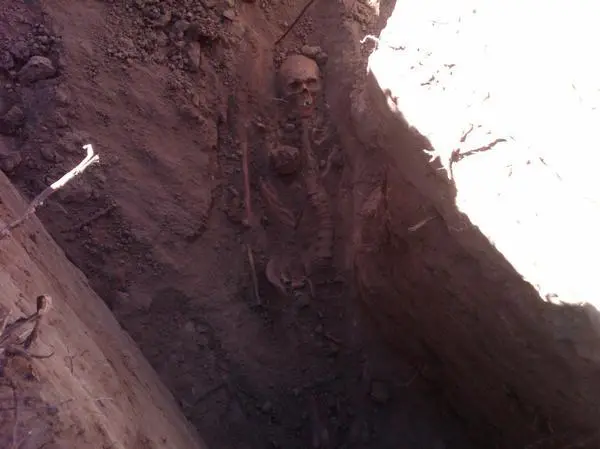
Photo: Denver Post, “Four preserved skeletons unearthed at Denver’s Cheesman Park, once a cemetery“, 2010
There’s an unsubstantiated rumor that the unmoved graves and subsequent development of this park was an inspiration for Poltergeist. Who knows? What is substantiated is the story behind the 1980 film The Changeling, which takes place in a mansion that directly sat on Cheesman Park. Starring George C. Scott trying his hardest not to be irascible, this classic haunted house film was inspired by a story written by a composer named Russell Hunter who was renting the Henry Treat Rogers House in 1968. His recounting is nearly identical to the story in the film: bouncing balls in hallways, a sealed-over door leading to a hidden room, the discovery of a diary from a person locked away from public view, a psychic medium, and ultimately the revelation of the child-swap. The Denver Public Library has tried to verify any part of this tale — to no avail. But it made its way to film and a great one at that! The mansion was demolished in the 70s for a sad high-rise condominium building. Poltergeist and The Changeling — this park has something for everyone, I tell you!
The final stop on our hike brings us to the unavoidable importance of Colorado to Stephen King’s and Stanley Kubrick’s very separate masterpieces called The Shining. Up in the mountains here in a small town called Estes Park is a gorgeous old hotel called The Stanley. Originally created as a retreat for wealthy Easterners suffering tuberculosis and other ailments, the hotel eventually became a high-end stopover for tourists on their way to Rocky Mountain National Park, established in 1915. Given the massive amounts of snow at elevation the hotel was only open in the summer months (until 1983). But back in 1974 the author Stephen King, coincidentally, happened to book a room at the Stanley the day before it was being shuttered for the winter. He roamed the halls of the near-desolate hotel, had a drink at the bar with a bartender named Grady, and spent the night in room 217. The rest is mostly history, though of note to those who know the sizable differences between the book and the film, The Stanley did actually partially explode in 1911 due to a gas build-up. Clearly King learned this during his stay, providing him with the novel’s conclusion.
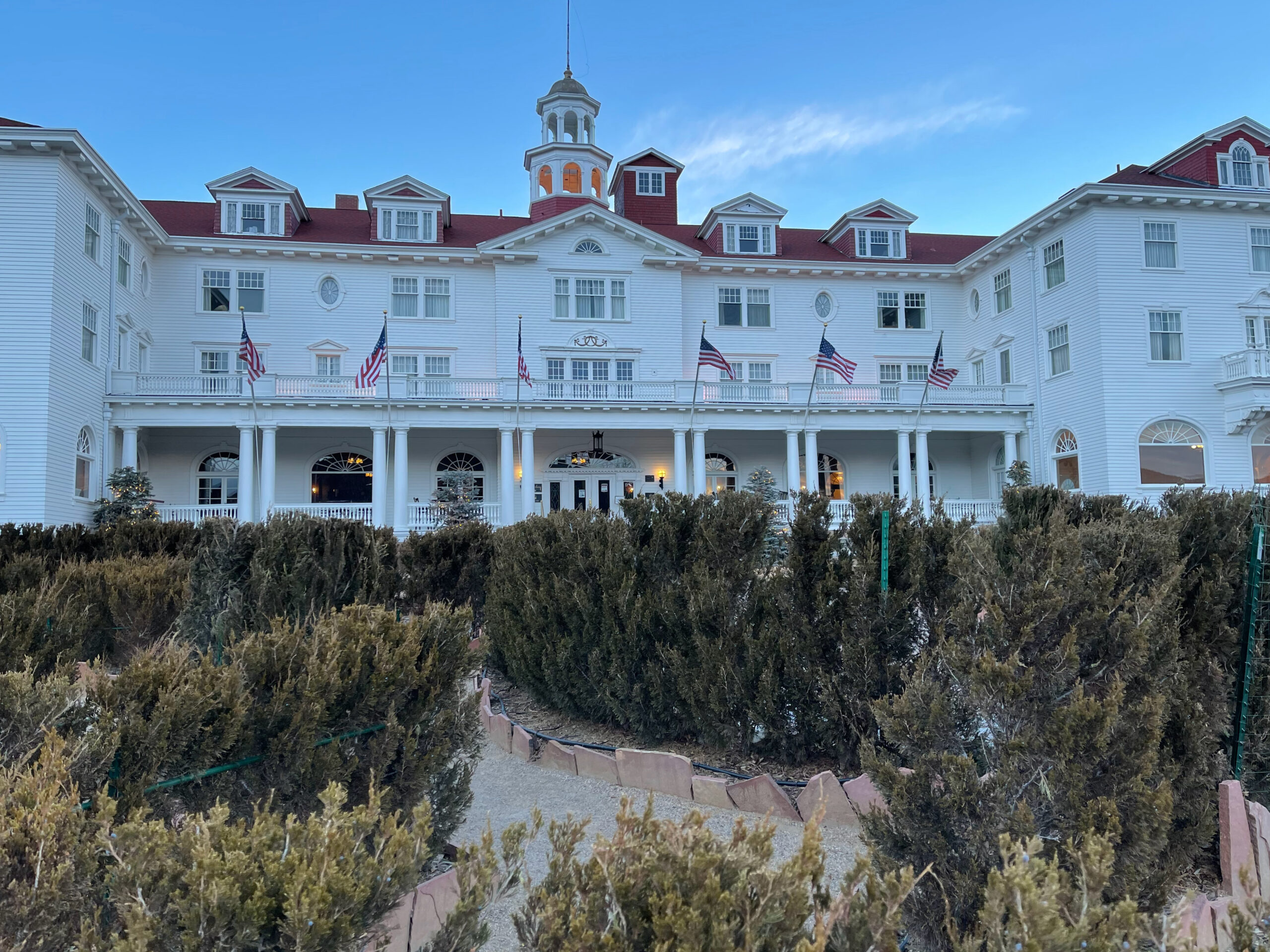
The Stanley Hotel, Estes Park, Colorado
The hotel itself is in no way scary. I’ve stayed there several times and it is just a beautiful, Federalist-style set of buildings that seem more at home on the east coast than the mountain west. If you’ve seen the terrible 1997 miniseries of The Shining directed by King (or the 1994 film Dumb and Dumber) then you have seen The Stanley. No hedge row labyrinth, no art deco ballroom, really nothing but the original bar that evokes dread. For decades the ownership of the hotel shied away from its associations with the book and film, especially since none of the latter was filmed there. But eventually they came to embrace the notoriety, planting their own very short hedge maze, offering Shining tours, and even now throwing an annual Shining Ball (which my wife and I have attended). But hotel management is all in now: in a partnership with the horror film production company Blumhouse the hotel is building out a 80,000 square foot film center and museum devoted to horror cinema. It should be open in a few years. I want to work there.
As for the other Stanley, Kubrick, he didn’t have much use for Colorado in his film. Not only was it not filmed here but even the one location-specific reference in the film — the story of the Donner Party that Jack recounts to his family on the ride up to the hotel — takes place in California. There’s a brief establishing shot outside the Torrance’s Boulder apartment — still there looking the same right next to the University of Colorado — but that’s it!
As terror tourists, however, you will likely care to know that Kubrick did use much of the mountain west as inspiration. He cribbed the design of the lobby and Native American iconography from the Ahwahnee Hotel in Yosemite National Park in California (for real, like down to the location of individual light fixtures), gathered exterior shots from the Timberline Lodge atop Mount Hood in Oregon, filmed the opening title sequence at Going-To-The-Sun Road in Montana’s Glacier National Park, and maybe even stole the red bathroom from the Biltmore Hotel outside Scottsdale in Arizona. That said, 98% of the film was shot on a soundstage at Elstree Studios north of London.
This is where I leave you to hike on your own, listeners. There are plenty of other sights for you to explore of course. I’ll note the excellent The Black Phone from 2021, set in 1970s Denver, the Day of the Dead remake from 2008 which isn’t awful, and the unrated Snowbeast from 1977 set in Crested Butte, Colorado. This film is awful in the very best way possible. I highly recommend it.
Good luck on your travels. Remember to hydrate and stay wary!
A full list of the movies mentioned above can be found at Letterboxd. Find out where to watch there.