
Maybe Shark
Prefer to listen to this post? (It’s really me, not AI!)
Greetings, travelers! Grab a towel, maybe a snorkel too. This week we’re returning to a destination you may recall from last year’s itinerary called Doom Shanty — the horrors of the underwater world. But as seasoned visitors on this second trip we’re focusing on a specific threat. This death from below is almost as old as natural threats get. It was swimming in the waters of our planet before the land had trees. I speak, of course, of the diverse group of apex predators we call sharks. On this 50th anniversary of Jaws, a movie which changed movie-going and some people’s views of the ocean forever, let’s look at the evolution of sharks as the thing we fear in movies in a segment called Maybe Shark (doo doo doo-doo doo-doo).
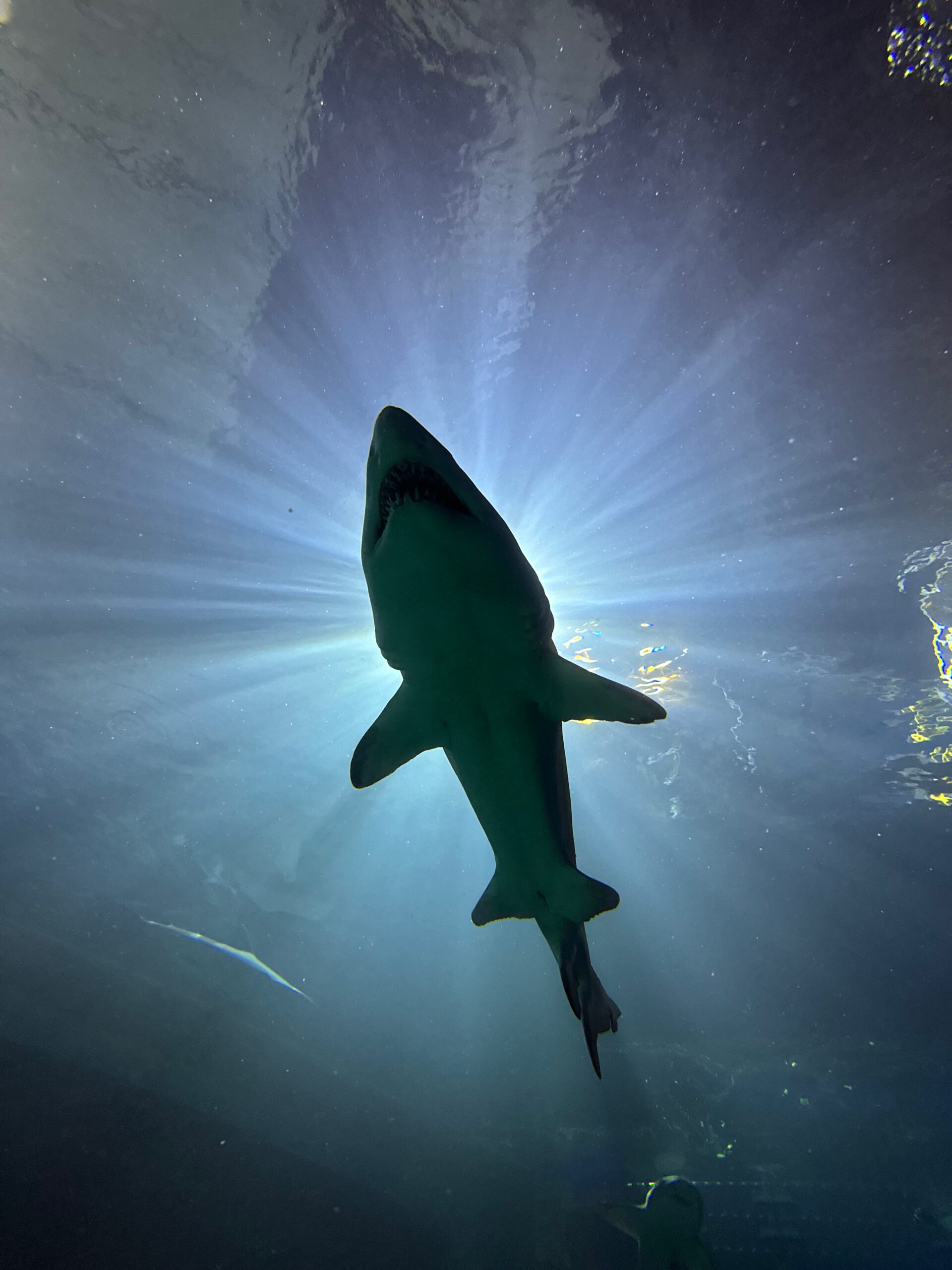
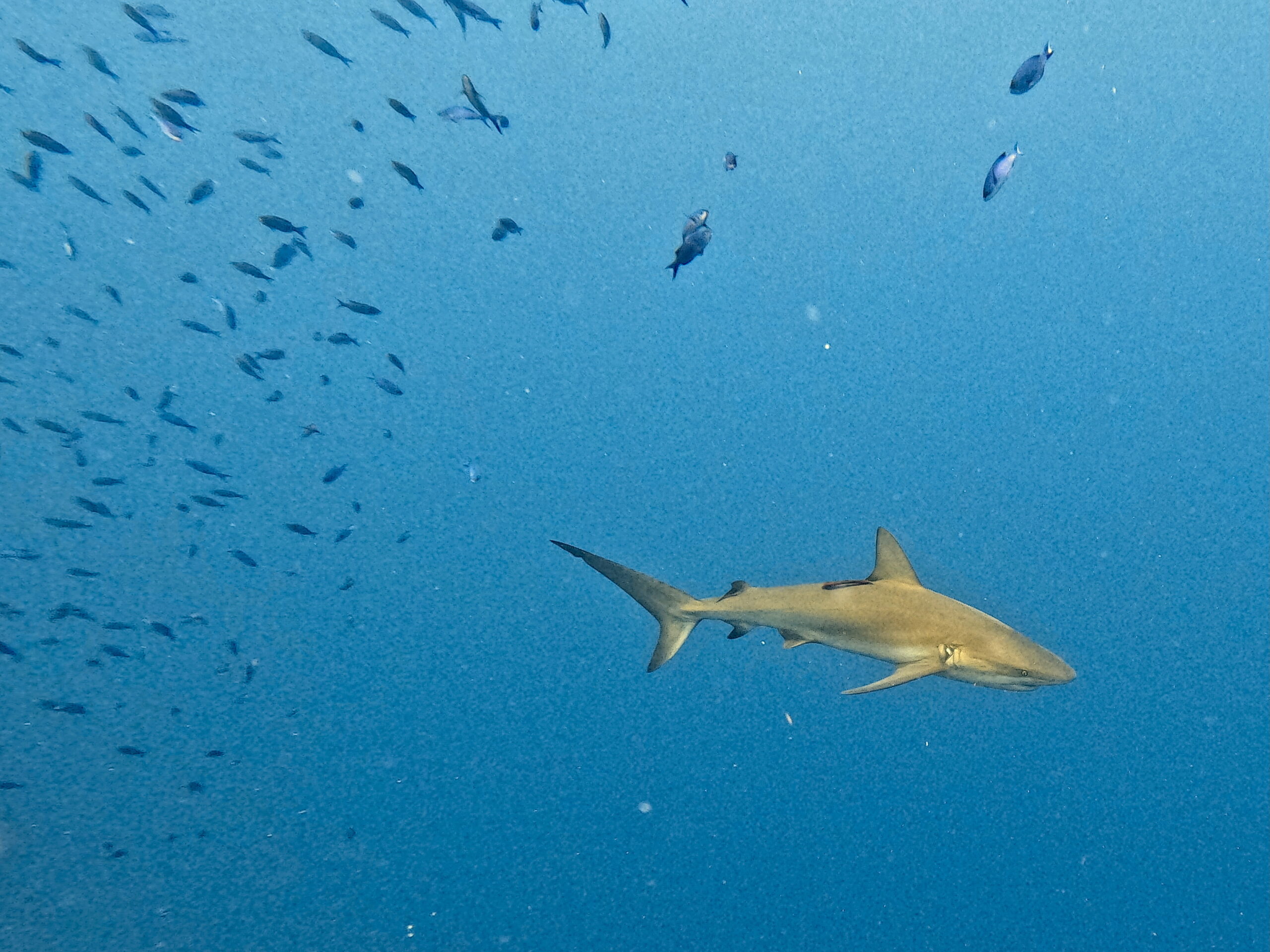
Sharks have been around for almost half a billion years. As reference Homo sapiens — modern humans — have been around a short 300,000 years. Sharks are really good at what they do, which is almost constantly eating, sometimes reproducing, and mostly not being killed by other hungry things in the ocean. This is why they are sometimes called nature’s perfect creatures. And yet, to call sharks’ evolution perfect is to presume some sort of direction towards perfection. This is a mistake, as evolution has no direction — it’s just a series of random genetic fuck-ups that sometimes yield cool new ways of not dying. Sharks have been remarkably successful in adapting to changing conditions — everything from competition for food to global extinction events.
And what accounts for this success? Let’s drop below the waves in this sturdy cage and have a closer look. Sharks are fish, but importantly — and weirdly — they are mostly boneless. Their body structure is kept relatively rigid by tissues made of cartilage (what human ears and nose tips are made of). Being boneless makes sharks more buoyant. Lucky for us, even this cartilage fossilizes to some degree which is how we know anything at all about the most ancient sharks. The skin of a shark is composed of thousands of tiny teeth-like structures called dermal denticles, which is why it feels like sandpaper. Put another way, sharks are literally covered nose to tail in teeth.
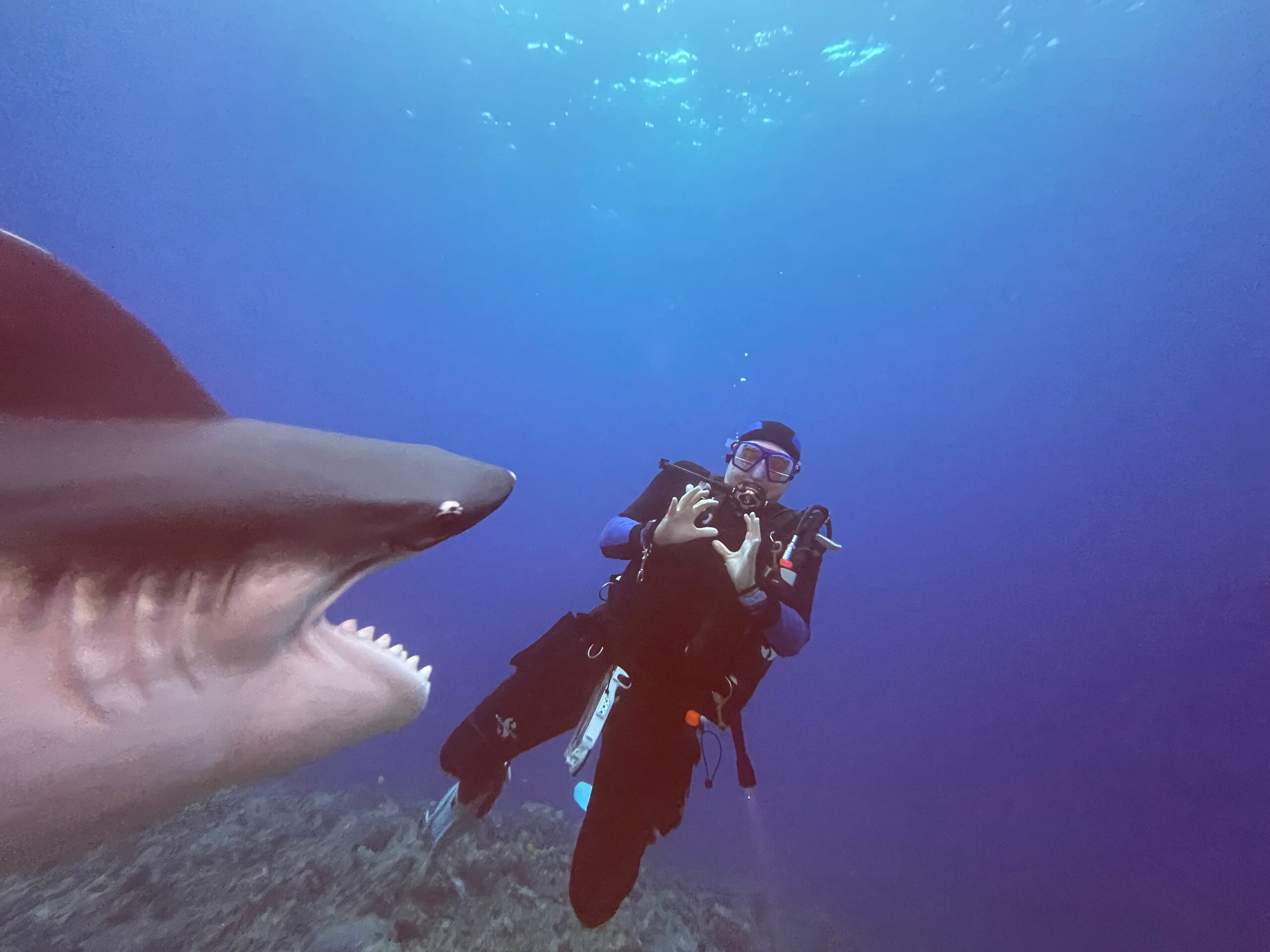
Sharks have phenomenal eyesight and an extraordinary sense of smell (they can detect odor molecules in dilutions as low as ten parts per billion). But sharks have a literal sixth sense too — they can detect electrical impulses in the water. Organs with the badass name of the Ampullae of Lorenzini form a network of mucus-filled pores that are both electroreceptors and magnetoreceptors. Why is this interesting? These ampullae are so sensitive that they can detect the electrical stimuli from the muscle contractions of potential prey. Too dark to see that tasty seal in the water column? No problem, sharks can feel their victims’ electrical presence. It’s almost magical. Having organic magnets is useful too. And this is why sharks can migrate ridiculously long routes around the planet without problem. The ampullae of Lorenzini are a built-in GPS system.
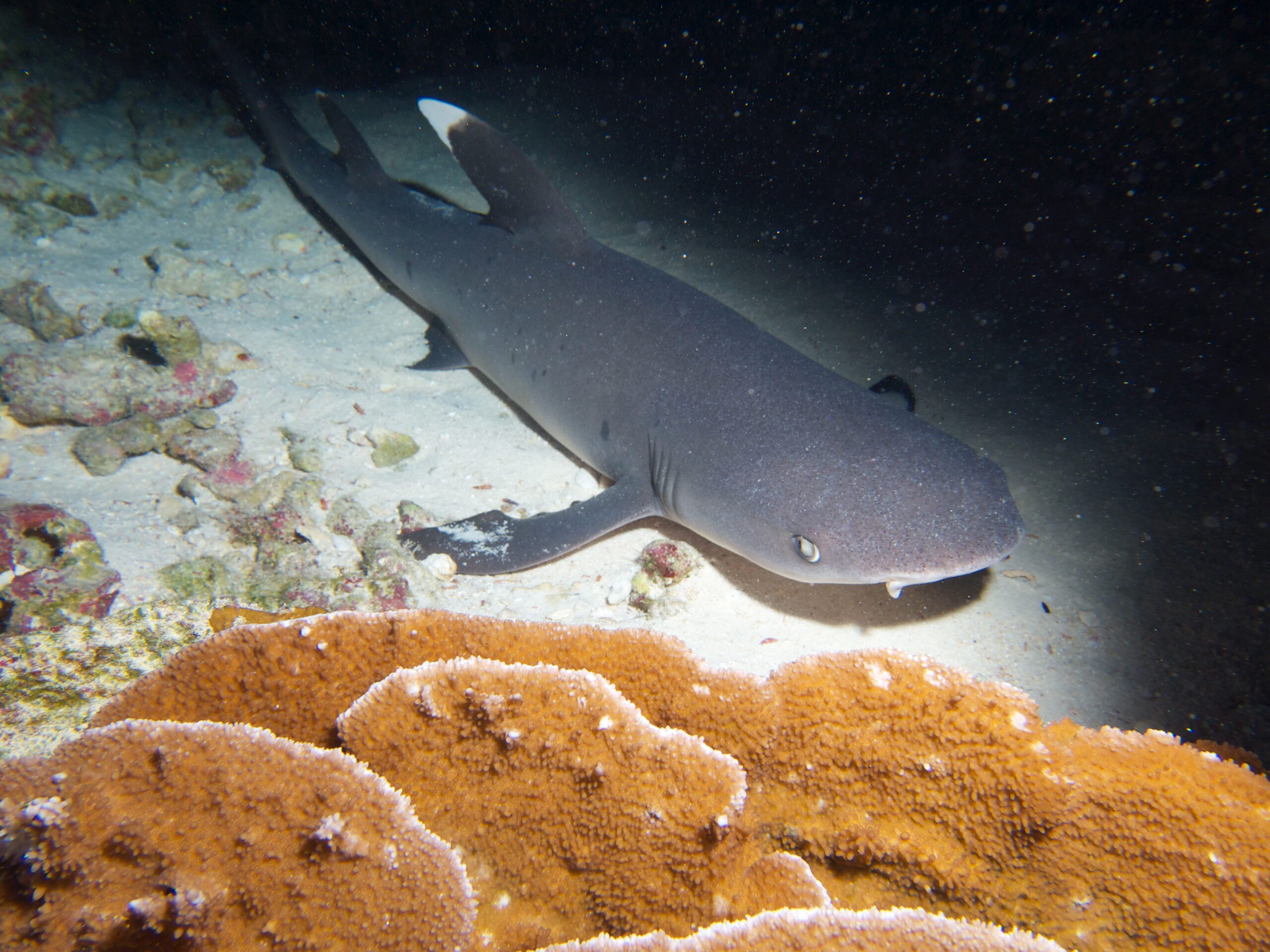
You’ve probably heard that sharks need to keep swimming or they will die. This is mostly true since, without lungs, it is the flow of oxygenated water through their gill plates that allows for respiration. But it isn’t completely true. Some bottom-dwellers, like angel and nurse sharks, have an extra organ than manually pulls water in over their gills so they can stay at rest for long periods of time. Which is why scuba divers will often encounter a shark just sitting there in a crevice. It’s momentarily alarming, sometimes terrifying, even if these species are completely harmless to humans.
So, yeah, sharks are adaptable. But it doesn’t end there. Have you heard of intrauterine cannibalism? Just what it says on the tin: shark sibling embryos that eat each other inside the uterus of their mother. (I must have missed the verse in the song Baby Shark on this.) How on earth is this a good thing? Turns out, sand tiger sharks only ever produce two pups — one from each uterus. This is far smaller than the normal litter of shark babies which for other species is at least a dozen. Baby sharks are small of course, which makes them prey, so the larger the litter size the better the chances some of them will survive. But with only two pups the sand tiger shark has the odds stacked against it. Unless the babies come out of the womb as seasoned killers already, that is! Not only do the cannibal embryos get a headstart learning the taste of blood from their unborn brothers and sisters, but statistically this is survival of the fittest — with only the best killers coming out into a world ready to climb up the predator chain quickly. There is video of intrauterine cannibalism. It is alien and disturbing and gross and completely awesome.
One note before we open this cage and soil our wetsuits. I mentioned above that one of the hallmarks of sharks’ longevity is that they are mostly not being killed by other hungry things in the ocean. They are certainly being killed by things on the ocean and that’s us, human beings. Mostly this is purely economic: humans kill 100 million sharks annually, mostly for the value of their fins, meat, skin, and liver oil. Many more are killed as bycatch when fishing for other things. But we’re also destroying their ecosystem as habitat is contaminated by toxic run-off, ripped to shreds by bottom trawling, or simply denuded of prey because ocean temperatures are rising past levels where fish can survive. More than a third of all shark species are facing extinction.
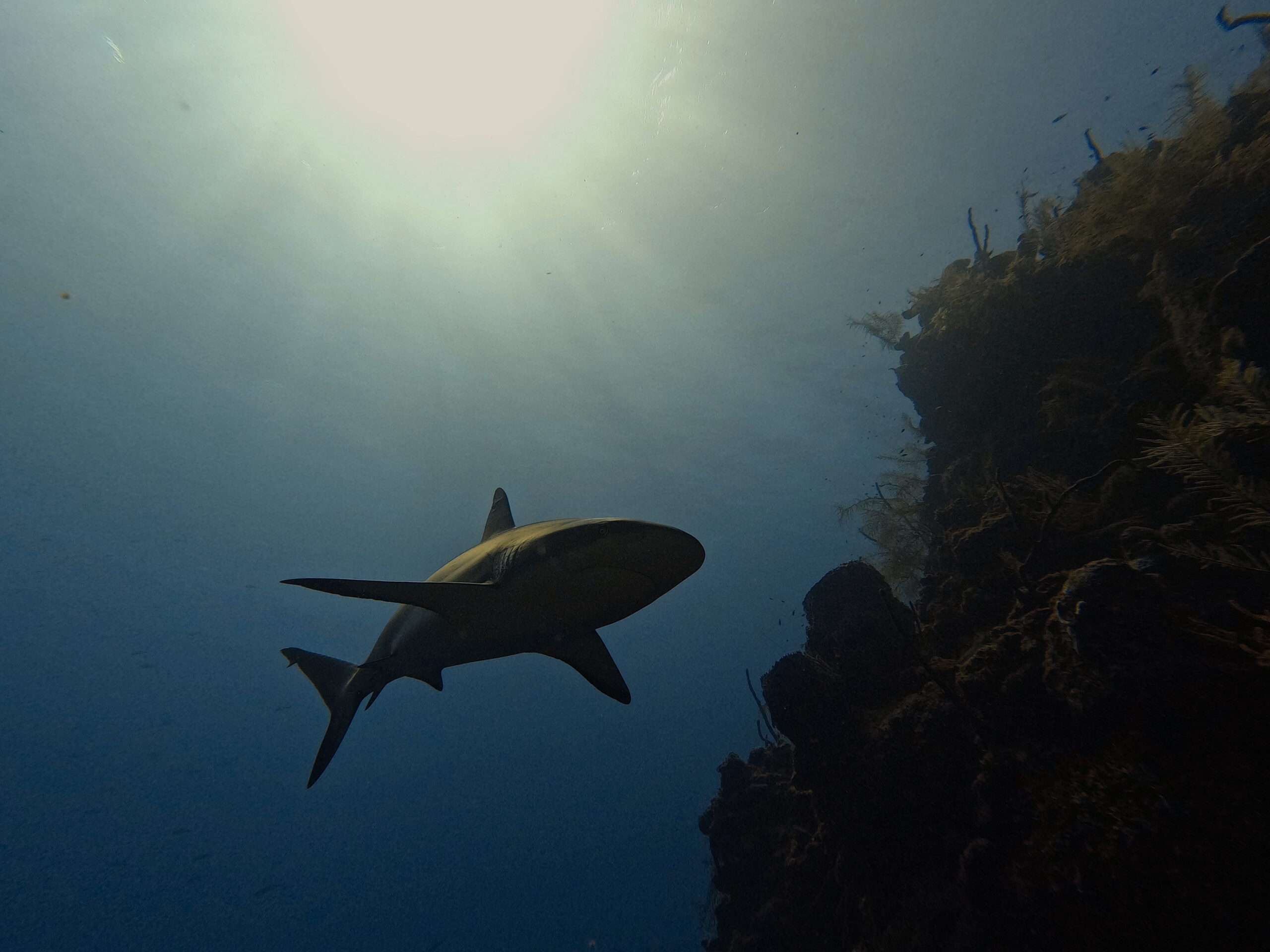
There’s another reason humans are a threat, though, and that has less to do with the actual killing of sharks and more with our attitudes towards them. The vilification of sharks is a full-blown industry, as the films we are about to discuss exemplify. With the exception of Pacific Islander cultures, the modern view of sharks has almost universally been one of fear and malevolence. We fear sharks thus we do not value them. This is a problem because an ocean without sharks is even scarier than an ocean with them. Without sharks, the global food web — a web that leads to your dinner plate and far beyond — would unravel. Entire ecosystems would collapse as prey species would overpopulate, herbivores would run amuck decimating coral reefs and seagrasses, making way for an explosion of algae all over everything. This would noticeably decrease oxygen production globally, making room for even more carbon dioxide in the atmosphere, hastening global warming. And we all know how that’s going. So, yeah, sharks are scary, but we need them if we want this third rock from the sun to continue to be habitable at all.
OK, the cage is unlocked. Find your dive buddy and let’s swim out slow and orderly. We’re gonna explore the history of sharks in horror movies.
Holy mackerel there are a lot of films about sharks! Far too many to watch — or want to watch. Lotta chum in these waters. But there are some useful ways of separating The Shark Cinematic Universe into categories. First, shark films are a good case study for discussing the differences between thrillers and horror movies. Often these two genres intermix. Sometimes thrillers have horrific elements. The best horror keeps you on the edge of your seat like a good thriller. But they are not the same. Horror’s engine is fear. A thriller runs on suspense. And this is why there are so many shark films that are not horror. For the most part Jaws from 1975 is the line demarcating the shift from shark thrillers to shark horror. (More specifically, that precise transitional moment was probably when young Alex Kintner gets torn apart on his raft.)
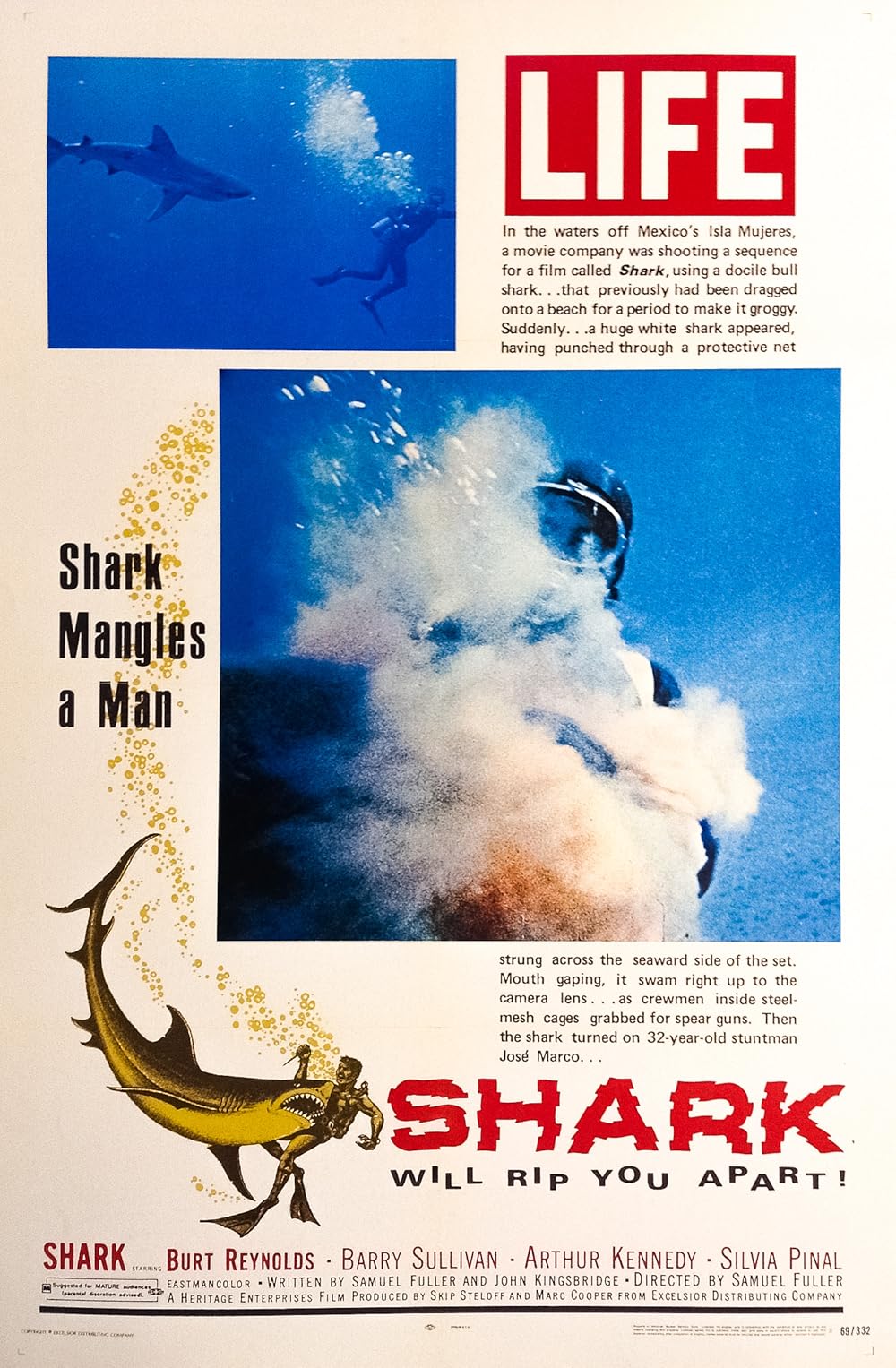
Pre-Jaws films with sharks were mostly adventure flicks. White Death (1936), filmed by Zane Grey as a fishing trip side-project, is basically a Western set on the ocean. The Sharkfighters (1956) is a fictionalized after-story of the sinking of the USS Indianapolis during WWII — the tale of shipwrecked sailors being ravaged en masse by sharks which you may recall that Quint famously recounts in Jaws. The Sharkfighters is notable for being one of the first films to use footage of real tiger sharks rather than puppets or dummies. Then there’s Shark (sometimes Shark!, 1969) starring Burt Reynolds and Silvia Pinal. Filmed in Mexico pretending to be Sudan it is mostly agreed that this film was an excuse for Reynolds and director Sam Fuller to party in beach towns. This movie has all the early tropes of ocean thrillers — unscrupulous treasure hunters, brave Westerners surrounded by caricatured locals, and the thought of sharks being in the water as all the tension needed. In a kind of snuff film-esque twist, it was claimed that a stunt diver was killed by a shark during filming. Life magazine did a photo spread of stills purportedly captured on film. After an investigation the magazine corrected itself, calling the story a hoax that involved a dead or drugged grey shark and “lots of ketchup”. But that didn’t stop the producers from marketing the film based on the supposed stuntman death. Maybe it was the success of this gruesome marketing that was the true harbinger of the turn towards horror just six years later.
Do we really need to talk about Jaws? Who has not seen this movie? OK fine, scaredy-pants. But who has not felt the cultural impact of this movie? No one. Usually listed as a thriller — and I can see this argument — it is undeniable that the result of Jaws was pure fear. To this day there are people of a certain generation who will not swim in the ocean because of this single movie. Only the second feature film of young director Steven Spielberg, Jaws was a notoriously difficult movie to make well — from the instability of filming at sea to the mechanical shark named Bruce to Robert Shaw battling alcoholism on-set. But made well it was, so well that it created an entire new category of movie, one whose lines of ticket-seekers wrapped around movie theater blocks, effectively “busting” them. The blockbuster became the new Hollywood business model: the pursuit of high box office returns from heavily-advertised action and adventure films released during the summer. For our purposes what Jaws proved is that there clearly was a market for being scared by sharks.
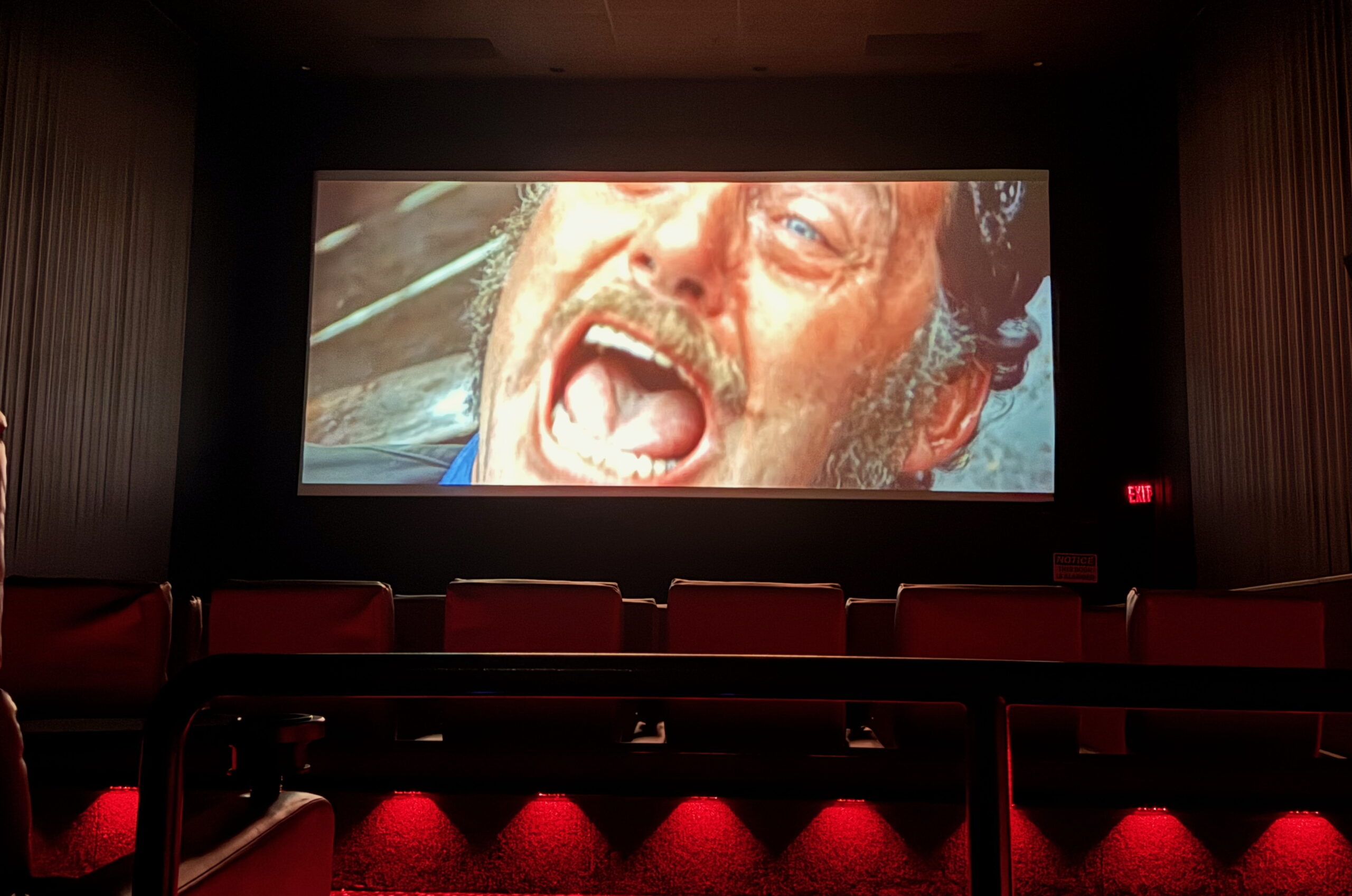
Sidenote: the main shark theme music — a could-not-be-simpler alternation of two notes one half-step apart — may be the most recognizable piece of music in the entire history of film. Composer John Williams described the theme as “grinding away at you, just as a shark would do, instinctual, relentless, unstoppable.”
You know what else is unstoppable? Film studios’ pursuit of money. After Jaws there was an absolute frenzy of shark movies looking to take a bite out of the market. Jaws itself had three sequels, the first of which was decent. The other two we shall not discuss. The 70s and 80s were awash with knock-off shark flicks: Mako: The Jaws of Death which was first on the bandwagon in 1976 and at least spices up the plot with a man who achieves some telepathic connection with sharks from a shaman’s medallion and Shark Kill, also from that year, which is just made-for-TV slop. Oh but then Mexico got in on the action releasing Tintorera (1977) — we’ll come back to this one, Cyclone (1978), and Bermuda: Cave of the Sharks (also in 1978).
Hang on, don’t forget the Italians, next in line (such as Italians know how to form a line — I can say this, as I am Italian). Spending exactly one month in theaters in 1981 before being sued into oblivion by Universal was Great White (also known as The Last Shark) starring Vic Morrow who would be decapitated by a helicopter stunt gone horribly wrong on the set of Twilight Zone: The Movie less than two years later. Courts would rule that Great White was exactly the same film as Jaws. Which may be, but I found it to be a great watch. None other than giallo maestro Lucio Fulci was a fan of the aforementioned Tintorera. He wasn’t a big enough fan to approve a zombie versus shark scene suggested by his producer for his film Zombi 2 (aka Zombie Flesh Eaters), but that didn’t stop it from being filmed by his special effects lead Giannetto De Rossi inside a large saltwater tank with a recently-fed and heavily-sedated shark. Eventually Fulci agreed to include the now-infamous (and ridiculous) sequence. But here’s the interesting part: a local Mexican diver and photographer named Ramón Bravo was hired to fill in for the stunt man as the underwater zombie fighting the actual shark. Ramón Bravo wrote the novel Tintorera upon which the movie was based! Full circle.
So that’s the immediate before and after Jaws. First, sharks as thriller plot sidepieces shot poorly without color correction (or using stock footage). Then Jaws. Then a whole bunch of not-great derivative films coming from the usual suspect countries. That’s only the beginning though. Things start getting really good again — or at the very least, more interesting — around the turn of the millennium. This is largely due to what I consider the second best shark horror film ever made, Deep Blue Sea. Directed by Renny Harlin and released in 1999 this film stars Thomas Jane, Saffron Burrows, Samuel L. Jackson, and LL Cool J. Which, c’mon, that’s one hell of a cast. The premise here is basically what if we made a killer shark movie more like a slasher film? You may be wondering, how would you even do that? First, genetically enhance your sharks in a secret research facility. Make ‘em smarter and more cunning. Then partially flood the facility so the sharks can move about its corridors, but humans can still run and move through the same corridors. Voila! Slasher shark film! You may think that there was nothing redeeming about James Cameron’s Titanic from 1997, but you would be wrong, as the sets for Deep Blue Sea were constructed atop the massive water tanks that had been built in Baja California for Titanic. Its heart — or at least its massive tanks — did go on. Deep Blue Sea is a fun film, a scary film, and a pretty novel one at that. The baddies here aren’t the sharks so much as the people who modified and experimented on them. Sharks as antagonist but not as villain; sharks as bullet but not the gun. This is a tonal shift we will see again. More than anything Deep Blue Sea jumpstarted shark films again, yielding a whole lotta awful — basically the second wave of sharksploitation — interspersed with some pearls.
It took about a decade to really get going, but honestly the sheer amount and at least conceptual creativity of the shark films about to be unleashed on the public is impressive. Let’s run down a few:
- In Sharktopus (2010) there’s only one reason the US Navy would engineer a half-shark, half-octopus creature for combat. It’s so that we could look back on the relative sanity of this hybrid once the sequels were released. Please enjoy Sharktopus vs. Whalewolf and Sharktopus vs. Pteracuda.
- The premise of Sharknado (2013) starts with a tornado that scoops up and throws ravenous sharks all over town. And that’s the least ridiculous of the premises of the five Sharknado films which, like all horror series that have run their course, eventually goes to outer space.
- Ghost Shark (2013) solves a problem with sharks, namely that you can only be attacked by one if you are in a large body of water. This movie is hilarious. The slightest amount of water, even just a puddle, can unleash Ghost Shark!
- Please read this movie title a few times: Sharkansas Women’s Prison Massacre (2015). This film delivers everything (except an enjoyable experience): a fracking mishap, giant prehistoric sharks, female prisoners on a work detail in a swamp, and Traci Lords playing a detective for some reason.
- As a fan of Christmas horror, I watched Santa Jaws (2018). My strong advice to you, travelers, is not to watch this. The gag of a Santa hat being worn atop a shark dorsal fin slicing through the water is mildly humorous precisely one time.
- Midwest represent! Sharks of the Corn (2021) is exactly what it sounds like — and should not be.
- Nothing stirs a sense of patriotism like Americans fighting unkillable sharks launched to the moon by the Soviets years ago. Please salute Shark Side of the Moon (2022).
As you can see from these films sharks have become bolt-on accoutrements to almost the entire range of horror tropes and sub-genres. Monster movies, ghost flicks, religious horror, space frights, and then just straight up replacement of killers from previous films with … sharks. Is this lazy? Sure. Is it fun? Usually! In 75 years sharks have gone from representing the threat of the unknown, to evil killers, to placeholders for whatever situation needs more menace. We said it before at the beginning of this journey, but it probably bears repeating: sharks have been around forever because they are almost infinitely adaptable.
Travelers, I know what you are thinking: there are so many shark horror films — and most of them are terrifically bad. Can’t you please provide a smaller map of the best destinations? Sure, can do.
Open Water (2003) — Based on the true story of two scuba divers left behind when their dive operator doesn’t perform a proper headcount, the horror here is more the terror of being alone in the sea. Only later do sharks do what sharks do best. As for what really happened to these divers we will never know. Maybe they died well before any sharks showed up. Maybe there were never any sharks at all. All we do know is that those divers did not live.
The Reef (2010) — Based super loosely on a true story where two people were killed by sharks, this film uses real sharks superbly edited to tell the tale of a group of folks trapped on a capsized yacht. A very similar premise to Open Water. The characters here just have the hull of a boat to cling to instead of bobbing around in the waves. The result is the same ultimately.
Bait (2012) — Australians know how to do sharks (as you might remember from the recent grotch Dangerous Animals). Bait takes place almost entirely inside a flooded grocery store next to a beach. If you liked the everyday confines of the movie The Mist and sharks in corridors like Deep Blue Sea you’ll love this.
The Shallows (2016) — Starring Blake Lively … and a shark. And that’s really it. What’s incredible about this film is how a single person trapped on a rock with a Great White shark circling around makes for a compelling film. But it very much does.
47 Meters Down (2017) — Stuck in a cage at the very limits of recreational diving (and nitrogen narcosis) this is The Shallows with one extra character and a giant twist at the end. Obviously there are sharks, but there’s also the overriding dread of an ever-diminishing air supply to quicken the pulse.
Under Paris (2024) — I found this more compelling than the Olympics opening ceremony it meant to prefigure (which also took place on the Seine). Under Paris is actually a really fun movie with flooded catacombs, mutant sharks, and a triathlon stand-in for the Olympics that becomes a chomping smorgasbord.
There are so many others. You could watch one shark horror film every week for a year and probably not run out. I do not advise doing this.
Let’s conclude this week’s journey with a quote from a recent New Yorker piece on what we really have to fear about sharks:
There is no such thing as shark-infested waters, in the same way that there is no such thing as a child-infested school. You cannot infest your own home. Fear is, of course, a great good. It can be a form of wisdom. But if we could reorient the sentiment—and direct it, for instance, toward those humans whose vested interests lie in persuading us to acquiesce in the living world’s destruction—we would fare better. Beware an ExxonMobil-infested State Department; beware a fossil-fuel-infested politics. These are dark times, and there are many things to fear. But none of them are found swimming under a vast sky as the waters around us warm and empty.
That’s it, my waterlogged travel-mates. You can surface now, but carefully. Stay vigilant out there, but I really wouldn’t worry about sharks. Until next time, I am your faithful tour guide.
A full list of the movies mentioned above can be found at Letterboxd. Find out where to watch there.
The Terror Tourist is my occasional segment on the Heavy Leather Horror Show, a weekly podcast about all things horror out of Salem, Massachusetts. These segments are also available as an email newsletter. Sign up here, if interested. The segment begins at 22:40 in this episode:
Land of the Shtriga
Prefer to listen to this post? (It’s really me, not AI!)
It’s been a while since our journey took us to an actual place, like a country. Let’s get back to our roots here.
What makes something a horror representative of a nation? It can’t be merely that the country is used as a shooting location. If it were there would be hundreds of films we could consider Hungarian, Croatian, or Slovakian horror. Sometimes I think every third person on the street in Budapest is a film fixer. But that’s not how it works. To be a national horror generally requires either of these two characteristics (and the best have both): 1) majority cast and crew from the country — bonus if it is the director, writer, and lead actors and/or especially 2) the story centers on regionally- or nationally-specific fears, concerns, and/or cultural narratives. Very few filmmakers set out to make a national horror, though some do — looking at you A Serbian Film. But many use a region’s cultural memory of folklore or legend to make something unique.
So where are we going? If you’re coming from the USA, cross the Atlantic, and head to southern Europe. You can grab an espresso in Italy, but keep going. Cross the Adriatic, wave to the pretty dogs on the Dalmatian coast but do not stop — move southeasterly. Hit Greece? Too far. Back up. Our destination today is the incredible country of Albania in an installment called Land of the Shtriga.
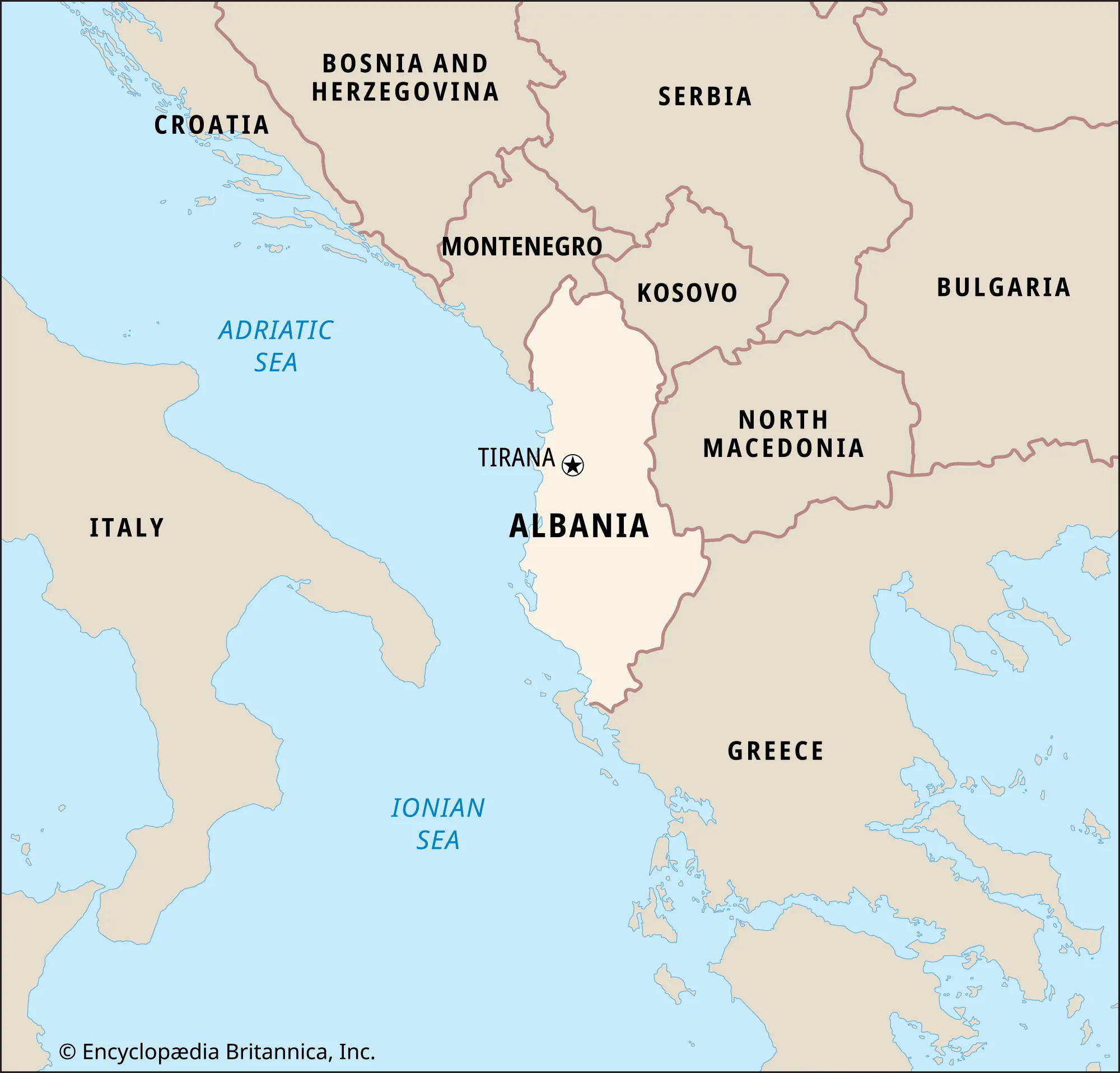
First a very brief history of this land. As noted, my traveling compatriots, if you jump off the very heel of the boot of Italy right where the Adriatic Sea becomes the Ionian Sea you’ll hit Albania. Situated directly northwest of Greece and west of Macedonia, the tribal peoples of this land — known as Illyrians — were successively ruled by Greece, Alexander the Great, and eventually the Roman Empire. It was the establishment of independent Eastern and Western Roman Empires in 396 AD and even more so the schism between the western and eastern Catholic churches in the 11th century that created the remarkable diversity of architecture, religion, and peoples that populate the land to this day. Throughout the late medieval period the various principalities coalesced into something resembling an Albanian identity.
That is until the fall of Constantinople in 1453. The Eastern Roman Empire was no more as Ottoman Turkish forces pushed into what is modern day Albania by the end of the 15th century. Thousands of Christian Albanians fled to southern Italy during this period (including the ancestors of my paternal great-grandparents). Of note, this period is noted for national hero General Skanderberg who successfully defeated major Ottoman armies including those of Sultan Mehmed II, in the process uniting many of the principalities. If this sounds familiar to horror history fans your intuition is correct: Skanderberg was a contemporary of and very similar to Vlad Dracul III of Wallachia, known as Vlad the Impaler, our Count Dracula. He too fought against the Ottoman armies, holding them off for a time. Like Vlad, Skanderberg only delayed the conquest — a fact many historians credit with ultimately halting the expansion of the Ottoman empire at the Balkans and giving Italy enough time to mount an effective defense of Western Europe. The Albanian peoples continued to develop a united identity, but it was a unification under rule from Istanbul and amidst large-scale Islamization of its culture.
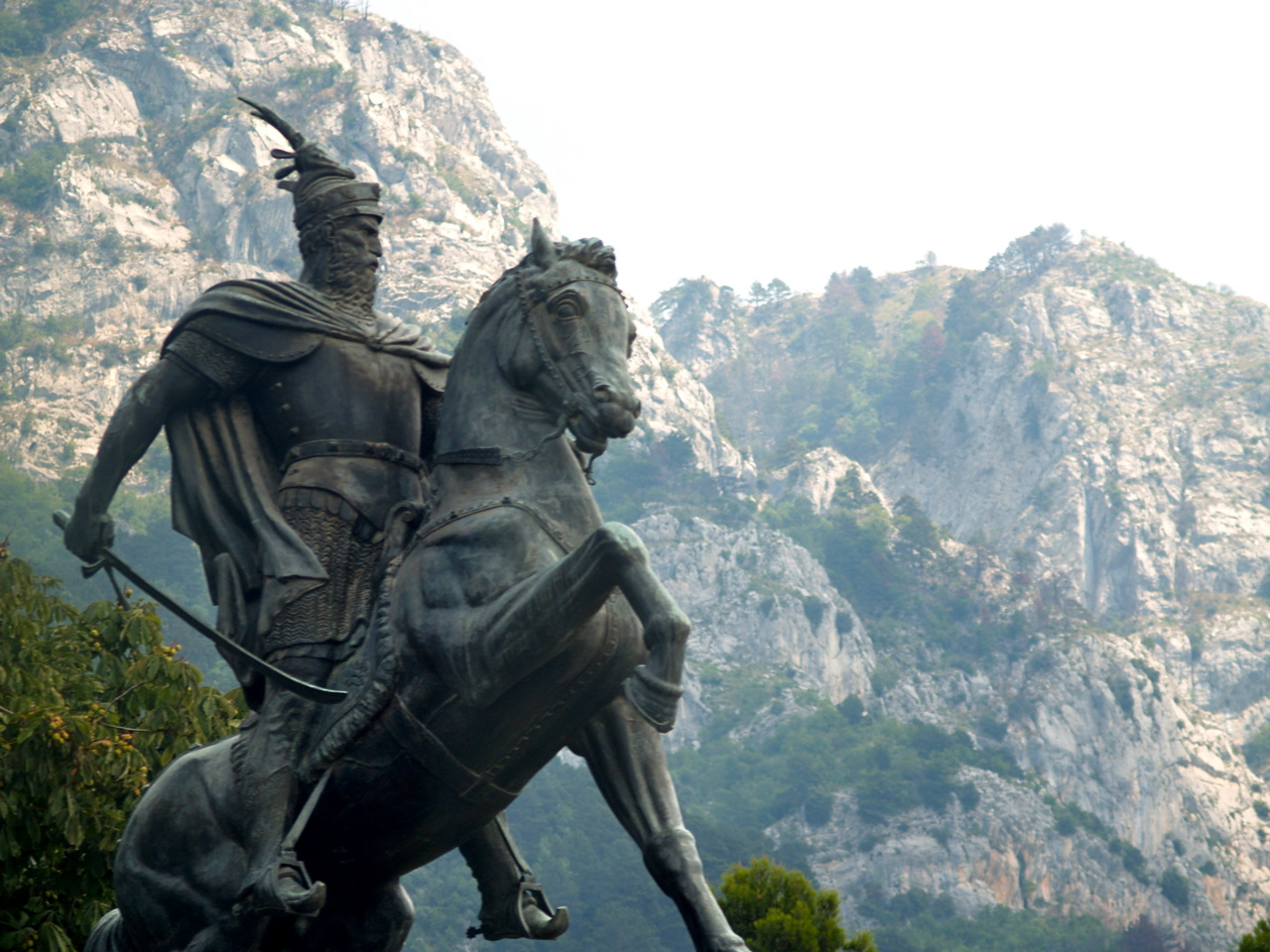
All of this to say to you, my tourists, that like many countries bordering the Mediterranean, Albania is a swirling mixture of peoples and beliefs stirred by a legacy of suffering as victims of imperial forces criss-crossing the Sea. To Western Europe Albania was an almost mythical place, sitting at the edge of what they considered enlightened civilization. Fans of Shakespeare will remember that his comedy Twelfth Night takes place in Illyria, a fictional setting (but obviously based on Albania) chosen for its exoticism and remoteness. This conception of Albania as a liminal place between worlds carries through in the Western imagination almost to the present day. A great setting for a horror movie, no?
World War I spelled the end of the Ottoman Empire and saw the birth of an independent Albanian state, a republic which lasted until invasions both by Mussolini and then, after his not-soon-enough encounter with a lamppost, by Nazi forces. In 1944 anti-Nazi partisans which included future leader Enver Hoxha, successfully liberated the nation leading to four decades of Communist dictatorship aligned alternately with the Soviet Union and Maoist China. With the fall of the Berlin Wall and eventually the Soviet Union, communist rule in Albanian also ceased leading to rapid Westernization in the 90s. Albania today is a multi-party republic, a member of NATO, and a candidate for EU membership.
Two special notes before we arrive at our destinations.
First, the Albanian national flag. Listeners, search for this magnificence right now so that you too may appreciate it. The Albanian flag may be my favorite national flag of all 195. It depicts a two-headed eagle, talons outstretched, in all black set against a blood red background. It’s clearly a bird, but you’d be forgiven for believing it more fantastic than that, like a Hydra or Cerberus. No staid symbolism, no echos of other countries’ flags, just a badass beast you do not want to mess with. In my opinion if you can’t tell if you’re looking at a biker gang tattoo or a national emblem you know a flag design is going to at least inspire awe.

Next we need to talk about the Gjakmarrja, the Albanian blood feud. The Gjakmarrja, based on a larger social code called the Kanun, is the social requirement to exact revenge usually via murder to defend one’s honor. The blood debts owed to an aggrieved family can extend generations if not paid. This code of socially-sanctioned revenge has been kept alive for centuries by tribal elders exclusively via oral transmission. As recently as 2018 police records noted 704 families affected by blood feuds. Fertile, blood-soaked ground for horror movies, no?
So let us now travel from blood feuds to actual blood — at least the cinematic kind. The truth is, Albanian horror as a genre is not even a decade old. While there are other Balkan and Kosovar examples of horror filmmaking, you can count the number of Albania-specific horror films on one hand, indeed one hand missing two fingers.
Bloodlands from 2017 is often considered the first Albanian horror film, though this was part of its own marketing effort so we’d need an actual film scholar to make a definitive call. The story here centers on the family of a butcher named Skender living on the edge of poverty in a clearly post-communist quasi-rural town. We are shown the actual butchering of a lamb in all its gory detail and you just know this is the most overt kind of foreshadowing. Skender’s shop is beset by grimy forest-dwelling people who scavenge offal from the trash until he runs them off. Meanwhile Skender sees a man on the street who he could swear died many years ago. Enter the shtriga, an Albanian witch (related, at least etymologically, to the strega the Italian witch). Turns out the shtriga leads a group of vagabond, possibly undead cannibals who eventually stumble upon Skender’s son in the forest. Skender goes looking for his boy and eventually blasts his captor with a shotgun. Thus begins the blood feud. Skender is abducted and gruesomely butchered (and eaten) exactly as the lamb he cut up days earlier. With no body to bury the family sets off to exact revenge for this revenge, leading ultimately to a confrontation with the shtriga. This isn’t a great movie, but it is absolutely horrific and totally steeped in very Albanian lore. The irony is that Bloodlands was written and directed by Steven Kastrissios, an Australian.
If postwar Albanian history is your thing, you’ll get it in spades with The Invocation of Enver Simaku from 2018. This film begins in 1997 during the tumultuous civil rioting — some call it a war — precipitated by the financial idiocy of the immediate post-Soviet government. (Like so many countries freshly out from under the Iron Curtain, Albania suffered from national monetary policies based on pyramid schemes and formerly nationalized industries being gobbled up by mafia-like oligarchs.) The narrator/documentarian, Julien, at the center of this camcorder-style film positions himself in the midst of these riots where his partner Angela is murdered, one of at least 2000 dead when it was all over. Twenty years later he returns to try to find out exactly how and why she died. What’s key here is the flourishing (or re-flourishing) of ancient folk beliefs after their official ban during the decades of Communist rule — Albania being the world’s first (maybe only) constitutionally atheist country during the Hoxha regime. Well the old ways flood back and Julien soon enough finds out that his partner was murdered by the brothers of Enver Simaku, a man in a 30 year-long coma who possessed by an Albanian demon known as the Kukuth There are no great kills, no jump scares, and only some passably creepy scenes. But The Invocation of Enver Simaku is a unique mixture of political history and supernatural folklore, neither of which is much known by audiences outside of the immediate region. This is also not a great film — just the mixture of languages is off-putting (English, Albanian, Italian, and Spanish — some but not all of which are subtitled), but its ambition is laudable and if you like slow-building drama that only flirts with being a true horror movie this is definitely for you.
Blades in the Darkness from 2022 takes the legacy of communist rule very literally. The whole thing takes place and was filmed in a disused Hoxha-era underground bunker. Like Enver Simaku this film also begins amidst the riots of 1997 where a young boy, Matia, seeks shelter in the abandoned bunker. He is scarred by a run-in with barbed wire and then bricked into the bunker by a crazy unregenerate communist named The Commander and his wife. Jump to 2022. The bunker is being visited by a group of investors — the term here being used extremely casually — interested in turning it into a nightclub and restaurant. There, while dealing with drug dealers owed a debt by one of the investors, they encounter Matia, horribly disfigured, all grown up, and presumably deeply scarred by a communist propaganda 8mm film he’s been forced to watch on repeat in the bunker for the past 25 years. He looks sorta like the Predator alien with long knives attached to the ends of his arms. At this point we have a slasher film as Matia rampages through the bunker, especially pissed off when the projector breaks and sets the corpse of one of his initial captors aflame. A corpse, it should be noted, that he has seated in a chair and which he animates like a marionette. Just sayin’ that 25 years without sunlight is not good for one’s mental health. Blades in the Darkness is maybe the most typical horror film in this lot, though with so many references to the last 50 years of Albanian history it’s easy to see why it could be interesting beyond the gore. For example, adult Matia is listed in the credits as “The Eagle” and his knife-hands do kinda resemble talons so let’s remember that dope Albanian flag. It makes an appearance in the fiery climax and Matia eventually bleeds out on the pavement in a way that exactly mirrors the flag eagle’s feathers. So obviously the filmmakers here are trying to say something about the country. I’m just not sure what exactly. Technical note: like most films that I can only find dubbed I probably would have enjoyed this more if it had been subtitled. Awesome movie poster though. And apparently there is a sequel to this the connection being that it … also employs blades? Hard to tell.
Then there’s Vlog#13 from 2023. iMDB says: “This film follows vloggers exploring Albanian legends, potentially incorporating horror elements based on folklore.” Now the word ‘potentially’ is the tell here: this film does not exist — or if it ever did it was a one-off showing somewhere that’s not recorded anywhere online. This film is not available to stream or rent anywhere and does not exist on any of the half dozen trackers I checked. Travelers if you have seen this movie or any of the vlogs 1 through 12, please call our hotline immediately. It sounds like a perfect anthology of Albanian frights.
So that’s all there is, really, my tourists. Albanian horror is a newborn baby. I do believe I watched everything I could that exists in this sub-genre. But this newborn has some wonderfully rich genealogy. The history of this often-overlooked land is full of subject matter that lends itself perfectly to horror. I say, if Romania can have a horror legacy (even if it was invented by a British Victorian) then so can Albania. Let’s make this happen!
Until next time, I am your faithful tour guide. Thank you for joining us on this journey.
A full list of the movies mentioned above can be found at Letterboxd. Find out where to watch there.
The Terror Tourist is my occasional segment on the Heavy Leather Horror Show, a weekly podcast about all things horror out of Salem, Massachusetts. These segments are also available as an email newsletter. Sign up here, if interested. The segment begins at 17:15 in this episode: