
Mission Elapsed Time: 20:00:21:06:42:40
This month both my personal blog, Ascent Stage, and my Flickr account turn 20 years old.
I’ve gone back through all of it — 862 posts, 30,558 photos. Other than endemic linkrot, an unfortunate smattering of Flash-based content, and services whose embed functions have crapped out (looking at you Flickr video, YouTube, and Google Maps), it has been a very pleasant journey through two decades of me. What follows are some thoughts on the evolution of the site, interspersed with my twelve most viewed (publicly-accessible) Flickr photos from the past two decades. (Here’s the 10,000th photo posted and, very recently, the 30,000th.)

#12 From the first hackathon the City of Chicago orchestrated around our open data initiative in 2011. I had just started as the city’s first Chief Technology Officer.
Since 1996 I had maintained a personal website called, pretentiously, hypertext :: renaissance. This site had no content management system — definitely not what would come to be called a blog — all hand-coded with table-based layouts, frames, and hacks. It was a beautiful mess, all mine, and visited by precisely no one. I loved it. Many rough years passed with browser-specific HTML atrocities, cgi-bin Perl scripts, and transparent single pixel GIFs. But help was on the way: personal blogging software. As a former grad student studying the English Renaissance how could I not jump onto a platform called Movable Type?
But we’re starting in 2004. Google had just introduced Gmail. Flickr was launched as a social photo service built on the corpse of an MMO gaming platform called Game Neverending. The social bookmarking site del.icio.us was in its pre-acquisition heyday. Feedburner brought the first bit of Web 2.0 cred to the Chicago tech scene. Javascript was having its moment with the Ajax framework. Mozilla’s Firefox 1.0 browser was attempting to cut into Microsoft’s then-95% share of the browser market with IE. MySpace had just passed 1 million users. Facebook had only just been created in a Harvard dorm room. Twitter was two years in the future. The iPhone, three years. My wife and I had two kids under the age of three. I decided to start blogging.

#11 One of the last things I did at IBM was serve as a contestant on the actual Jeopardy soundstage to compete against our latest AI, called Watson. I bested it on a single question. +1 for meatbag intelligence.
I have always loved writing and tinkering with software. And with a debilitatingly broad curiosity that has led me into countless hobbies, projects, and side quests blogging was a perfect outlet. But more than that, blogging itself seemed like fulfillment of the promise of the still relatively new web — the democratization of publication. So much more than the hobbyist/nerd niche websites of the late 90s, weblogs were full platforms to let anyone anywhere communicate in a relatively non-amateur way. Even better, as this was before the coming of fully hosted blogs, spinning up your own meant doing it outside any big corporation’s monetization imperative or walled gardens. This was the second coming of Gutenberg, at least to young me who liked writing about such things.
I got the platform up and running but the site needed a name. I wanted something hopeful, forward-looking, and ever-so-slightly nerdy. As a spaceflight dork I chose Ascent Stage, the piece of the rocket that goes up. (Eventually I had to explain this. And yes I do also own descentstage.com. I’ve often considered crafting an anti-hero version of me there.) First post: Oct. 1, 2004 about my best buddy Matt’s art show. (And he’s still making beautiful things, 20 years on.)

#10 View of the extinct volcano Mount Vulture from one of the three trips I’ve made back to my ancestral village Barile in Basilicata, Italy including once to be made an honorary citizen.
Reading back through everything some patterns come through almost immediately. Many posts were very short, 2-3 sentence observations or comments on links. It was a need for something like Twitter several years before that service was launched. I even experimented with something I called microposts, basically manual snippets in the blog margin. What doomed these is that they were never integrated chronologically with main site posts or in the main RSS feed. Twitter solved this particular problem, but it created quite another. My blog posting rate dropped off a cliff in the early years of Twitter, but, given the service’s 140 character limit (which was delightful), the length of individual blog posts expanded greatly.

Microposts failed but the marginalia survived and continues to this day. It’s a persistent collection of featured site sections, latest public photos from Flickr, interesting links (powered today by Pocket, but formerly pulled from del.icio.us), and books I have recently read (pulled from LibraryThing). In some ways the margin is the oldest section of the site, at least in concept. It’s a throwback to a time when open, interoperable, embeddable web functionality was everywhere. A web made of many pieces loosely joined. Being distributed these pieces have broken many times through the years, but that’s the thing about a garden without walls: there are always new plants to find further afield.

Many posts in the early years were lists of favorite things like links, gadgets and software — most of which no longer exist, given the pace of technological change and startup frailty. And yet the reminders of what caught my fancy — such as what my backpack carried on international trips — have some historical and emotional value.
And speaking of the latter, one early topic category called The Darnedest Things (and a broader one called Kids) was a running diary of observations on parenting two and then three small children. My kids are only just now discovering these snapshots with equal parts fascination and horror. Like finding a lost diary.
Hurricane Katrina was a catastrophe for many, including my extended family. In an era before widespread social media Ascent Stage was a collection point for information as my wife’s grandparents fled coastal Mississippi. Eventually it was where our family could see that their house was destroyed.

#8 One of my many pandemic lockdown projects, the coral brickscape taught me how difficult it was to build a squishy, curvaceous reef out of hard plastic 90° angles. It also got me an (unsuccessful) audition for Lego Masters.
Oh the music nerdery! These were the early years of MP3 files and online music stores, mostly pre-streaming. Having already ripped my entire CD collection to digital I was prepared for the onslaught of music organization, visualization and analysis tools that came about in the early years of the millennium. Hoo boy, I had some fun:
- The Mashability Index — an attempt at visualizing the most mashed-together artists from thousands of songs.
- Evolving my music genome — an attempt at using Apple’s Genius music recommendation algorithm to cross-reference its output recursively, highlighting duplicate tracks. This, I posited, would ultimately generate a playlist where my musical interests overlapped, each track of which being a root node for all the music that I have come to love moving forward from that point. It sorta worked.
- Culinary turntablism — using a traditional Chinese rotating food serving platter and the dishes placed upon it like a player piano roll. You should have seen the incredulity of my colleagues in Beijing over the course of a multi-hour meal as I assiduously noted when dishes were added and removed to the rotation and how many revolutions they made.
I dabbled in short album reviews on the blog, but mostly used it to distribute novelty remixes (like this one, danger!) and what I called giftmixes (like this one from 2011), lightly-mixed continuous collections of tracks for friends. These were also the days of my participation in the DJ collective known as Beat Research Chicago with Jake Trusell and Jesse Kriss. Such fun as we lit it up at Villain’s in the South Loop for a few months. Music was also a huge part of a series of bonkers holiday parties thrown by my wife and I. With a custom-built DJ booth, handmade electroluminescent jackets, and a steady stream of Chicago police officers demanding we turn it down the three final parties called Out of This World, Around the World, and The End of the World became legendary. I sure do miss those electroluminescent jackets.

#7 The popularity of this photo is what happens when Flickr features it on their Explore page. But I love the picture for how the building’s floating truss echoes the L track substructure. Chicago Loop, Washington and Wells, looking west.
Like any good blogger I wrote a lot about food, but very specifically about recipes and experiments in Southern Italian cuisine, relatively unloved in the USA. It was cooking as ancestor worship, basically. These were also the years of winemaking and brewing as well. Of course I had to do it the hard way, ginning up everything from colonial-era Applejack and wine from wild-picked raspberries to an Irish red ale in memoriam.
And then there was work blogging. The lion’s share of posts on Ascent Stage to date were written while I worked for IBM. Most of my time there was spent working on cultural heritage and related projects in Russia, Egypt, China, Ghana and dozens of other far-flung locales for shorter durations. These were the most formative years of my early career and the fact that I wrote about them at such length, naively in some cases but always with extreme curiosity and wonderment, brings me immeasurable joy. We got not one but two History Channel documentaries out of this work, not a single pixel of which seems to remain available anywhere on the Internet. I do know that Omar Sharif said my name in one of these, but you’ll have to take my word on that.

#6 An exploration of the former freight delivery tunnels below every street in Chicago’s downtown. The whole thing flooded when it was punctured accidentally beneath the Chicago River in 1992.
Then there was the brief but intense dalliance my colleagues and I took in virtual worlds, like Second Life, as we were researching technologies for our work in China. This roller coaster seemed to stop abruptly … and yet given the current fascination with AR and VR headsets and open world gaming these days it seems pretty clear that we were way out in front of the technology back then. What’s old is new. No more so than with AI. The blog documents one of my favorite memories at IBM at the very end of my time there in 2011: serving as a human test contestant while training the AI supercomputer called Watson as it prepared to compete on the game show Jeopardy. I beat the AI on one question. A single question.
I left IBM in 2011 which corresponds pretty precisely with the end of frequent posting on Ascent Stage — but the writing that did happen got longer and in some ways more serious. The reduction in posting is likely not that I had more time to write while working for IBM but because I had so many more outlets in my new role as Chief Technology Officer for the City of Chicago. Also, my travel during this time fell to nearly zero. And then of course there were the continuing effects of microblogging via Twitter.

#5 I spent much of the summer of 2018 in Ghana, Africa as part of IBM’s Corporate Service Corps working with a group called Aid to Artisans. Here’s a classic dish of tilapia and banku (fermented corn meal).
My professional and intellectual focus at this point was primarily on urban design and technology. Even before I joined the mayor’s team, Ascent Stage had become an outlet for exploring the intersection of data, especially open data, and the experience of life in cities using Chicago as a platform. Here are some highlights:
- Our second city — an essay I was asked to write by WBEZ in Chicago and which, in retrospect, seems like the beginning of my deep thinking on cities and technology. A favorite.
- Lessons from unmaking urban mistakes — wherein I extract six examples from the past to guide us as we explore a future of networked urbanism. Holds up.
- What the public way means in the networked age — an ode to the sidewalk as the original social network.
- When tech culture and urbanism collide — still not sure we’ve learned to be skeptical about urban solutions coming out of Silicon Valley, a giant suburb literally built around the cult of the garage.
- City of Big Data — another career highlight participating in the curation of an exhibit at the Chicago Architecture Foundation (now Chicago Architecture Center), weaving my prior museum work into current interests.
- What we talk about when we talk about smart cities — one of the last in-depth treatments I gave to this subject before it moved to the saner side of the hype curve.

#4 One of my great loves/labors is a 300+ gallon saltwater reef aquarium. Here is bubble coral (Plerogyra sinuosa), which took me years to figure out how to keep alive. (Still going!)
But really Ascent Stage has been the most fun when it was just cataloging the odd and the interesting, even when I didn’t realize it at the time. Here’s a selection:
Turns out not 20 days into even having a blog in 2004 I made an aside about my dislike for Donald J. Trump. (This hasn’t changed.) He tore down the Sun-Times building which, admittedly, was an unlovable eyesore on the Chicago River, right outside my window next door at IBM Plaza. We documented the whole thing and created a timelapse video, which I believe is my most watched video on YouTube. The refrain “there’s beauty in the breakdown” of the track we set the video to, “Let Go” by Frou Frou, hits differently these many years later living with the other things Trump has wrecked.
My friend Len introduced me to sensory deprivation tanks, something I enjoy to this day as a vehicle for relaxation and meditation. That in itself wouldn’t be very interesting except that the local ABC news affiliate did a story on it. Their spin? Harried working dad uses sensory deprivation to deal with stress. My wife was having none of it. But I was not done with the tanks. Through a series of experiments I brought a waterproofed iPad nano and heart rate monitor into the chambers to document taking all the senses away but one. Altered States it wasn’t. Scientific it wasn’t. But, hey, I was dealing with stress.

#3 Another pandemic project, this is my modification of the Lego Police Station with a Black Lives Matter protest out front.
It’s tough to choose a favorite moment on the blog over twenty years, but the back-and-forth it prompted with my favorite novelist, Richard Powers, winner of the 2019 Pulitzer Prize for Fiction, has got to be close to the top. I had mentioned Powers early on in a post which prompted a reply in a now-defunct electronic literature forum. But it was in 2007 that I directly called him out for a claim that his then-latest novel, The Echo Maker, was written completely by dictation using text-to-speech software. He replied, convincingly and humorously. This was the essence of the early web, nailing a note to tree in a dense forest of websites and having it be found (by someone famous, no less). I’m sure this still happens via social media, but the direct access it seemed one had to experts of all kinds in the early days of the web still seems magical to me.
Lego bricks occupy a lot of space on this blog. And in my house. And in my life. Building crazy things got me through the pandemic lockdown (and an audition on Lego Masters, twice), but well before then it was the launchpad for a small business with my two young sons. When our first child was born I used some paternity leave time to convert his photo into a grayscale mosaic and then posted a how-to. This got picked up somewhat widely around the web and eventually led to our establishing a service to do it for others, called The Brick Brothers. We received a letter from the Lego Corporation, which I thought would be the boys’ introduction to the concept of cease-and-desist, but which was in reality a congratulations. I couldn’t love those Danes more.

#2 This photo-within-a-photo at the northwest corner of the intersection of Dakin and Sheridan in Chicago depicts my grandfather, father, and uncle sometime in the late 1940s. I returned a few times with my family to recreate it.
Pretty sure this blog earned me honorary citizenship in Italy. I had been writing about my Italian heritage for a few years, having studied there in 1993 and learning about the spectacular and relatively-undiscovered province of Basilicata, the region from which my family hails. It began with the help of Ancestry.com as my kids and I traipsed all over Chicago locating graves and places from old photographs. Some folks in Basilicata noticed and eventually invited me to come to Barile, the town of my great-grandparents, as their guest. It was an odyssey I will never forget in no small part because of the rarity of serving as a tour guide for my aging parents. Bringing it back home I wrote 1903, a piece of speculative fiction and genealogical detective tale that is easily one of my favorite posts.
Going back through two decades of cultivating this weedy garden, I’m reminded of seeds planted way back when that flower today. As early as 2009 my interest in restoring ecosystems is evident which today manifests as a broad study of how complex systems (like dinosaurs and towns) fail. And it’s probably why you’ll find more recent posts about underwater exploration and coral reefs, including a fundraiser I launched for Marhaver Lab in 2022. The last two years of Ascent Stage have been dominated by long-form, multi-part adventures. Last year my daughter, niece, dog, and I embarked on an epic multi-state tour of the American West in a jalopy camper trailer hauled by an electric vehicle. This was an extraordinary trip in many ways, not the least of which was being able to document how to actually do it logistically. This year’s adventure has mostly been about horror — cancer, sure, but really horror movies. Starting with a Zombiefest in 2008 through lockdown binge-watching horror has long been a theme explored in these posts. This year most of the pixels spilled here have been devoted to deep dives into the places in these movies, specifically a segment called The Terror Tourist which I contribute to a podcast out of Salem, Massachusetts called the Heavy Leather Horror Show.

#1 Turns out my most viewed photo is a flagrant copyright violation. After watching 2004’s I, Robot I wrote about where I thought the CGI buildings were placed. Nerds loved it.
So that’s it. That’s 20 years of self-publishing. It’s possible that one day blogs will be seen as a period-specific format, much like silent films are to the early 20th century. I hope not, of course, as their personality and authenticity seem ever more important as the web fills with AI-generated slop curated by corporations inimical to the hyperlink.
Like anything online the picture this blog paints of me is incomplete at best, an artifice of persona at worst. But it is me. I’ve detailed many highs in the posts and photos linked here, but the blog also documents some low points — let’s call them bumpy landings before I ascended again. On this eve of a new life phase which will surely have its share of mission calamities, I’m glad for it all. Here’s to many more orbits.
_________________
End transmission.
Undead Mockingbird
Prefer to listen to this post?
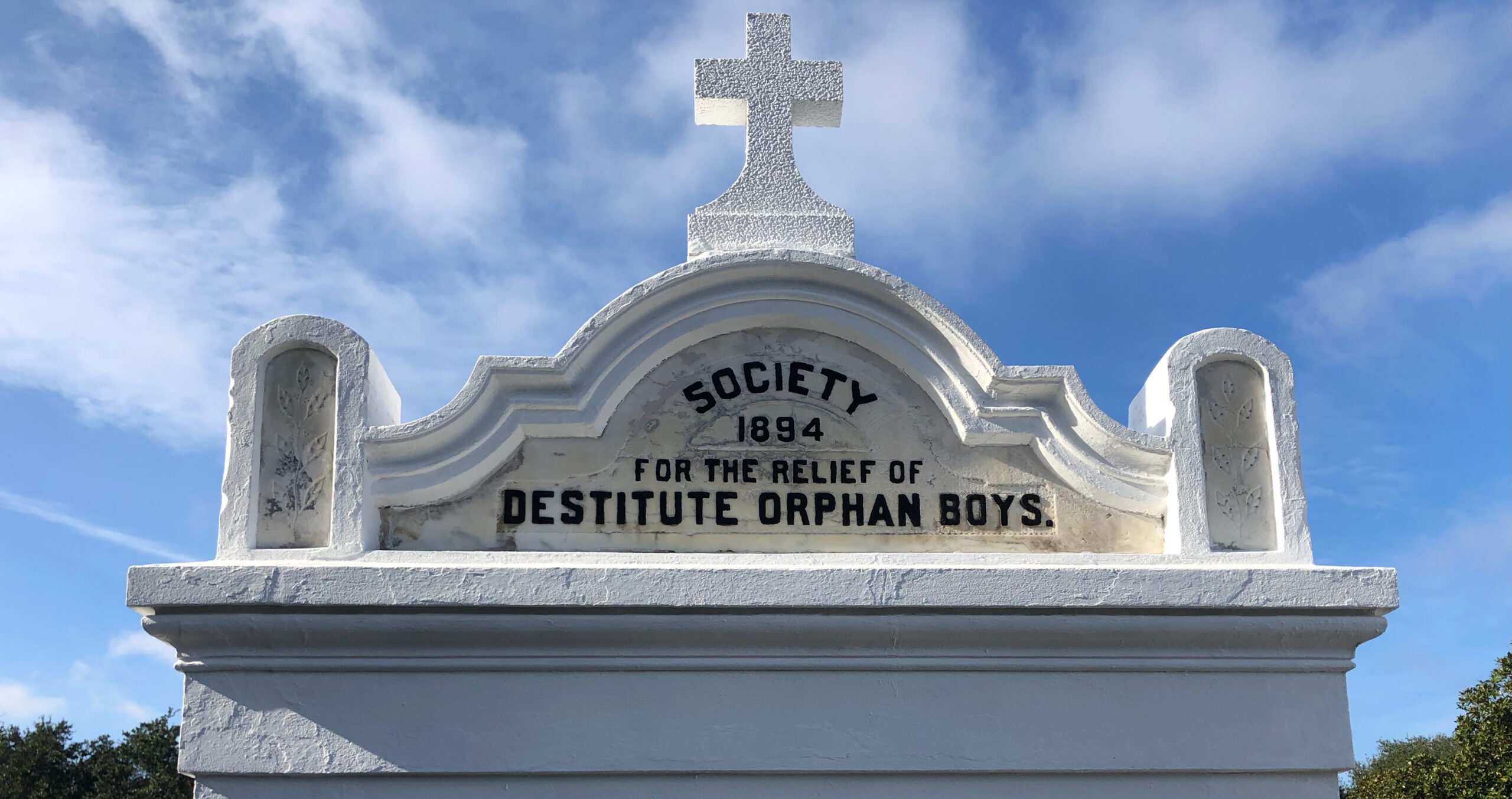
“It’s a sin to kill a mockingbird,” we’re told by Atticus Finch, in the novel title-dropped in that line. Now, think back to your 8th grade self and try to remember why it’s a sin in his opinion. It isn’t because it’s a pretty bird; Atticus says flatly “Shoot all the bluejays you want, if you can hit ʼem”. Anyone remember? It’s because, as Atticus says, they “don’t do one thing but make music for us to enjoy”. They are, in other words, innocent. And the potential execution of an innocent person is what the book and movie are all about. The story is also about rape, racism, rabid animals, murder, an attack after a Halloween pageant, and a creepy recluse in a house named Boo. Despite this, no one would argue that To Kill a Mockingbird is horror story. But it is a prime example of Southern Gothic, a sub-genre that is full of the grotesque, macabre, and often supernatural and which, as we will explore on our journey today, easily slides into full-blown horror.
Welcome to this week’s itinerary, travelers, called Undead Mockingbird. Grab a sweet ice tea with lemon to go because we’re headed south of the Mason-Dixon line to a land where I went to school, twice, on purpose. And it changed me forever.
Before we arrive at the destination that is Southern Gothic Horror we should probably hit a few waypoints for the terms that comprise it. Let’s start with “gothic”, since, as terror tourists, you’ve likely encountered movies that are utterly suffused with gothic ambiance and tropes. Now, unless we’re talking about the extinct Germanic language of the 5th century Goth peoples or trying to describe why you borrowed your sister’s eyeliner to go to the Siouxsie and the Banshees show — neither of which we are talking about — then we’re talking about a style of architecture.
Gothic building design was a European architecture of the 12th to 16th centuries. You’ve seen it: pointed arches instead of curved domes, flying buttresses that meant walls could for the first time do things — like hold stained glass — instead of solely making sure the roof didn’t fall in, and elaborate ornamental stonework of all kinds including, yes, gargoyles. If you can picture Notre Dame in Paris or the Duomo in Milan then you know exactly what Gothic architecture is. Importantly the term “gothic” was originally applied to this form of architecture as an insult. Artists centuries later considered these buildings to be barbarous, monstrous even, precisely because they were so different from the classical curves of the ancient Greeks and Romans that the Renaissance so eagerly sought to revive.
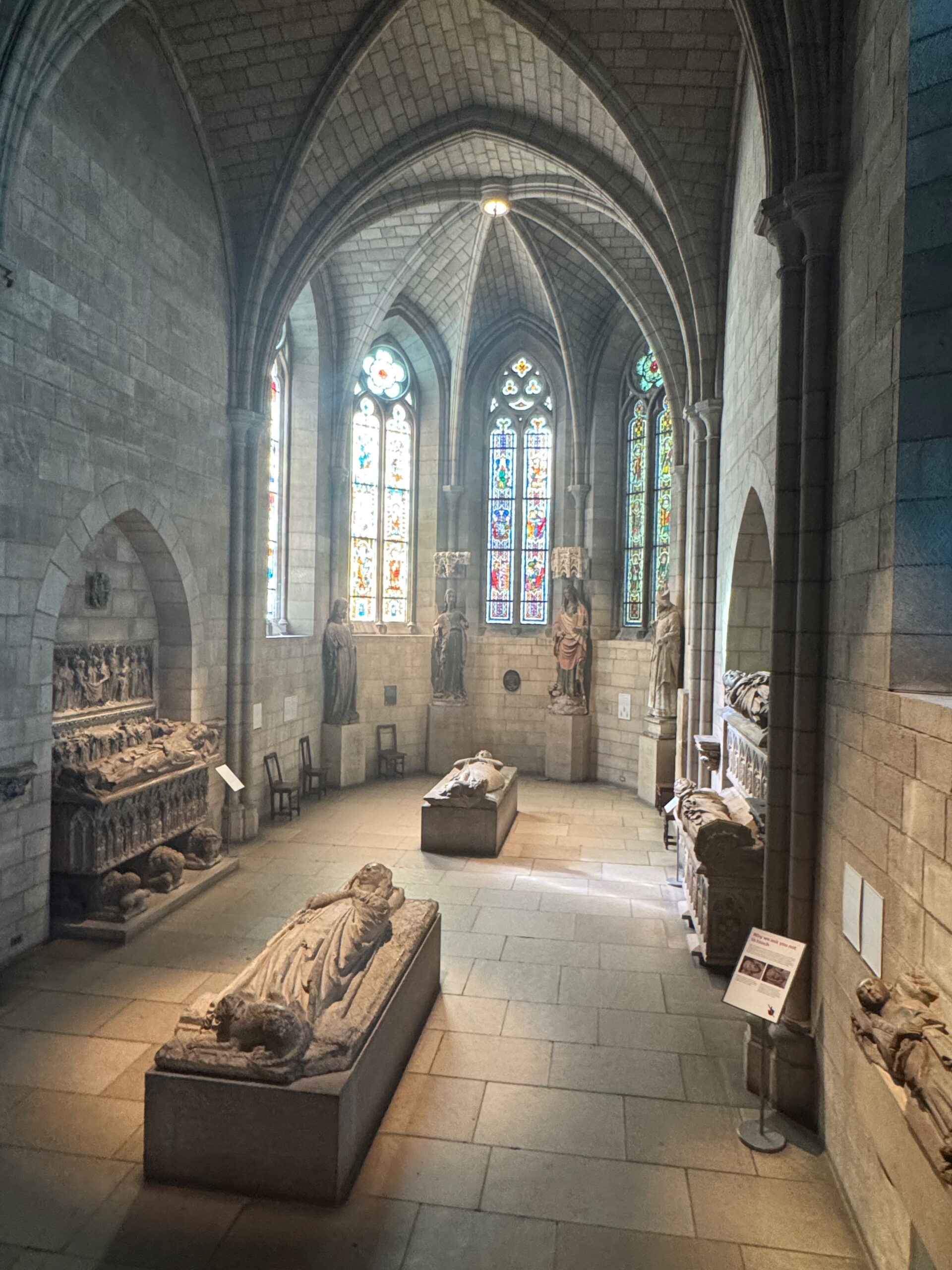
So, the term “gothic” was originally used with contempt. But it was also applied to very old structures, many in states of decay and ruination by the time of the Renaissance. These buildings — many of which were churches — were equal parts beautiful and rotting, isolated and grandiose, and were the primary inspiration for the gothic fiction of the 18th and 19th centuries. Many of these stories, the first of which is The Castle of Otranto by Horace Walpole from 1764, take place in gloomy landscapes and/or outright haunted manors. And the people in these places, well, they tend towards the end of the emotional spectrum where rage, lust, madness, and terror dwell. Think of the tales of Edgar Allen Poe, Bram Stoker, Mary Shelley, Charlotte Brontë, and Oscar Wilde.
Gothic fiction was the beginning of the horror genre as we know it. The aesthetic of mystery, of decay, of the past forcing its way into the present (sometimes supernaturally) so defined what in the West would visually be considered scary that most of the costumes you see today at Halloween are just riffs on old gothic motifs. OK so just glancing back at our map: gothic architecture, specifically the buildings of that style in a state of decay, inspired gothic fiction which itself eventually morphed into the larger category of horror fiction.
So how does Southern Gothic, a distinctly American art form, come from what was primarily a European genre? Where the rotting hulks of churches inspired the gothic authors of Europe, the dilapidation of once-majestic plantation houses in the post-Civil War South became a focal point for authors in America seeking to explore themes of a flawed society trying to rebuild itself. These flaws, often personified by grotesque or mysterious figures (like Boo Radley from To Kill A Mockingbird), usually involve racism, violence, and religious extremism — even hoodoo and voodoo.
The characters in Southern Gothic fiction are often physically or psychologically twisted – shut-ins, freaks, back-woods types and those unable to move forward in tight-knit communities, sometimes too tight. These characters, caricatures really, are usually colored — and color is key in this genre — by the dark events of the past, the violent history of race relations, the resentment of Civil War defeat, the Great Depression and, more recently, the devastation of Hurricane Katrina.
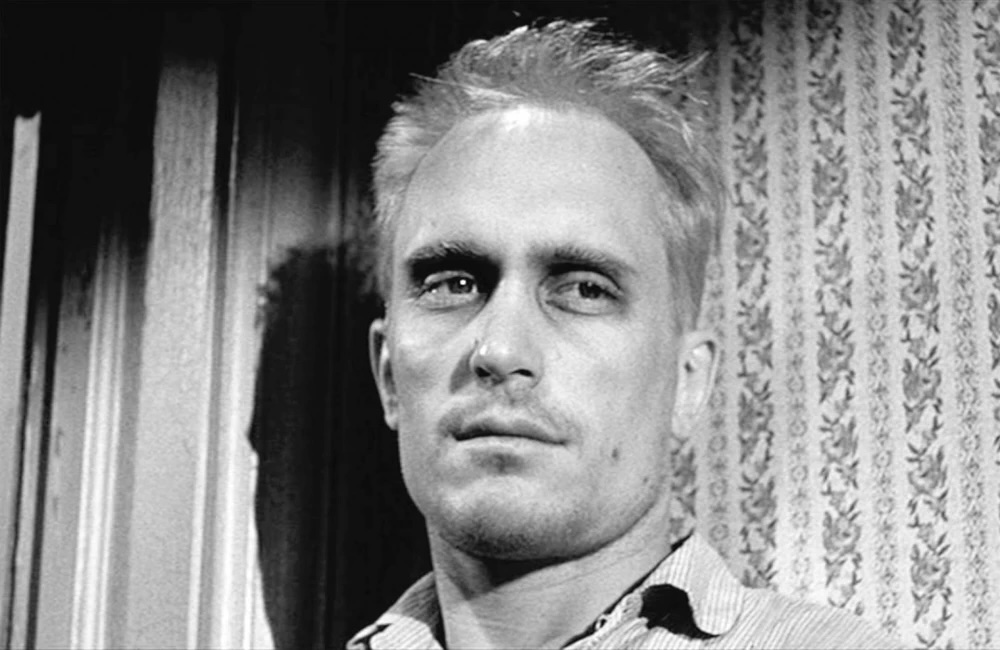
Whether overt or as subtext the point of a Southern Gothic story is to reckon with — if not fully rewrite — the myth that the pre-Civil War south was an idyllic, harmonious, and happy time and place. It is, like gothic literature, an attempt to deal with a society in ruin. Authors who wrote in this style at least some of the time include William Faulkner, Flannery O’Connor, Eudora Welty and more recently Anne Rice and (one of my favorite authors) Donna Tartt.
Tourists, you may see where we’re headed. It is not such a leap from the dark themes of these Southern novelists to straight-up horror: mansions rotting into swamps, snake-handling preachers, and unreconstructed beliefs in the supernatural. Southern Gothic often becomes Southern Gothic horror and nowhere is this more true than at the movies.
Before we talk about films, though, a quick note on genre slippage. Categories are always tricky; what’s the real difference between a dark thriller and a horror movie with a gore score of zero, for example? But in the case of the category of Southern Gothic we’re actually taking about a geographical place, specifically the states of the former Confederacy. There are many films which you might otherwise call Southern Gothic except for their setting in the American Midwest or amongst the hillbillies of Appalachia. And many of these films are wonderful — see especially The Night of the Hunter from 1955 about a serial killer posing as a preacher in West Virginia or the 2017 film 1922 based on the Stephen King novella about murder and guilt on a Nebraska farm. But for now let’s constrain our travels to the South and a few standout films.
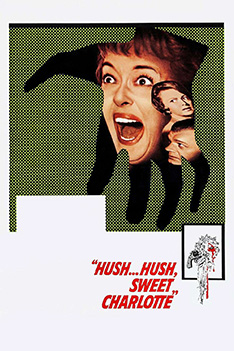
Hush…Hush, Sweet Charlotte is a 1964 creep-out starring Bette Davis and Olivia de Havilland as middle-aged cousins in Louisiana attempting to keep the local authorities from demolishing a home in the path of a new interstate. That’d make for a pretty good straight drama, except that Bette is also the primary suspect in the decades-old unsolved murder of her former lover whose decapitated head comes back for a visit. Of note, this film is 133 minutes long and very slow by contemporary pacing standards, but it is a great example of the subgenre.
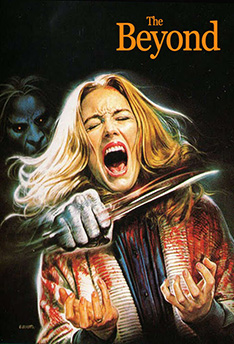
The masterful director Lucio Fulci wasn’t afraid of trying anything and his film The Beyond from 1981 is his take on Southern Gothic. Filmed on location in and around New Orleans, The Beyond is about a woman, Liza, who inherits and attempts to rehabilitate a crumbling old hotel — which happens to be sitting atop one of the seven gates of hell! This is an exceptional film, part of the Fulci’s Gates of Hell trilogy, one of the UK’s “video nasties”, and did not see an uncut release in the US until 1998. You need to see this film not only because of its contribution to our subject today but because the ending is bleak as all hell — er, as all beyond.
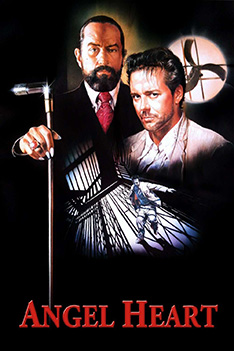
Angel Heart from 1987 is a noir-ish detective tale with a satantic twist. This film partakes of lots of Southern Gothic tropes aesthetically, but does include one we haven’t mentioned yet, the half-crazed war veteran. In this case it’s not a Civil War veteran but an injured WWII solider who’s gone missing. A man named Louis Cyphre, played by De Niro, hires a private investigator named Harry Angel, played by Mickey Rourke, to find the veteran who owes him a debt. It’s a fallen angel tale set amidst the dark, oppressively humid decadence of New Orleans.
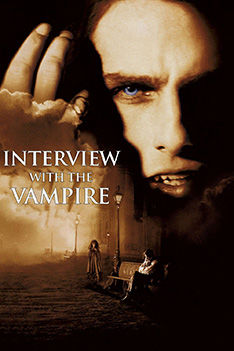
And if Big Easy decadence is your thing then you’re likely a fan of the novels of Anne Rice about the vampire Lestat. Interview with the Vampire from 1994 is the big budget film version of the novel of the same name, featuring Tom Cruise, Brad Pitt, Antonio Banderas and a young Kirsten Dunst. Much of the film takes place in antebellum Louisiana with all its Caribbean disease, rotten swamps, wrought iron balconies, and candle-lit passages. It’s ultimately a tale of child murder — or at least, taking the human life from a child — and the grief surrounding this act. But it’s also a very modern take on the visual trappings of southern-inflected horror. I suggest reading the books and skipping the movie, but hey you do you.
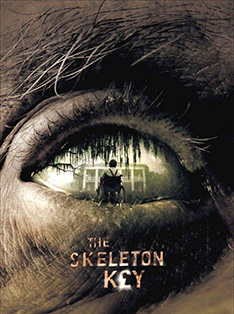
If you want the Cliffs Notes version of Southern Gothic have a watch of The Skeleton Key featuring Kate Hudson and John Hurt from 2005. This film contains every possible Southern Gothic trope (or cliche, if you’re feeling critical): a plantation house in the middle of a rural parish in Louisiana, the twisted legacy of a slave lynching, hoodoo rituals, and all the atmosphere of a once-majestic society now covered in a layer of dust. It’s not a perfect film, but it may be the most exemplary of our genre exploration.
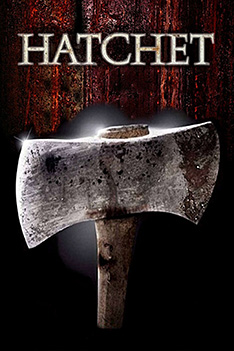
Is there such a thing as a Southern Gothic slasher? Indeed there is, my touring pals. It’s called Hatchet from 2006 and features the undead, deformed Victor Crowley who slops through swamps in search of his next victims. In this case it’s a group of tourists (just like us!) stranded in the countryside on a ghost tour out of New Orleans. Hatchet is paint-by-numbers horror — you know exactly what you’re going to get and pretty much exactly where its going, but at the time I enjoyed the fresh setting and I found it fun to see how southern motifs were woven into the scaffolding pulled mostly from 1980s campground horror. There are several more Crowley films after this one, if this is your jam.
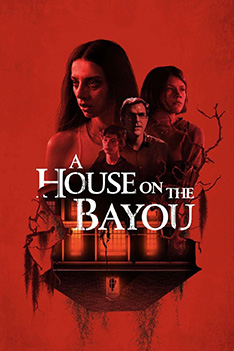
A House on the Bayou from 2021, reviewed on this pod previously, is an unexpected entry in the genre, focusing primarily on familial tension over an affair but set in a decaying mansion in the swampy countryside. The family here are outsiders, definitely not southerners, who basically represent us, the viewers, thrust into a world out of time, complete with creepy fellows named Grandpappy who represent the old order, the way things used to be but which definitely shouldn’t be. Great performances and an excellent twist!
Now, you may have noticed something about all these films. I chose them almost randomly — a few I had seen previously, a few I had wanted to see — as exemplars of Southern Gothic horror. But every single one of them is set in Louisiana, often New Orleans. This isn’t coincidence. Louisiana is ground zero for the genre, possibly because it has the most visible legacy of majesty-in-ruin, colliding cultures of decadence and religiosity, diverse peoples mixing uneasily (black and white, high society and low, European and Afro-Caribbean colonizers and immigrants), all stewing in an oppressive climate of bugs, alligators, and slithering creatures.
I haven’t done an exhaustive census, but my guess is that more than half of what you’d consider quintessential Southern Gothic Horror takes place in Louisiana. Yes there are films which do not — of special note is Cape Fear, both the 1962 and 1991 versions, set on the outer banks of North Carolina. But the center of gravity for the genre seems always to be the Deep South. The entire third season of American Horror Story, called Coven, is set amongst the witches of New Orleans, for instance. Of note, my wife is from New Orleans. Is she a southern goth witch? This is an exploration for a possible future installment of The Terror Tourist.
Until then, my compatriots, sorry for the humidity. And the mosquitos. But hey, we enjoyed some lovely sweet ice tea, no? See you on our next journey!
A full list of the movies mentioned above can be found at Letterboxd. Find out where to watch there.
The Terror Tourist is my occasional segment on the Heavy Leather Horror Show, a weekly podcast about all things horror out of Salem, Massachusetts. These segments are also available as an email newsletter. Sign up here, if interested. Here’s the episode containing “Undead Mockingbird”: