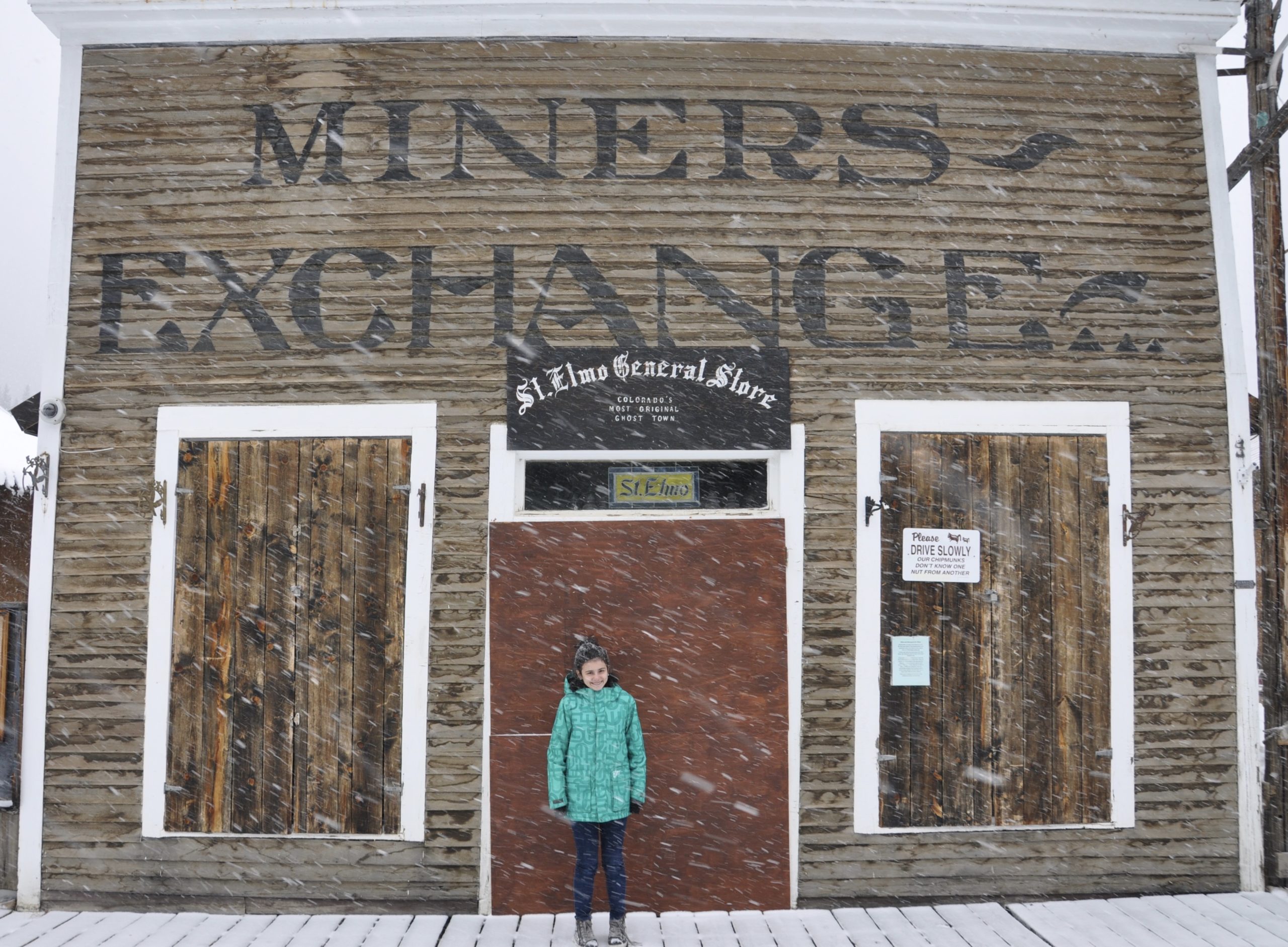
Day Three – The Good, The Badlands, and The Ugly
A long day of incredible sights, ending with a Old Testament-grade thunderstorm as we pulled into our night’s campsite. But that’s getting ahead of things.
Today was about the Badlands, those crazy geological formations (with a lowercase ‘b’) all over world basically tell living things to make a detour. And yet, life, uh, finds a way. As we found ours up, down, and around the crags and pinnacles. Being varying levels of dinosaur nerds we searched for evidence of the KT boundary, but as our Badlands formed right after the extinction event (geologically speaking) it would have been right at ground level if visible at all. Which it wasn’t. Sad dino nerds. But wow is that place beautiful, looking not so much like a landscape as a matte painting with such severe contrasts of light and dark. But color too, in places, which is delightful. All nestled cozily in grasslands stretching to the horizon, as our Great Plains did before we carved it all into squares for agribusiness.
Leaving the Badlands is where we finally picked up my father’s late-1970’s motorhome trail on I-90. His route, you might recall, was the catalyst for this whole ridiculous odyssey, so intercepting the path of yore was meaningful. And we did so at Wall Drug, the crazy nearly century-old roadside pharmacy turned Americana theme park, which he loved. As my daughter put it, “This is like the inside of Grandpa’s head.” A compliment, to be sure, but neither places you want to overstay.
So we scooted west to Rapid City mostly to top off electrons. We hunted for a diner (no luck), high-fived/flipped off a few of the town’s tourist-bait roadside president statues, dropped in on a haunted (yeah, no) hotel, and got out. Rapidly, you might say.
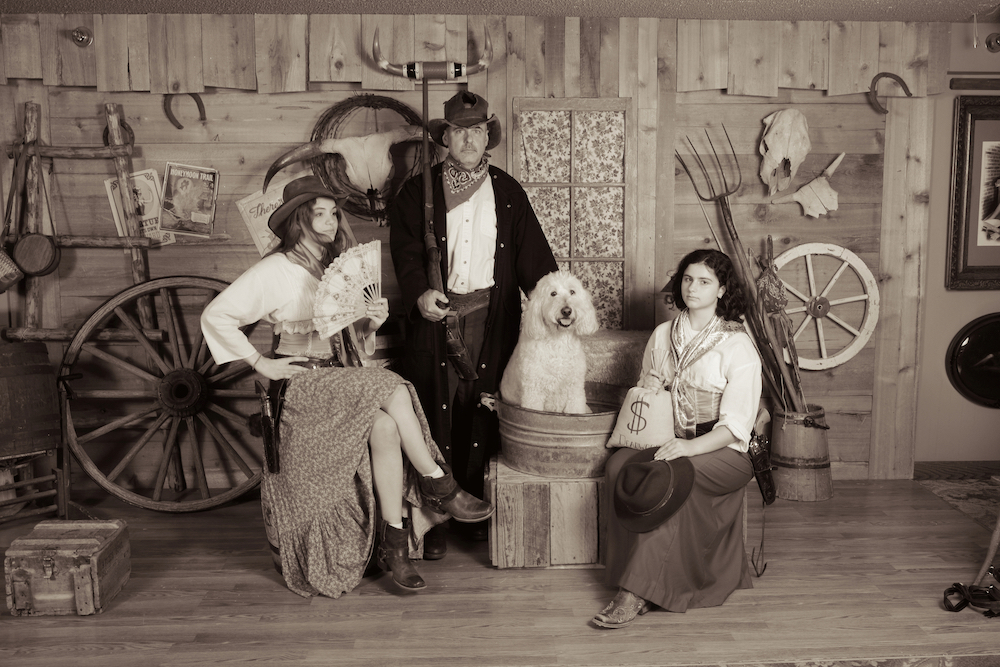
Up in elevation from there to Deadwood. Where Wall Drug presents a faux old west townscape, Deadwood desperately tries to maintain itself as a time capsule of a real one. It was probably all over for the town when its last brothel was raided and closed in 1980, but that doesn’t keep the architecture from still being pretty amazing on a long stretch of main street. We took some old tyme photos, cleaned up an anxiety-poop from Owen (our dog) at the gunshot blanks being discharged for a showdown shoot-‘em-up re-enactment in the middle of the street, and left town alive (as Wild Bill, alas, did not).
Onward to Devils Tower, geological marvel and plot finale for Close Encounters of the Third Kind. Devils Tower was one of a few early anchor destinations that I, a sci-fi geek, planned the trip around. But the skies opened up as we approached. Lightning in the Black Hills is sublime and terrifying, providing possibly the spookiest first viewing of the tower ever. (See the Instagram post for this day and prepare to enter the Upside-Down.) Hooking up a 50 amp electrical connection while rain dumped down and lighting bolts sliced up the sky was a low point. But then, I thought, at least I didn’t shit myself in terror like Owen did. Positive thinking, people!
Collapsed immediately.
Day Two – Into The Black Hills
Day two, first morning at a campground. Not the most exciting overnight beyond sweating ourselves to sleep and waking up freezing. We possess the ability to thermally regulate, just not a ton of sense of experience to execute. But that’s the thing: we’re learning bit by bit, muttered curse by muttered curse, unexpected joy by unexpected joy. We’ll be experts in what we know and comfortable in the naïveté of what we don’t by July 4, I’d wager.
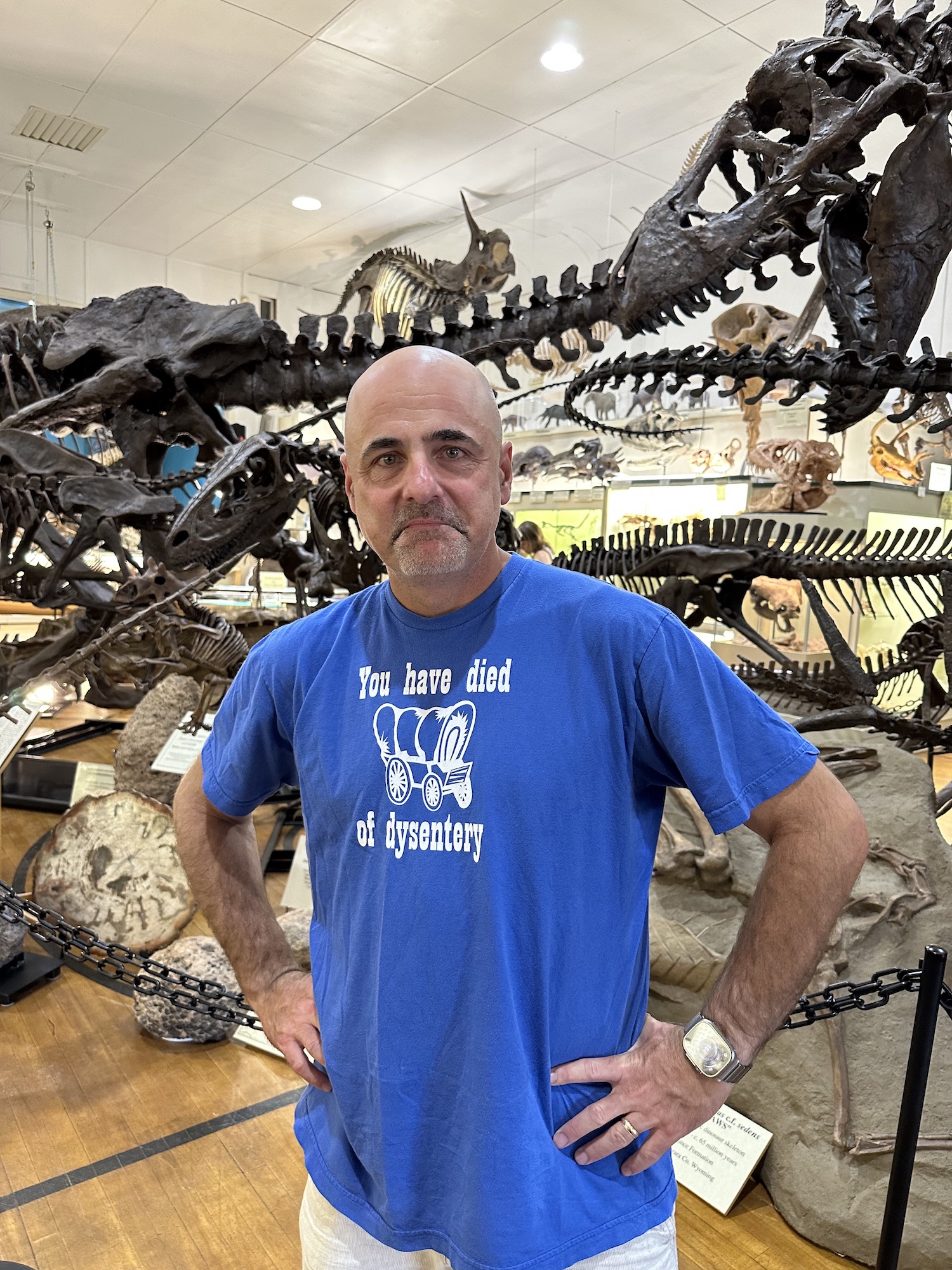
Leaving Wyoming we crossed into South Dakota and the towns leading into the Black Hills. I was glad to be back after recently finishing Dan Simmons’ masterful The Black Hills and subsequently having no desire to trot over to Mount Rushmore. Hit Custer on the way to our first real destination in Hill City, the Museum of the Black Hills Institute. Known primarily for its role in the discovery of Sue the T. Rex (now at Chicago’s Field Museum) it’s a small affair with a truly exceptional collection. Two laps of the whole thing and the teens were still enthralled. We’ll see if that lasts through our actual fossil dig in a few days …
For something completely different we visited the Cosmos Mystery Area, a surprisingly fun bunk science sideshow where buildings erected at weird angles on a hillside show “evidence” of cosmological “hot spots” where gravity is wonky. It’s not. The whole experience is your inner ear data fighting with your eyes’ visual data. Of course it knocks you off kilter, but it isn’t a mystery. I’d do it again, though. Always up to humor a carnival barker.
From there we took a short jaunt onto the other planet that’s known Badlands National Park. Just a taste as we were heading to our campground. The Badlands gets our full attention tomorrow — as does Deadwood and finally Devil’s Tower tomorrow night.
A note on KOA Kampgrounds, our second tonight. There’s a massive difference between Journey tier sites (basically camps only as waypoints) and Holiday tier sites (amenity-laden destinations). The ladies prefer the latter. I just need to sleep.
Oh and another campsite observation. KOA sites all have ample bathroom and shower facilities, but I find that the toilets are only used by people who don’t want to lay waste in their $200,000 home-on-wheels. What I’m saying is that campsite-provided indoor plumbing witnesses atrocity.
And goodnight!
Day One – Departure
We were on the road around 8am starting a two-day journey to the Badlands of South Dakota. Could have made it in a day, probably, but I wanted to start easy. We’re hauling a hell of a lot more stuff than my test runs. Upside: the rig is more stable laden with all our crap (and properly inflated trailer tires). Didn’t notice an appreciable range reduction, though I’ve stopped doing thorough calcs now. What will be will be.
Our only real sightseeing today was the Quebec 01 Missile Alert Facility outside of Chugwater, Wyoming. It’s not a missile silo, per se, but it was part of the United States’ Cold War-era nuclear arsenal command and control. (And yet only decommissioned in 2005.) Spartan like a college dormitory and yet outfitted with a pool table, a nice kitchen, an 8-track music deck, and other amenities. Weird to think of young soldiers passing the time there — sinking billiard balls, enjoying some tunes — while the keys to launch ICBM’s that would annihilate 20 million people were in the same facility.
Some small snafus on the journey. We were blocked in while charging by someone who parked and left their vehicle. (This happens at gas stations too, of course.) Through a stroke of sheer luck we found out that the owner of the car was a line chef inside an Olive Garden across the parking lot. So, we ate at Olive Garden while the manager tried to figure out which of his employees drove the blocking car. “Eat at Olive Garden” (blech) was absolutely not on my trip itinerary, certainly not on Father’s Day, but this trip is all about rolling with the punches. Upside: my father loved Olive Garden. The more over-the-top the theming of any commercial establishment (think Rainforest Cafe) the better, for him. So, happy Father’s Day, Dad!
Staying tonight at the first of many different KOA campgrounds (excuse me, kampgrounds). This one is not quite the low-grade MAGA rally the girls were hoping for, though that certainly awaits us. We played a round of 9 holes at a decrepit mini golf facility. Left the dog alone in the trailer for 10 minutes where he ripped into and devoured an entire bag’s worth of hot dog buns. So, yeah, basically everything going as planned.
The real hack for travelers towing RV’s with electric vehicles is hooking into the electrical connections at campground sites meant to power motorhomes but using it to refill your vehicle battery. Technically this isn’t allowed (it’s in the campground fine print), but it absolutely works. Basically Level 2 charging overnight. And if you bring a splitter, as I have, you can continue to power the RV too. This is admittedly the “easy” part of the EV charging odyssey. More on this to come.
We’re winding down and prepping for our visit to the Black Hills Institute tomorrow by watching Dinosaur 13, the story of (and at least one of several contested perspectives concerning) the legal/criminal drama behind the T. Rex fossil known as Sue.
Black Hills-bound shortly after sun-up.
The Ampcamper: An RV Adventure
I’m about to depart for three weeks towing a 30-year-old RV trailer with an electric vehicle up and down the Rocky Mountains and into various national parks, off grid. With me will be my teenage daughter and niece and a fairly large dog. Surely something will go wrong.

I had been digitizing old family media for a few years after my father passed away when I stumbled upon a unique photo — actually a 35mm slide because projected slides were social media in the late 70’s. It depicted a map and had clearly been drawn on. After a little sleuthing I determined it was the route my family took in a motorhome we owned for a few years on a three-week trip which came to be known thereafter as “the three-week trip”.
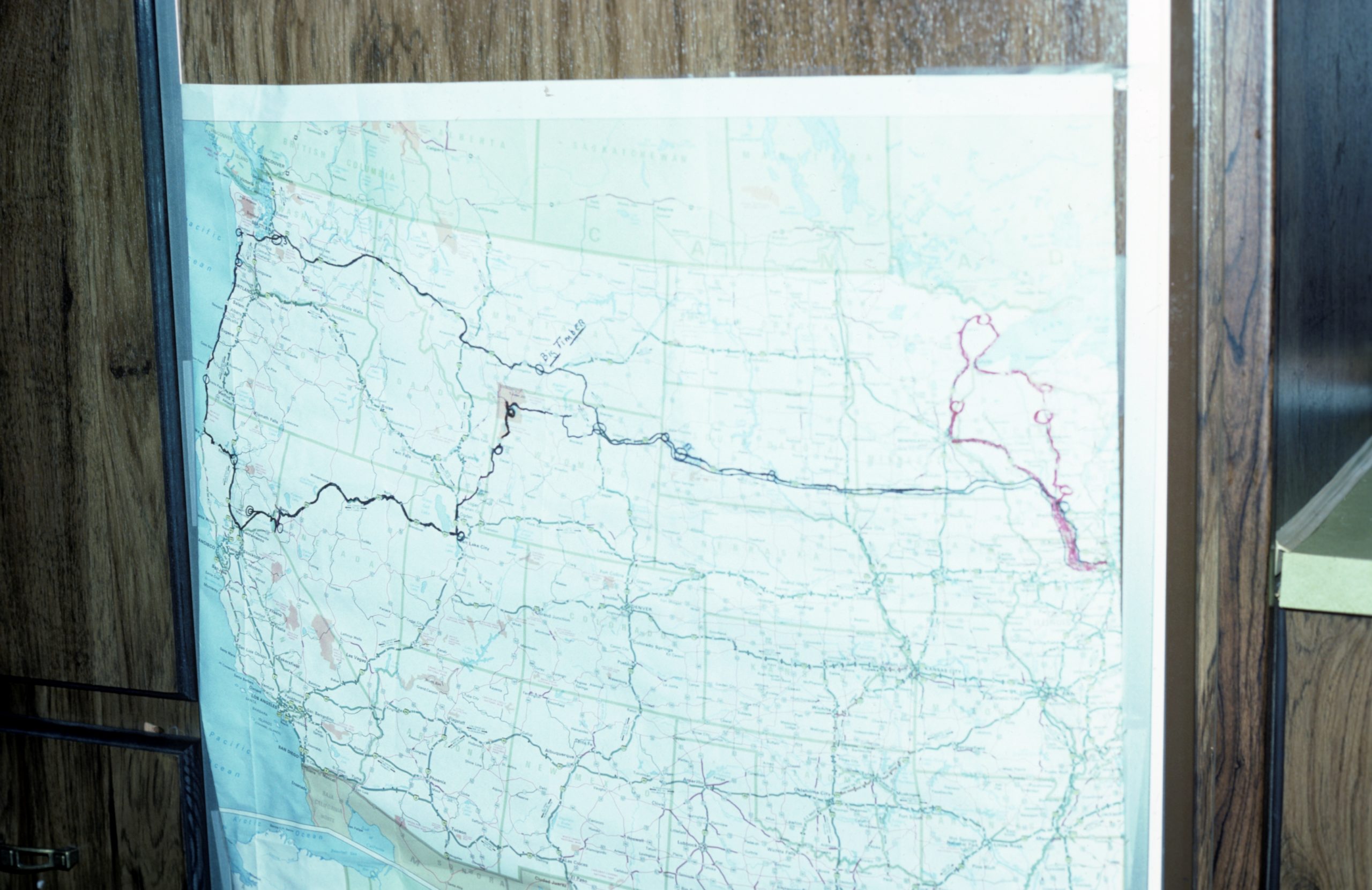
My father loved that motorhome. I think it was as close as he could get to his fantasy of being a cross-country big rig truck driver, role-playing Convoy. I recall very little of the sites or destinations we visited in that thing, but I do remember being inside what seemed a massive vehicle to young me. So on finding the map I knew I had to recreate at least a part of the journey at some point. Well, that point is now.
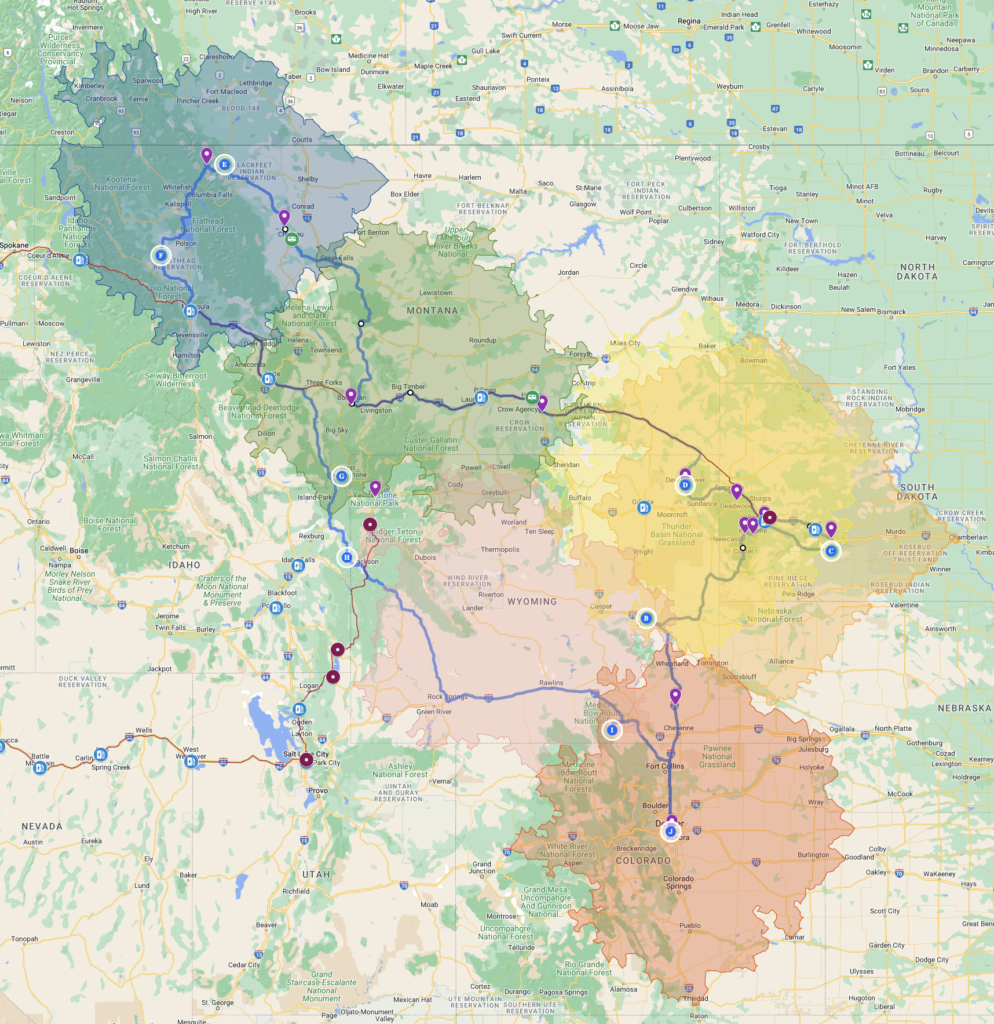
Starting point: Denver. My father’s original route is the thin red line above and we pretty quickly determined that actually recreating the trip (which swung all the way out to the Pacific Northwest and down the west coast) would take up most of the summer. How ol’ dad pulled this off in three weeks — including transiting the northern plans to/from Chicago — I have no idea.
So our upcoming route basically breaks down into thirds: Black Hills/Badlands, Glacier National Park, and Yellowstone. We pick up my dad’s route along I-90 west and then again at Yellowstone. Glacier itself is a bit of a detour (which I want to see for obvious reasons), so we’re not being overly faithful to the original, though we are trying to at least stop at some of the places he’s circled on the map. Why, for instance, Big Timber, Montana? No clue. But we’re gonna find out — or at least make up a reason we think he circled it.
The second challenge was finding a vehicle. RV envy is real, especially when you have friends who’ve done it just right. I considered renting a big motorhome to recreate my childhood experience, but maybe (I wondered) the reason I have no recollection of actually seeing sights from those trips is because we couldn’t actually park that beast anywhere desirable? With some previous experience visiting national parks and kooky Americana I knew that vehicle flexibility was key. So we settled on a trailer-towing arrangement so that we can unhitch and tool around as needed. But what to tow?
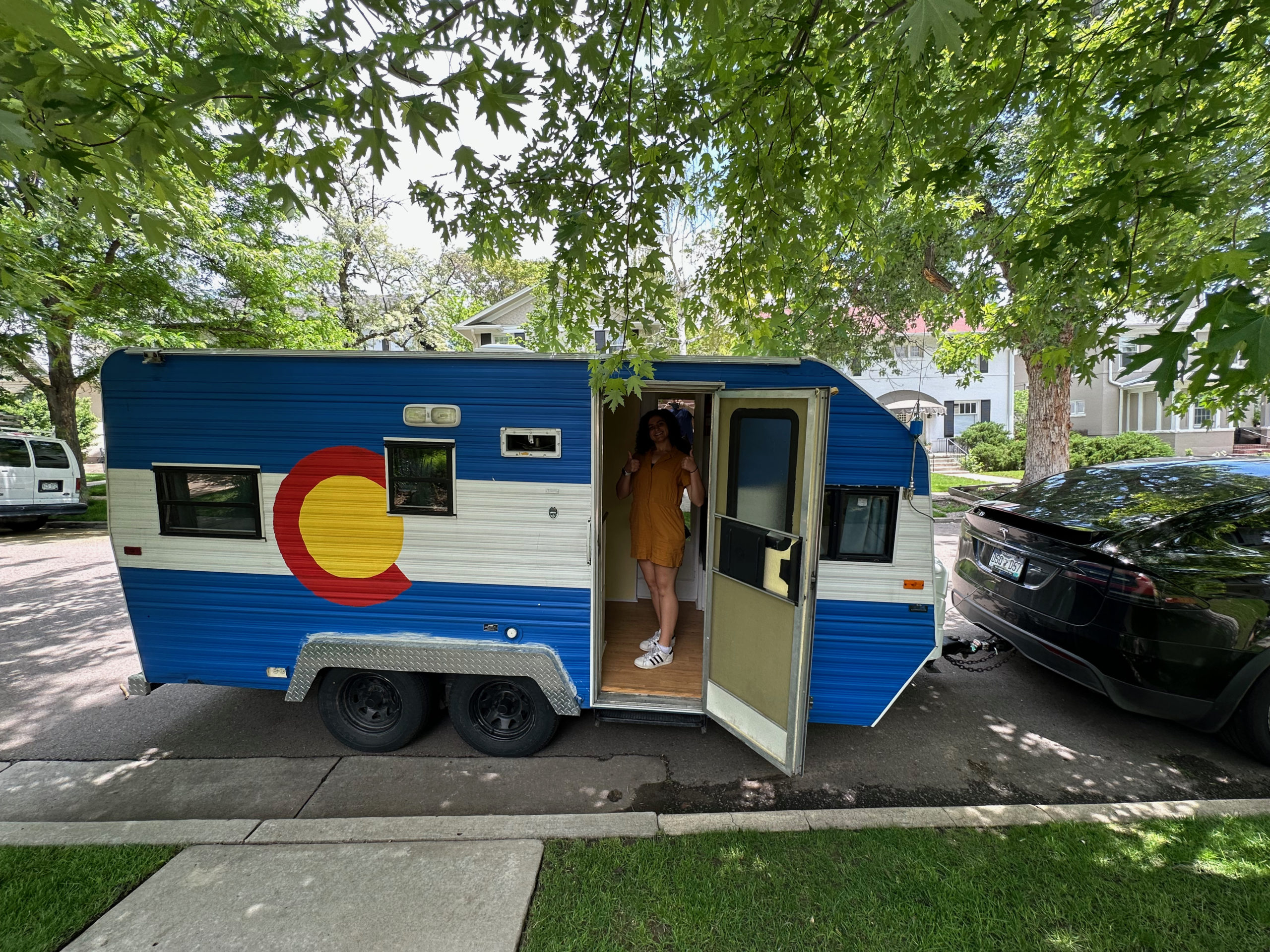
It’s good to have outdoorsy friends, especially close friends you’ve known since rooming together in college. And this is how I have come into the temporary possession of the glorious Colorado flag-themed (handpainted!) 1993 Sunline camper trailer above. There are no bells and whistles on this thing whatsoever and it is kinda falling apart, but it works and tows like a dream. Much more on our home-away-from-home in posts as we hit the road.
OK so, how to tow? I have been driving an electric vehicle for several years and have come to love the national Tesla charging network (though not so much the company’s leader). So why not make this odyssey needlessly (more) complex and attempt to haul a two-ton trailer on electrons alone? I did a few test runs and the range impact is basically exactly what you’d expect from an internal combustion engine: 43.3 % average reduction in range, 55.6 % average reduction in efficiency. Conservatively that means 175 miles of range per full charge. The colored polygons on the map above show roughly how far we can go from major destinations on a charge. (The tribulations of charging with a trailer, especially in the EV infrastructure wasteland of Wyoming and Montana, will get its own post.)
I’ll post as regularly as I can once we depart with some special features including what it is like to outfit this quasi-futurist jalopy with a CB radio. Everything will be cataloged at http://ampcamper.com with updates at Instagram and Bluesky.
If anyone reading this lives around the route or has recommendations what to see, hit us up!
Here’s a full map and itinerary spreadsheet.
10 days and counting …
Ghost Ecosystems
Bubbling this old post to the top given some recent chatter around using traditional indicators of urban decay — trash, graffiti, boarded-up windows — to make inferences using predictive modeling (and, of course, AI). As a system for understanding future municipal resource deployment for spot-fixes and infrastructural interventions — and decisively not to resurrect discredited theories suggesting these indicators encourage crime — this makes a lot of sense (enough for me to spend several years of my professional life on it).
But as a wider lens into the systemic causes of decay and ultimately ecosystem collapse, like of an entire town or species as the post below jauntily tours, it misses the forest fire for a few fallen trees. AI of course is being used in many different scientific domains to map deeper foundational, existential threats, but given where we are in the hype curve with LLMs there’s a lot of money (and attention and compute cycles and energy consumption) going into more surface-level predictive tech. This is probably because it’s a lot easier to fill a pothole than move a city off of fossil fuels.
Speaking of fossils, here’s the old post.
I teach a course at CU Denver on urban technologies where, to the bewilderment of most students, we begin by studying a decrepit urban typology somewhat unique to the American West: ghost towns. Where students are expecting robot cars and sparkling sci-fi skylines they get depopulated ruins and crumbling foundations. It takes several sessions before students appreciate why we start this way. The afterlife of towns and cities exposes quite a bit about why they were created, what assumptions they were built upon, and what larger systems they are enmeshed in. If these towns are ghosts, how exactly did they die?